
The Strait of Hormuz: A Crucial Maritime Crossroad Amidst Global Tensions
Current Situation in the Strait of Hormuz
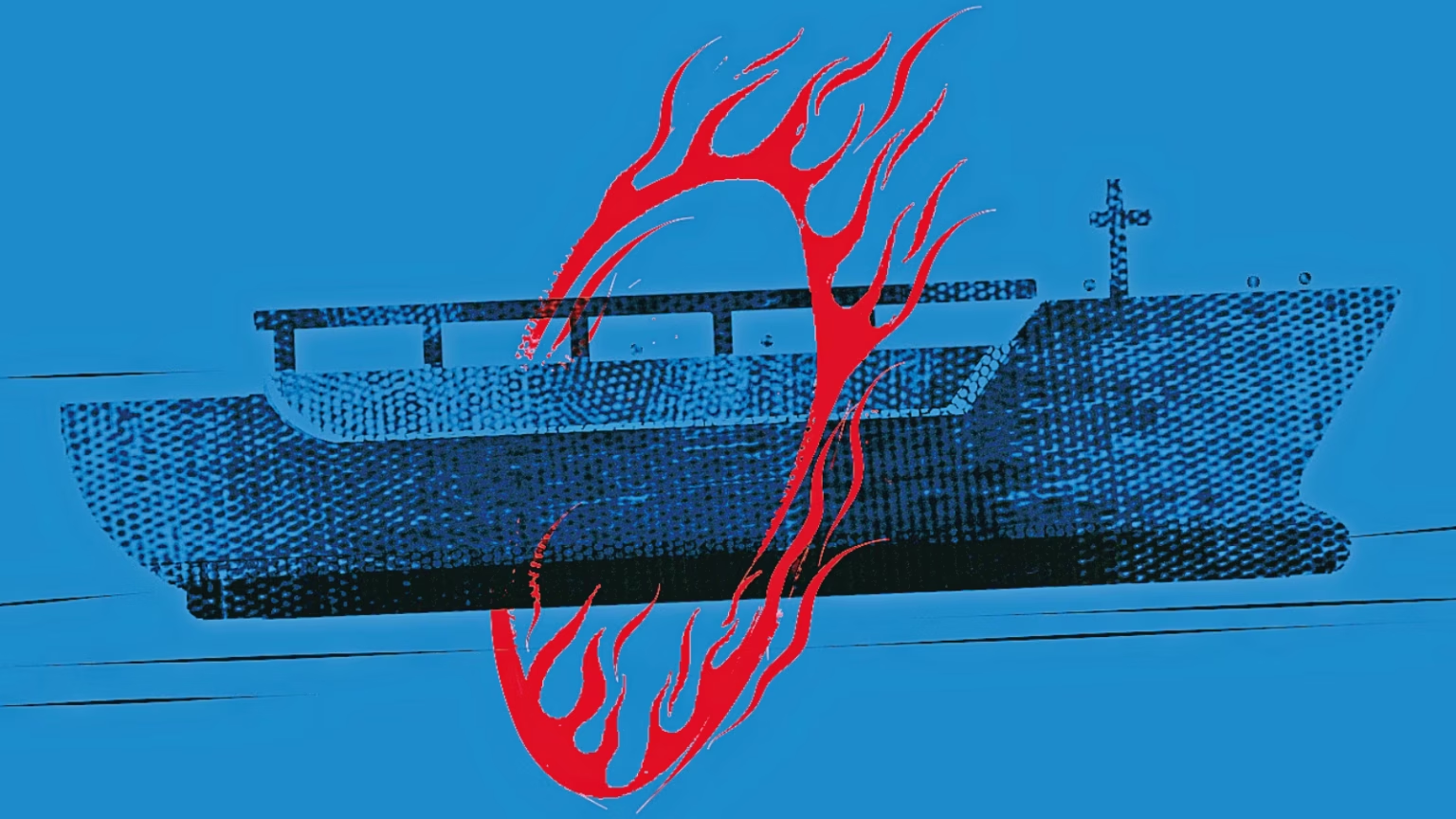
The Strait of Hormuz has emerged as the focal point of a significant economic and maritime crisis worldwide. Following a US-Israeli military operation against Iran on February 28, the strait has been classified as a “war zone,” resulting in substantial restrictions on international shipping routes. The strait is crucial as it facilitates nearly 20% of the global oil trade and 25% of liquefied natural gas (LNG) trade, marking it as one of the most serious disruptions to global energy supplies since the 1970s.
While Iran has sustained considerable military losses, its coastal missile systems, drone capabilities, and sea mines present substantial threats that have deterred most commercial vessels. Marine insurance costs have surged dramatically, rising between 400% to 600%. Additionally, Iran has begun imposing transit tolls of up to $1 per barrel of oil, a move that many stakeholders perceive as exorbitant. The situation is complex, entangled with various legal, strategic, and political factors.
Importance of Maritime Choke Points
A significant portion of global commerce relies on maritime transportation, and while oceans seem vast, shipping routes are frequently concentrated in narrow water passages known as “maritime choke points.” Control of these strategic channels has historically allowed nations to enhance their naval power and secure their maritime interests. Choke points have been pivotal in global geopolitical dynamics, shaping the control exerted by maritime powers.
The historical influence of British naval supremacy from 1815 to 1914, known as “Pax Britannica,” stemmed from its strategic control over vital nautical locations, which facilitated its dominance in world trade. Notably, during World War I, the Dardanelles Strait significantly influenced the war’s dynamics by affecting the Ottoman Empire’s resilience.
Strategic Considerations and Global Competition
In contemporary discussions, US strategies regarding Greenland and the Panama Canal reflect concerns over strategic choke points amidst rising competition with nations like China and Russia. Greenland is crucial for controlling the Greenland-Iceland-UK Gap, a pathway vital for Russian naval operations in the Arctic. In light of melting Arctic ice, China is also extending its Maritime Silk Road through this route.
The historical principle of Mare Liberum, introduced by Dutch jurist Hugo Grotius in 1609, asserts that the seas are international territory open for trade. However, the 1982 United Nations Convention on the Law of the Sea (UNCLOS) established territorial waters at 12 nautical miles and presented challenges to this principle due to choke points that intersect the territorial waters of multiple states.
Legal Framework Governing Navigation
UNCLOS introduced two legal frameworks to govern maritime navigation: “Innocent Passage,” which allows ships to transit territorial waters with certain restrictions, and “Transit Passage,” which applies to international straits and guarantees freedom for continuous maritime traffic. The Strait of Hormuz, connecting the Persian Gulf to the Gulf of Oman, is specifically recognized under UNCLOS as a strait used for international navigation, although Iran has not ratified the convention, complicating compliance with international legal standards.
Iran’s application of the restrictive Innocent Passage stipulations violates the UNCLOS framework regarding Transit Passage, designed to preserve open navigation even in territorial waters. The country faces significant military challenges and seeks to leverage its control over the Strait of Hormuz to gain concessions in a context of economic and strategic duress.
Implications for India and Regional Security
The Strait of Hormuz is pivotal for India, described as a “jugular vein” underpinning national security and economic stability. Disruptions in this waterway could pose severe threats, including regional instability. Moreover, escalations could evoke broader concerns, especially regarding nuclear threats in the area.
Despite maintaining cordial relations with the United States, Israel, and Iran, India’s cautious diplomatic stance has led to a lack of mediating initiatives in the current crisis. Nonetheless, India aims to promote adherence to international laws and peaceful resolutions, aligning with its foreign policy goals while safeguarding its interests amid growing tensions in the region.
Follow US
https://www.facebook.com/charchaexpress
https://www.youtube.com/@charcha-express
https://www.instagram.com/charcha.express/
Contents
Current Situation in the Strait of HormuzThe Strait of Hormuz has emerged as the focal point of a significant economic and maritime crisis worldwide. Following a US-Israeli military operation against Iran on February 28, the strait has been classified as a “war zone,” resulting in substantial restrictions on international shipping routes. The strait is crucial as it facilitates nearly 20% of the global oil trade and 25% of liquefied natural gas (LNG) trade, marking it as one of the most serious disruptions to global energy supplies since the 1970s.While Iran has sustained considerable military losses, its coastal missile systems, drone capabilities, and sea mines present substantial threats that have deterred most commercial vessels. Marine insurance costs have surged dramatically, rising between 400% to 600%. Additionally, Iran has begun imposing transit tolls of up to $1 per barrel of oil, a move that many stakeholders perceive as exorbitant. The situation is complex, entangled with various legal, strategic, and political factors.Importance of Maritime Choke PointsA significant portion of global commerce relies on maritime transportation, and while oceans seem vast, shipping routes are frequently concentrated in narrow water passages known as “maritime choke points.” Control of these strategic channels has historically allowed nations to enhance their naval power and secure their maritime interests. Choke points have been pivotal in global geopolitical dynamics, shaping the control exerted by maritime powers.The historical influence of British naval supremacy from 1815 to 1914, known as “Pax Britannica,” stemmed from its strategic control over vital nautical locations, which facilitated its dominance in world trade. Notably, during World War I, the Dardanelles Strait significantly influenced the war’s dynamics by affecting the Ottoman Empire’s resilience.Strategic Considerations and Global CompetitionIn contemporary discussions, US strategies regarding Greenland and the Panama Canal reflect concerns over strategic choke points amidst rising competition with nations like China and Russia. Greenland is crucial for controlling the Greenland-Iceland-UK Gap, a pathway vital for Russian naval operations in the Arctic. In light of melting Arctic ice, China is also extending its Maritime Silk Road through this route.The historical principle of Mare Liberum, introduced by Dutch jurist Hugo Grotius in 1609, asserts that the seas are international territory open for trade. However, the 1982 United Nations Convention on the Law of the Sea (UNCLOS) established territorial waters at 12 nautical miles and presented challenges to this principle due to choke points that intersect the territorial waters of multiple states.Legal Framework Governing NavigationUNCLOS introduced two legal frameworks to govern maritime navigation: “Innocent Passage,” which allows ships to transit territorial waters with certain restrictions, and “Transit Passage,” which applies to international straits and guarantees freedom for continuous maritime traffic. The Strait of Hormuz, connecting the Persian Gulf to the Gulf of Oman, is specifically recognized under UNCLOS as a strait used for international navigation, although Iran has not ratified the convention, complicating compliance with international legal standards.Iran’s application of the restrictive Innocent Passage stipulations violates the UNCLOS framework regarding Transit Passage, designed to preserve open navigation even in territorial waters. The country faces significant military challenges and seeks to leverage its control over the Strait of Hormuz to gain concessions in a context of economic and strategic duress.Implications for India and Regional SecurityThe Strait of Hormuz is pivotal for India, described as a “jugular vein” underpinning national security and economic stability. Disruptions in this waterway could pose severe threats, including regional instability. Moreover, escalations could evoke broader concerns, especially regarding nuclear threats in the area.Despite maintaining cordial relations with the United States, Israel, and Iran, India’s cautious diplomatic stance has led to a lack of mediating initiatives in the current crisis. Nonetheless, India aims to promote adherence to international laws and peaceful resolutions, aligning with its foreign policy goals while safeguarding its interests amid growing tensions in the region.