

India Welcomes US-Iran Ceasefire, Emphasizes Importance of Strait of Hormuz
Ceasefire Agreement Welcomed
The Ministry of External Affairs (MEA) in India expressed a positive response to the ceasefire agreement reached between Iran and the United States. The MEA articulated hope that the agreement would facilitate enduring peace in West Asia and underscored the necessity for uninterrupted navigation through the Strait of Hormuz. “We welcome the ceasefire reached and hope that it will lead to a lasting peace in West Asia. As we have continuously advocated earlier, de-escalation, dialogue, and diplomacy are essential to bring an early end to the ongoing conflict,” a statement from the MEA indicated.
The ministry noted that the ongoing conflict has resulted in significant suffering for civilians and has disrupted global energy supplies and trade networks. The MEA reiterated its expectation for unfettered freedom of navigation and the smooth flow of commerce through the strategically crucial Strait of Hormuz.
Details of the Ceasefire
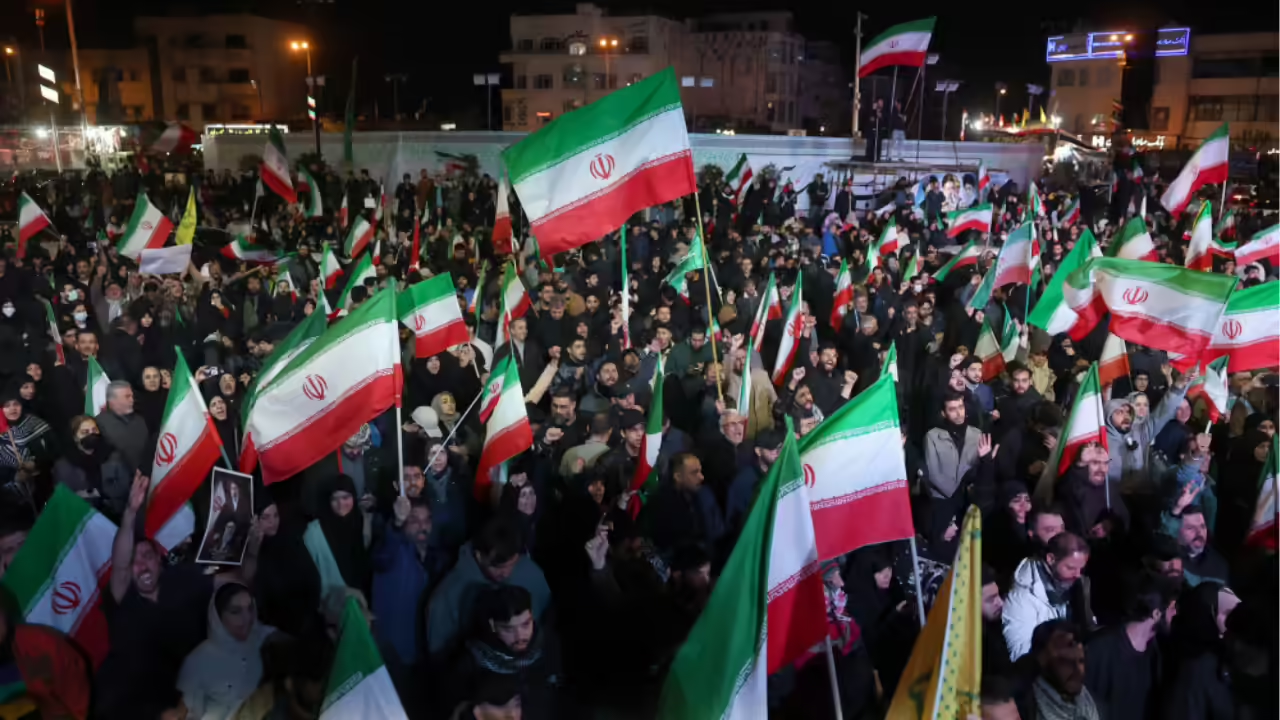
This announcement from India follows a declaration by Iran, the United States, and Israel regarding a two-week ceasefire. Tehran has indicated its readiness to engage in negotiations with Washington in Islamabad, which are set to commence on Friday.
In response to the ceasefire, US President Donald Trump characterized an initial 10-point plan proposed by Iran as “workable” but later rescinded his endorsement, labeling it as fraudulent without providing detailed explanations. Just hours prior to the ceasefire announcement, Trump delivered a stern warning, stating, “A whole civilization will die tonight, never to be brought back again,” should Iran fail to comply with terms including the reopening of the essential Strait of Hormuz.
International Reactions
In Israel, Prime Minister Benjamin Netanyahu’s office expressed support for Trump’s decision to halt military actions against Iran for a two-week period. However, it clarified that this pause does not apply to Israel’s ongoing hostilities with Hezbollah in Lebanon, where casualty figures have surpassed 1,500.
Iranian Foreign Minister Abbas Araghchi communicated that navigation through the Strait of Hormuz would be managed by Iranian military oversight, yet the extent to which Tehran would relax its control over this vital waterway remains uncertain.
Negotiation Insights
A regional official, who chose to remain anonymous, reported that the negotiations might incorporate a framework permitting both Iran and Oman to impose fees on vessels traversing the strait. It was suggested that Iran could utilize the revenues generated for the purpose of post-war reconstruction.
Despite the ceasefire, significant disparities persist between Iran and the United States concerning several crucial matters. These include Tehran’s nuclear ambitions, its capabilities regarding ballistic missiles, and the extensive network of regional proxies, which have all been cited by Washington and Israel as justifications for military interventions.
Moreover, Iran has outlined broader prerequisites for resolving the conflict, which include the withdrawal of US combat personnel from the region, lifting of economic sanctions, and the unfreezing of its assets.
Follow US
https://www.facebook.com/charchaexpress
https://www.youtube.com/@charcha-express
https://www.instagram.com/charcha.express/
Contents
Ceasefire Agreement WelcomedThe Ministry of External Affairs (MEA) in India expressed a positive response to the ceasefire agreement reached between Iran and the United States. The MEA articulated hope that the agreement would facilitate enduring peace in West Asia and underscored the necessity for uninterrupted navigation through the Strait of Hormuz. “We welcome the ceasefire reached and hope that it will lead to a lasting peace in West Asia. As we have continuously advocated earlier, de-escalation, dialogue, and diplomacy are essential to bring an early end to the ongoing conflict,” a statement from the MEA indicated.The ministry noted that the ongoing conflict has resulted in significant suffering for civilians and has disrupted global energy supplies and trade networks. The MEA reiterated its expectation for unfettered freedom of navigation and the smooth flow of commerce through the strategically crucial Strait of Hormuz.Details of the CeasefireThis announcement from India follows a declaration by Iran, the United States, and Israel regarding a two-week ceasefire. Tehran has indicated its readiness to engage in negotiations with Washington in Islamabad, which are set to commence on Friday.In response to the ceasefire, US President Donald Trump characterized an initial 10-point plan proposed by Iran as “workable” but later rescinded his endorsement, labeling it as fraudulent without providing detailed explanations. Just hours prior to the ceasefire announcement, Trump delivered a stern warning, stating, “A whole civilization will die tonight, never to be brought back again,” should Iran fail to comply with terms including the reopening of the essential Strait of Hormuz.International ReactionsIn Israel, Prime Minister Benjamin Netanyahu’s office expressed support for Trump’s decision to halt military actions against Iran for a two-week period. However, it clarified that this pause does not apply to Israel’s ongoing hostilities with Hezbollah in Lebanon, where casualty figures have surpassed 1,500.Iranian Foreign Minister Abbas Araghchi communicated that navigation through the Strait of Hormuz would be managed by Iranian military oversight, yet the extent to which Tehran would relax its control over this vital waterway remains uncertain.Negotiation InsightsA regional official, who chose to remain anonymous, reported that the negotiations might incorporate a framework permitting both Iran and Oman to impose fees on vessels traversing the strait. It was suggested that Iran could utilize the revenues generated for the purpose of post-war reconstruction.Despite the ceasefire, significant disparities persist between Iran and the United States concerning several crucial matters. These include Tehran’s nuclear ambitions, its capabilities regarding ballistic missiles, and the extensive network of regional proxies, which have all been cited by Washington and Israel as justifications for military interventions.Moreover, Iran has outlined broader prerequisites for resolving the conflict, which include the withdrawal of US combat personnel from the region, lifting of economic sanctions, and the unfreezing of its assets.