WHO Declares Ebola Outbreak a Public Health Emergency
On May 18, 2026, the World Health Organization (WHO) raised the alarm regarding a new outbreak of Ebola originating in the Democratic Republic of Congo (DRC), which has also spread to Uganda. The declaration of a Public Health Emergency of International Concern (PHEIC) marks the organization’s highest warning level for disease outbreaks.
So far, eight confirmed cases have been reported in DRC, accompanied by over 80 suspected deaths among a total of 246 suspected cases. Uganda’s capital, Kampala, has confirmed two cases, resulting in one death, marking a cross-border transmission in this outbreak.
Historical Context of Ebola Outbreaks
This is not the first time the WHO has issued such a warning. Similar alerts occurred during the significant West African outbreak in 2014, which resulted in over 11,000 deaths, and again in 2019 during a large outbreak in Congo, which claimed approximately 2,000 lives. The speed of the current declaration indicates the seriousness with which WHO views the present situation.
Understanding Ebola’s Fatality Rates
Ebola is known for its high fatality rates, with approximately 50% of infected individuals succumbing to the virus. In the deadliest outbreaks, this figure has reached as high as 90%. The ongoing outbreak is attributed to the Bundibugyo variant of the virus, which is somewhat less lethal, killing about 30 to 40% of the infected.
In comparison, COVID-19 has reported fatality rates of around 2 to 3% in many countries. Despite being significantly deadlier than COVID-19, Ebola has not achieved global spread in the same manner due to its transmission mode. Ebola spreads through direct contact with the bodily fluids of an infected individual, as well as through contaminated surfaces and objects, rather than through airborne particles.
Ebola Risk Assessment for India
The likelihood of an Ebola outbreak in India is currently considered low. A senior official from the Union Ministry of Health indicated that while a global emergency has been declared, similar situations were observed in 2014 and 2019 without resulting in local transmission within India. The official confirmed that the National Centre for Disease Control (NCDC) and related agencies are closely monitoring the situation.
Historically, Ebola has not resulted in sustained community transmission outside of Africa. The only recorded case of an Ebola-positive individual in India occurred in November 2014, involving a person who had recovered from Ebola in Liberia and did not transmit the virus upon returning home.
Characteristics of the Ebola Virus
First identified in 1976, the Ebola virus belongs to the filovirus family, with six species of ebolavirus documented. Of these, four species are known to infect humans, with Zaire, Sudan, and Bundibugyo being responsible for most major outbreaks. The virus primarily resides in fruit bats, which remain unaffected but can transmit the virus to humans and other animals.
Symptoms typically appear between two to 21 days post-infection and include high fever, severe body aches, vomiting, diarrhea, and bleeding in severe instances. Treatment mainly focuses on supportive care, as there is currently no approved vaccine for the Bundibugyo strain now spreading.
India’s Preparedness Against Ebola
India’s preparedness for handling such outbreaks has been rated as “reasonably well” by officials involved in monitoring viral diseases. Following the COVID-19 pandemic, the country fortified its health systems, enhancing facilities at the National Centre for Disease Control (NCDC) and the National Institute of Virology (NIV), which can conduct Ebola testing.
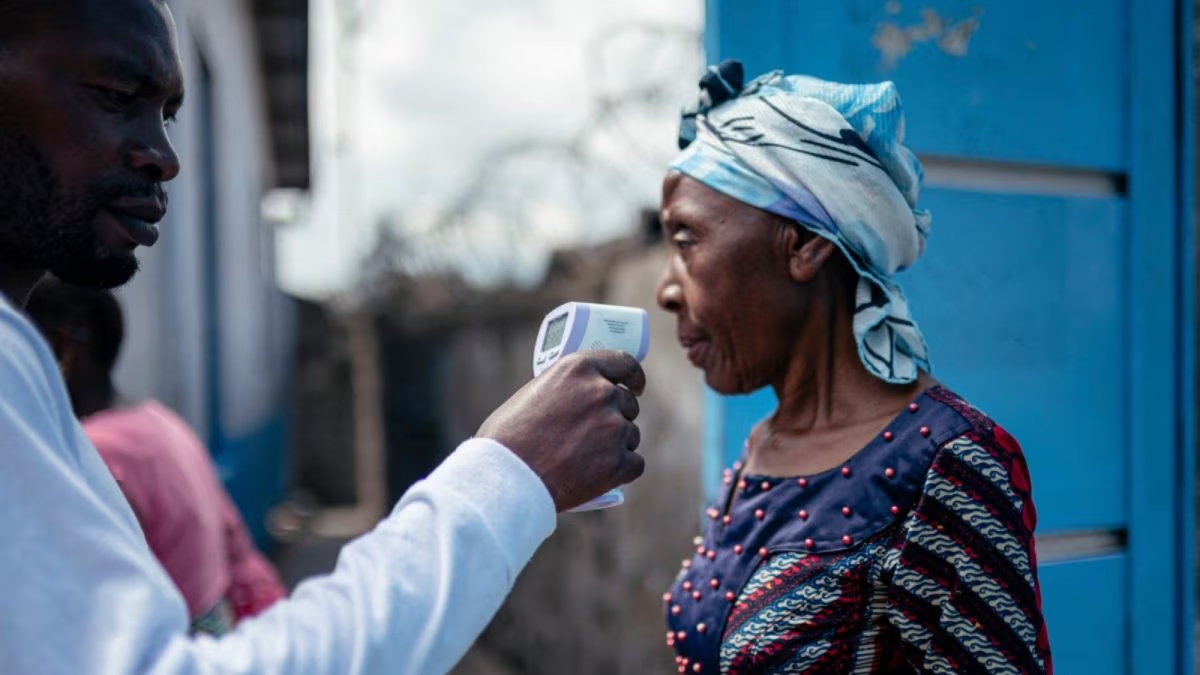
Thermal screening and isolation facilities are operational at major airports, and designated isolation wards for Ebola exist in major hospitals. However, there are concerns regarding traveler screening from Africa becoming less stringent and the unavailability of a stockpile of vaccines against this specific strain of the virus.
Thus, while the risk of an Ebola outbreak in India remains low, officials stress the importance of vigilance as timely interventions are critical in containing any potential spread of the virus.