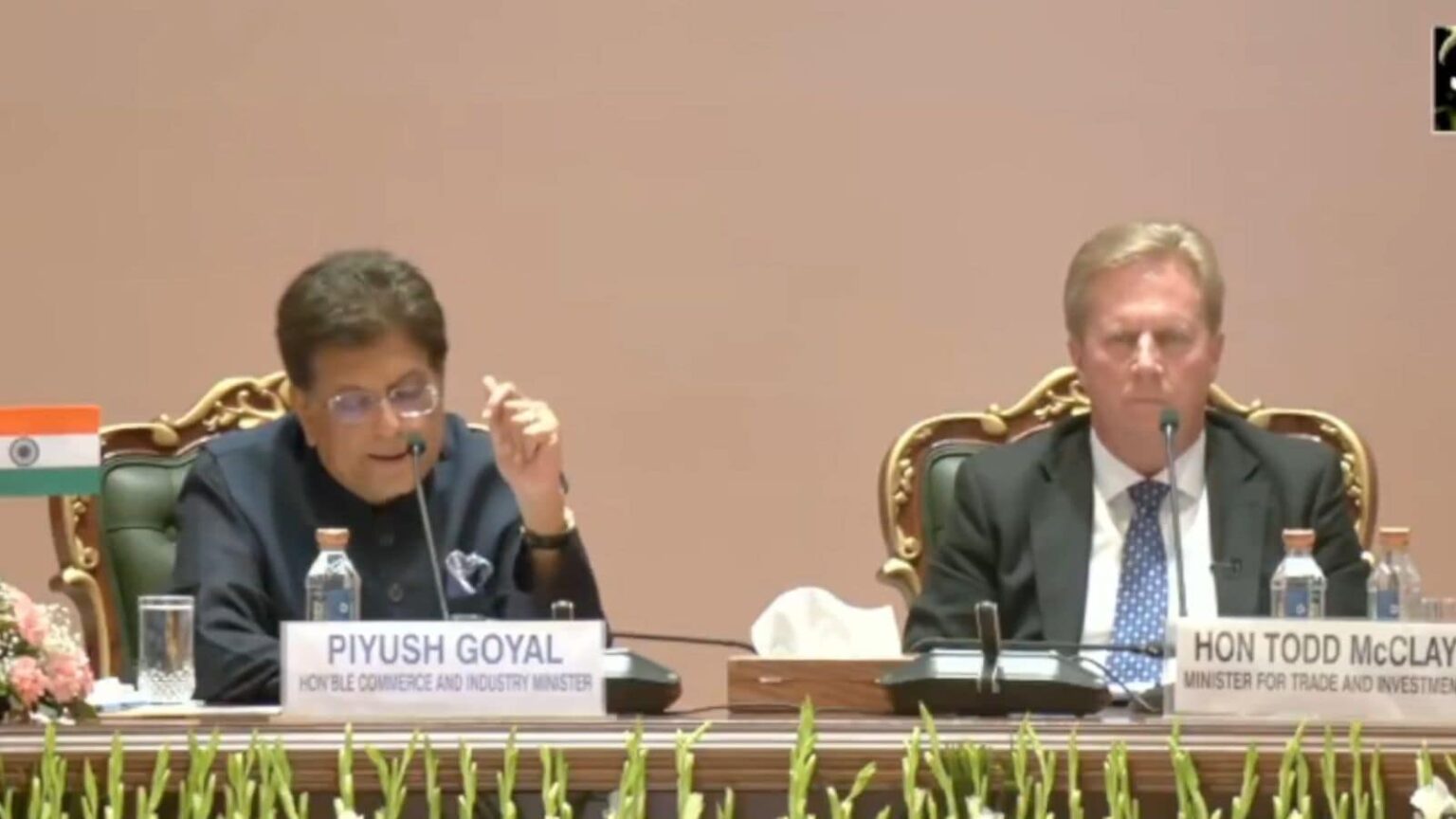
India and New Zealand Sign Free Trade Agreement with $20 Billion Investment Pledge
Overview of the Agreement
India and New Zealand have entered into a Free Trade Agreement (FTA) that was signed on Monday. This agreement aims for the complete elimination of tariffs on all Indian exports to New Zealand, while allowing for tariff reductions on 95% of New Zealand’s imports into India. New Zealand has also pledged to invest $20 billion in India over the next 15 years.
The negotiations for this agreement were concluded in December last year, during a period when India was dealing with high tariffs set by the United States. As part of recent trade agreements with developed nations, India is introducing investment commitments from its partners to balance the significant tariff concessions it is granting. The average tariffs in developed countries typically range from 2-3%, while New Zealand has an average import tariff of 2.3%, compared to India’s average of 16.2%.
Economic and Strategic Significance
Prime Minister Narendra Modi expressed that the FTA will notably benefit various sectors, including Indian farmers, women, micro, small and medium enterprises (MSMEs), artisans, startups, students, and innovators. He also highlighted that New Zealand’s $20 billion investment will enhance cooperation in agriculture, manufacturing, and technology.
Commerce and Industry Minister Piyush Goyal remarked that New Zealand’s investment commitment demonstrates strong confidence in India’s economic prospects. New Zealand Prime Minister Christopher Luxon emphasized that the FTA is an important move that signals a commitment to stable and predictable trade amidst global uncertainties.
Trade Dynamics Under the Agreement
The Commerce Ministry noted that India is liberalizing tariffs on 70.03% of tariff lines, which accounts for 95% of bilateral trade value, while 29.97% of tariff lines remain excluded to protect sensitive sectors. The agreement allows for duty-free access for 100% of India’s exports to New Zealand, encompassing all tariff lines. In the fiscal year 2026, India’s exports to New Zealand totaled $711 million, primarily consisting of aviation fuel, textiles, pharmaceuticals, and machinery.
India’s imports from New Zealand, valued at $587 million, mainly include raw materials, scrap metals, coal, and agricultural inputs. The previous peak tariffs on key Indian exports such as ceramics and automobiles, which reached 10%, will now be reduced to zero-duty market access, allowing Indian products to compete effectively in New Zealand.
Specific Trade Benefits
New Zealand has highlighted several advantages from the agreement, including increased exports of forestry products, sheep meat, wool, and reduced tariffs on key fish and seafood exports over a seven-year period. Additionally, tariffs on New Zealand wine will be cut by 66-83% over ten years.
Notably, New Zealand will gain preferential access for apples—the first such concession in any Indian FTA. The initial quota is set at 32,500 tonnes, increasing to 45,000 tonnes in the sixth year of the agreement, with specific price thresholds and conditions linked to compliance with the Apple Action Plan.
Exclusions and Cautions
The Commerce Ministry has identified several products to be excluded from tariff liberalization, including various dairy products, animal products (except for sheep meat), certain agricultural products, sugar, and gems. New Zealand will, however, have a fast-track process to facilitate duty-free supply of dairy products to India for local manufacturing.
The FTA also contains provisions for mobility, allowing new pathways for Indian students and professionals, with provisions for work permits for graduates and a temporary employment pathway for skilled Indian workers.
Investment Commitment and Concerns
The agreement’s investment commitment contains stipulations that recognize India’s economic growth and its implications for foreign direct investment (FDI). However, experts, including former trade officer Ajay Srivastava, have urged caution regarding the $20 billion investment promise, noting that New Zealand’s actual investment in India has been minimal over the last quarter-century.
Srivastava emphasized the gap between investment pledges and actual inflow, pointing out that previous agreements have often not resulted in tangible economic contributions. The terms of the agreement allow for adjustments to the investment goals in response to unforeseen global events that could affect the stipulated commitments.