

NASA Partners with SpaceX and Blue Origin for Future Moon Landings
Post-Artemis II Developments
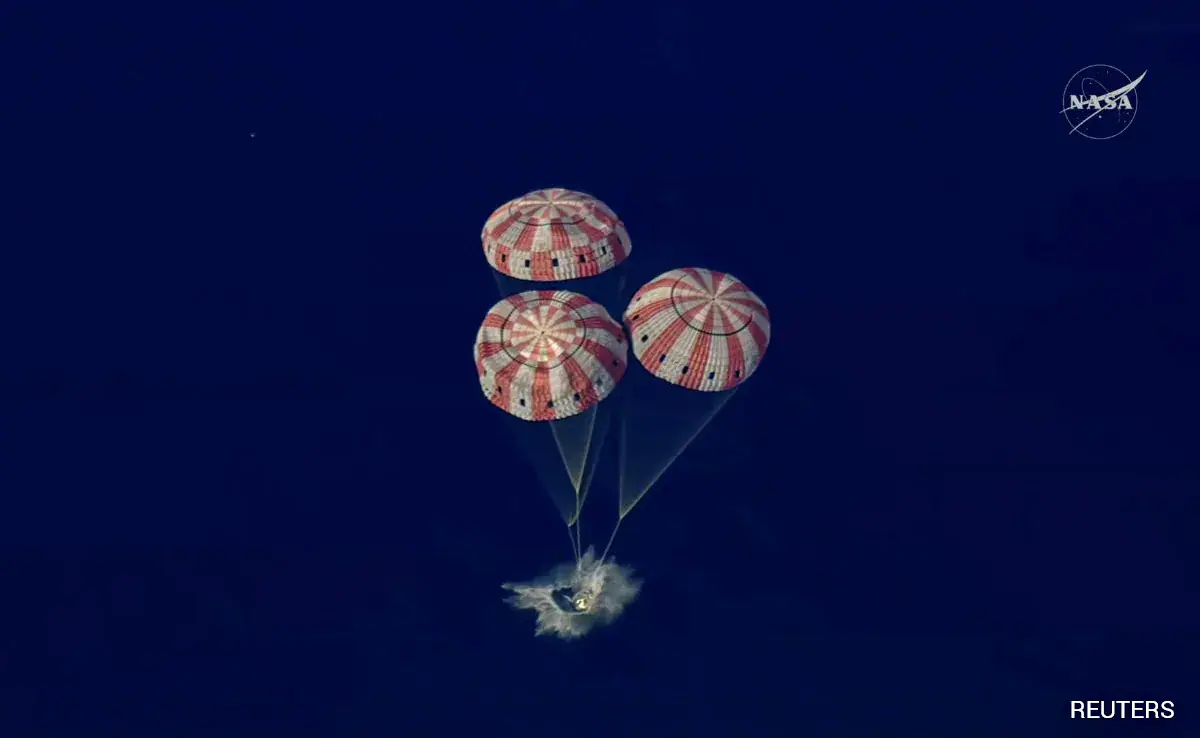
Following the successful completion of the Artemis II lunar mission, NASA is now collaborating with private space companies, specifically SpaceX and Blue Origin, to facilitate astronaut landings on the Moon. The historic Artemis II mission concluded with a splashdown in the Pacific Ocean on Friday, marking a significant milestone in NASA’s lunar exploration efforts.
With the Apollo program having previously set the stage for lunar exploration between 1969 and 1972, sending only two astronauts to the Moon for brief missions, current NASA objectives have evolved significantly. The agency is now aiming to transport four astronauts for missions that could last several weeks and is considering the establishment of a lunar base.
Commercial Lunar Landers
NASA’s strategy for the next phase involves utilizing commercially developed lunar landers from SpaceX and Blue Origin. This approach diverges from the Apollo methodology, wherein a single Saturn V rocket was responsible for launching both the lunar lander and the crew capsule. Instead, NASA is adopting a dual-system strategy: one rocket will launch the Orion spacecraft carrying astronauts, while another will transport the lunar lander, which will be contracted to private companies.
Lori Glaze, the acting associate NASA administrator, emphasized the necessity for industry collaboration at a press conference, stating the urgency for the production of the requisite lunar landers to achieve the goal of a crewed landing by 2028. She expressed the need for all players in the space sector to rise to the challenge.
Technical Considerations
The shift to two separate systems is largely due to the constraints experienced during the Apollo missions, according to Kent Chojnacki, a senior NASA official overseeing lunar lander development. He noted that the previous missions were not sustainable for prolonged exploration efforts. Jack Kiraly, director of government relations at the Planetary Society, described the Apollo missions as akin to “camping trips,” underscoring the short duration and limited scope compared to current aspirations.
The lunar landers being designed by SpaceX and Blue Origin are projected to be notably larger than their Apollo predecessors, ranging from two to seven times their size. This enhancement aims to improve capabilities for longer lunar excursions. NASA is also seeking collaboration from international partners, such as European companies that developed the propulsion systems for the Orion spacecraft.
Challenges Ahead
While this new approach offers expanded access to resources and equipment, it introduces complexities to operational logistics. In particular, the successful completion of in-flight refueling—a maneuver not yet fully tested—will be essential for the transportation of these larger landers to the Moon. Additional rockets may need to be dispatched to deliver the necessary fuel for the approximately 250,000-mile journey from Earth.
Concerns have escalated regarding this new undertaking, particularly in light of delays faced by SpaceX, which was initially anticipated to deliver its lunar lander first. Some former NASA officials have expressed apprehension, warning that the U.S. risks losing its competitive edge in lunar exploration to nations like China, which has ambitions to send humans to the Moon by 2030.
Future Timelines and Plans
In response to these challenges, NASA has indicated potential adjustments to contracts awarded to SpaceX, exploring the feasibility of employing Blue Origin’s lunar lander as an alternative. This possibility has compelled both companies to realign their strategies to ensure they remain competitive for NASA contracts.
The agency is also developing contingency plans to address any potential setbacks, with plans for testing in-orbit rendezvous between spacecraft and lunar landers in 2027. A crewed lunar landing is targeted for 2028, contingent upon successful completion of upcoming unmanned tests of the lunar lander to ensure safety. The timeline for these tasks remains tight, raising concerns among experts in the field regarding the feasibility of meeting these targets within the designated timeframe.
Follow US
https://www.facebook.com/charchaexpress
https://www.youtube.com/@charcha-express
https://www.instagram.com/charcha.express/
Contents
Post-Artemis II DevelopmentsFollowing the successful completion of the Artemis II lunar mission, NASA is now collaborating with private space companies, specifically SpaceX and Blue Origin, to facilitate astronaut landings on the Moon. The historic Artemis II mission concluded with a splashdown in the Pacific Ocean on Friday, marking a significant milestone in NASA’s lunar exploration efforts.With the Apollo program having previously set the stage for lunar exploration between 1969 and 1972, sending only two astronauts to the Moon for brief missions, current NASA objectives have evolved significantly. The agency is now aiming to transport four astronauts for missions that could last several weeks and is considering the establishment of a lunar base.Commercial Lunar LandersNASA’s strategy for the next phase involves utilizing commercially developed lunar landers from SpaceX and Blue Origin. This approach diverges from the Apollo methodology, wherein a single Saturn V rocket was responsible for launching both the lunar lander and the crew capsule. Instead, NASA is adopting a dual-system strategy: one rocket will launch the Orion spacecraft carrying astronauts, while another will transport the lunar lander, which will be contracted to private companies.Lori Glaze, the acting associate NASA administrator, emphasized the necessity for industry collaboration at a press conference, stating the urgency for the production of the requisite lunar landers to achieve the goal of a crewed landing by 2028. She expressed the need for all players in the space sector to rise to the challenge.Technical ConsiderationsThe shift to two separate systems is largely due to the constraints experienced during the Apollo missions, according to Kent Chojnacki, a senior NASA official overseeing lunar lander development. He noted that the previous missions were not sustainable for prolonged exploration efforts. Jack Kiraly, director of government relations at the Planetary Society, described the Apollo missions as akin to “camping trips,” underscoring the short duration and limited scope compared to current aspirations.The lunar landers being designed by SpaceX and Blue Origin are projected to be notably larger than their Apollo predecessors, ranging from two to seven times their size. This enhancement aims to improve capabilities for longer lunar excursions. NASA is also seeking collaboration from international partners, such as European companies that developed the propulsion systems for the Orion spacecraft.Challenges AheadWhile this new approach offers expanded access to resources and equipment, it introduces complexities to operational logistics. In particular, the successful completion of in-flight refueling—a maneuver not yet fully tested—will be essential for the transportation of these larger landers to the Moon. Additional rockets may need to be dispatched to deliver the necessary fuel for the approximately 250,000-mile journey from Earth.Concerns have escalated regarding this new undertaking, particularly in light of delays faced by SpaceX, which was initially anticipated to deliver its lunar lander first. Some former NASA officials have expressed apprehension, warning that the U.S. risks losing its competitive edge in lunar exploration to nations like China, which has ambitions to send humans to the Moon by 2030.Future Timelines and PlansIn response to these challenges, NASA has indicated potential adjustments to contracts awarded to SpaceX, exploring the feasibility of employing Blue Origin’s lunar lander as an alternative. This possibility has compelled both companies to realign their strategies to ensure they remain competitive for NASA contracts.The agency is also developing contingency plans to address any potential setbacks, with plans for testing in-orbit rendezvous between spacecraft and lunar landers in 2027. A crewed lunar landing is targeted for 2028, contingent upon successful completion of upcoming unmanned tests of the lunar lander to ensure safety. The timeline for these tasks remains tight, raising concerns among experts in the field regarding the feasibility of meeting these targets within the designated timeframe.