

Artemis II Mission Marks Return of Astronauts After Historic Journey Around the Moon
Return of the Crew
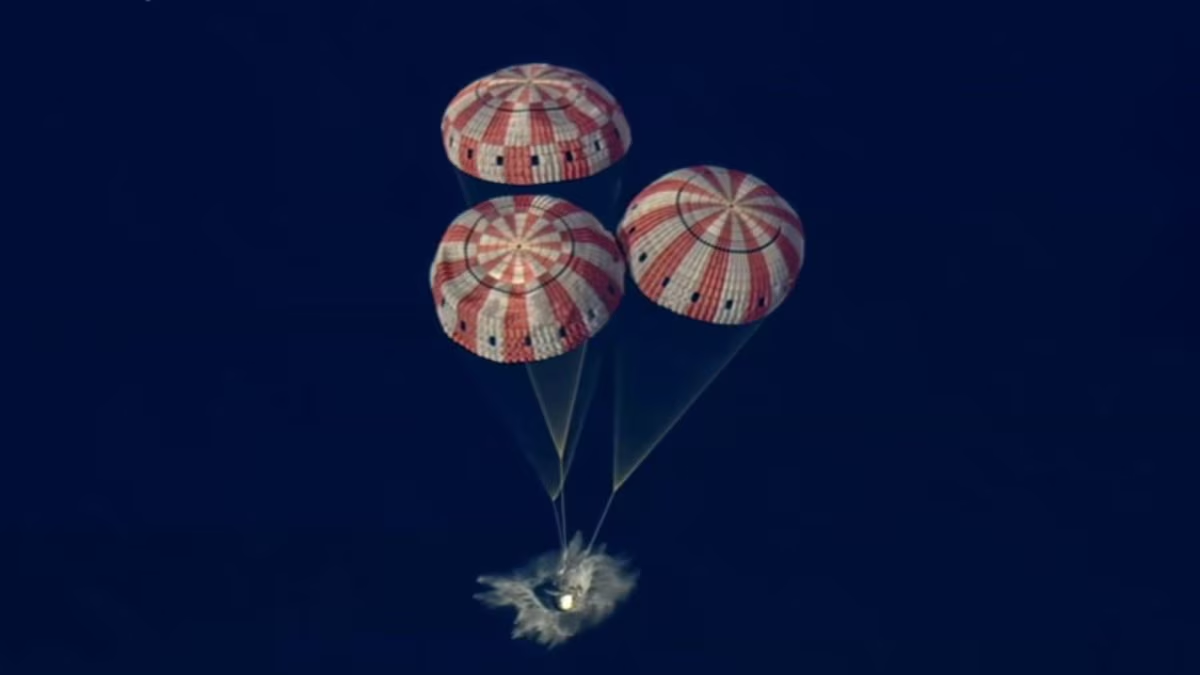
Four astronauts aboard NASA’s Artemis II mission successfully returned to Earth after a significant journey around the Moon. The Orion spacecraft, featuring astronauts Reid Wiseman, Victor Glover, Christina Koch from the United States, and Jeremy Hansen from Canada, splashed down in the Pacific Ocean off the southern California coast at 5:37 AM IST on April 11. This mission marks the first near-Moon expedition in over five decades, although the crew did not land on the lunar surface.
The Artemis II spacecraft reached a remarkable distance of 406,778 kilometers from Earth, surpassing the furthest distance achieved by the Apollo 13 mission in 1970 by approximately 6,606 kilometers. The mission duration was ten days, during which the astronauts covered about 1.12 million kilometers in total. However, this distance is not the highest recorded by a crewed mission; the Apollo 17 mission, for example, managed a total distance of approximately 2.38 million kilometers.
Understanding the Mission Distances
The average distance from the Earth to the Moon is about 384,400 kilometers, suggesting a round-trip journey would involve at least 768,800 kilometers. Nevertheless, actual travel distances for such missions can be complex, influenced by the elliptical orbits of both Earth and the Moon. The trajectory and distance covered during missions are determined by various factors, including the time spent in both lunar and Earth orbits.
Re-Entry and Splashdown Procedures
As the Orion spacecraft re-entered Earth’s atmosphere, it was traveling at a velocity between 11 to 12 kilometers per second (approximately 40,000 to 42,000 kilometers per hour), significantly faster than the 26,000 to 28,000 kilometers per hour commonly associated with spacecraft returning from the International Space Station. This increased speed results from the extended time spent under Earth’s gravity during lunar missions, compared to the relatively close orbit of the ISS at around 400 kilometers from the Earth’s surface.
The higher speeds necessitate more robust designs for lunar-returning spacecraft, which must endure greater physical stresses during re-entry. The Orion spacecraft executed a rapid deceleration upon re-entry, deploying its initial set of parachutes at an altitude of about 6 kilometers and another set at around 2 kilometers from the surface. Ultimately, the spacecraft slowed to approximately 30 kilometers per hour at the time of splashdown.
Post-Splashdown Procedures
Upon landing, teams from NASA and the U.S. military were positioned at multiple locations near the splashdown site to recover the astronauts and transport them to a nearby ship. This collaborative effort ensured a smooth extraction and post-mission transition for the crew members.
Significance of the Artemis II Mission
The successful completion of the Artemis II mission paves the way for the first crewed Moon landing in over fifty years, currently anticipated for 2028. As the inaugural crewed mission of NASA’s Artemis program, this journey seeks to return humans to the Moon after the historic Apollo missions, which allowed twelve astronauts to walk on the lunar surface across six missions.
While the Apollo missions occurred shortly after the onset of the space age, leading to remarkable technological advancements, the subsequent lunar exploration efforts have started anew from the early 2000s, initially focusing on sending orbiters. The upcoming human landings are expected to serve as crucial milestones in fostering deeper engagement with the Moon and possibly using it as a platform for further space exploration.
The Artemis program aims to establish a sustainable human presence on the Moon through multiple missions, utilizing both crewed and robotic missions to transport resources and equipment necessary for prolonged habitation. Over time, these initiatives will contribute to the development of a permanent lunar settlement, enabling frequent travel by humans to the surface of the Moon.
Follow US
https://www.facebook.com/charchaexpress
https://www.youtube.com/@charcha-express
https://www.instagram.com/charcha.express/
Contents
Return of the CrewFour astronauts aboard NASA’s Artemis II mission successfully returned to Earth after a significant journey around the Moon. The Orion spacecraft, featuring astronauts Reid Wiseman, Victor Glover, Christina Koch from the United States, and Jeremy Hansen from Canada, splashed down in the Pacific Ocean off the southern California coast at 5:37 AM IST on April 11. This mission marks the first near-Moon expedition in over five decades, although the crew did not land on the lunar surface.The Artemis II spacecraft reached a remarkable distance of 406,778 kilometers from Earth, surpassing the furthest distance achieved by the Apollo 13 mission in 1970 by approximately 6,606 kilometers. The mission duration was ten days, during which the astronauts covered about 1.12 million kilometers in total. However, this distance is not the highest recorded by a crewed mission; the Apollo 17 mission, for example, managed a total distance of approximately 2.38 million kilometers.Understanding the Mission DistancesThe average distance from the Earth to the Moon is about 384,400 kilometers, suggesting a round-trip journey would involve at least 768,800 kilometers. Nevertheless, actual travel distances for such missions can be complex, influenced by the elliptical orbits of both Earth and the Moon. The trajectory and distance covered during missions are determined by various factors, including the time spent in both lunar and Earth orbits.Re-Entry and Splashdown ProceduresAs the Orion spacecraft re-entered Earth’s atmosphere, it was traveling at a velocity between 11 to 12 kilometers per second (approximately 40,000 to 42,000 kilometers per hour), significantly faster than the 26,000 to 28,000 kilometers per hour commonly associated with spacecraft returning from the International Space Station. This increased speed results from the extended time spent under Earth’s gravity during lunar missions, compared to the relatively close orbit of the ISS at around 400 kilometers from the Earth’s surface.The higher speeds necessitate more robust designs for lunar-returning spacecraft, which must endure greater physical stresses during re-entry. The Orion spacecraft executed a rapid deceleration upon re-entry, deploying its initial set of parachutes at an altitude of about 6 kilometers and another set at around 2 kilometers from the surface. Ultimately, the spacecraft slowed to approximately 30 kilometers per hour at the time of splashdown.Post-Splashdown ProceduresUpon landing, teams from NASA and the U.S. military were positioned at multiple locations near the splashdown site to recover the astronauts and transport them to a nearby ship. This collaborative effort ensured a smooth extraction and post-mission transition for the crew members.Significance of the Artemis II MissionThe successful completion of the Artemis II mission paves the way for the first crewed Moon landing in over fifty years, currently anticipated for 2028. As the inaugural crewed mission of NASA’s Artemis program, this journey seeks to return humans to the Moon after the historic Apollo missions, which allowed twelve astronauts to walk on the lunar surface across six missions.While the Apollo missions occurred shortly after the onset of the space age, leading to remarkable technological advancements, the subsequent lunar exploration efforts have started anew from the early 2000s, initially focusing on sending orbiters. The upcoming human landings are expected to serve as crucial milestones in fostering deeper engagement with the Moon and possibly using it as a platform for further space exploration.The Artemis program aims to establish a sustainable human presence on the Moon through multiple missions, utilizing both crewed and robotic missions to transport resources and equipment necessary for prolonged habitation. Over time, these initiatives will contribute to the development of a permanent lunar settlement, enabling frequent travel by humans to the surface of the Moon.