Workers’ Protest in Noida Erupts into Violence Following Wage Disparities
Protests Escalate in Noida
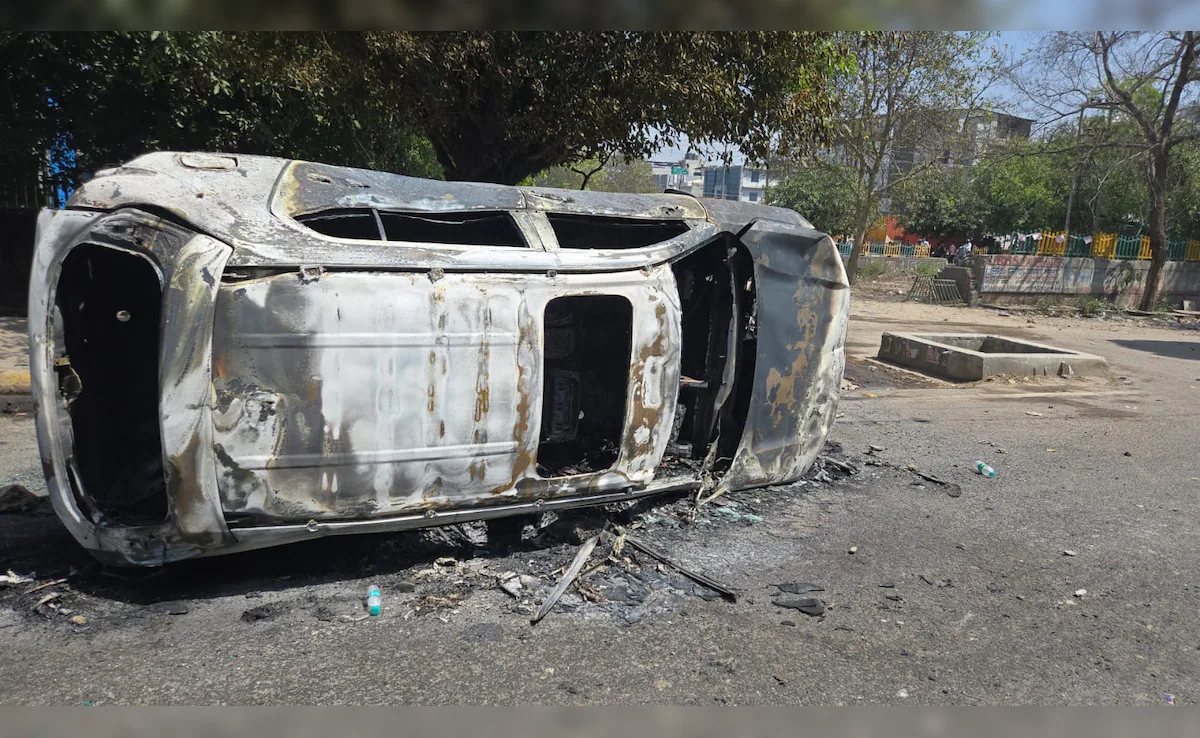
A significant protest by factory workers in Noida has turned violent, leading to the vandalism of vehicles and stone pelting as law enforcement attempts to control the situation. Footage captures workers damaging a police van and other vehicles in Phase 2 of Noida, an area housing numerous factories. The workers, representing various industrial units, are demanding higher salaries and improved benefits. In response to the escalating unrest, additional police reinforcements have been dispatched to maintain order. The protests have resulted in heavy traffic congestion on major roads in Noida on a Monday morning.
Uttar Pradesh Chief Minister Yogi Adityanath emphasized the necessity for workers to receive fair compensation while urging industries to adhere to labor laws. He has directed authorities to take stringent action against individuals attempting to incite unrest among workers. Footage from the protest highlights the chaos, showing vandalism and aggression among the demonstrators, with police deployment being intensified in a bid to restore calm.
Demands for Wage Increases
Recent protests by factory workers have centered on demands for higher wages and enhanced working conditions, sparked by the Haryana government’s announcement of a 35 percent increase in the minimum wage for unskilled workers, which rose from Rs 11,274 to Rs 15,220 per month. The minimum wage for semi-skilled workers in Haryana has also been adjusted from Rs 12,430.18 to Rs 16,780.74 per month, alongside similar increases for skilled and highly skilled workers.
Workers in Noida are advocating for a comparable wage increase from the Uttar Pradesh government, asserting that their counterparts in Haryana receive higher pay for equivalent jobs. They are also raising issues regarding unsafe working environments, insufficient weekly time off, and the lack of effective grievance resolution mechanisms. One worker, Lakshmi, articulated the primary demands, stating, “We are just asking for two things. One is overtime pay, and the other is a minimum wage of Rs 20,000 a month.” She pointed out that workers are not receiving timely meals and that safety conditions for women are inadequate.
Another protester, Akshay, noted that companies in Gurugram have begun offering salaries of Rs 20,000. “We are receiving Rs 10,000, and sometimes Rs 1,000 gets deducted,” he remarked, highlighting the significant wage gap with neighboring areas. Ankur Kumar, another demonstrator, questioned, “What is the point of working in big cities if there is no pay parity? We are being exploited by the system,” and expressed frustration regarding the violent response to their efforts to advocate for change.
Police Response and Government Action
The Noida police have reported that senior officers have been dispatched to the protest site, with ongoing monitoring of the developments. Law enforcement aims to engage with workers and encourage a peaceful resolution, employing minimal force to manage the situation. The police have also appealed for calm and urged the public not to heed rumors circulating about the protests.
Chief Minister Adityanath has reiterated the importance of fair compensation, safe work environments, and basic facilities for all workers. He has called on industrial entities to comply with labor laws and address worker grievances. The state labor department has been instructed to initiate discussions with local administrations and industrial units regarding these issues.
In a bid to maintain order, Noida district magistrate Medha Roopam has urged workers to ignore misinformation and return to work peacefully. She encouraged cooperation to foster harmony and law and order in the district, also providing control room contact numbers for workers in need of assistance.