
BJP Unveils Election Manifesto for West Bengal Assembly Polls
Amit Shah Introduces the Party’s Commitments
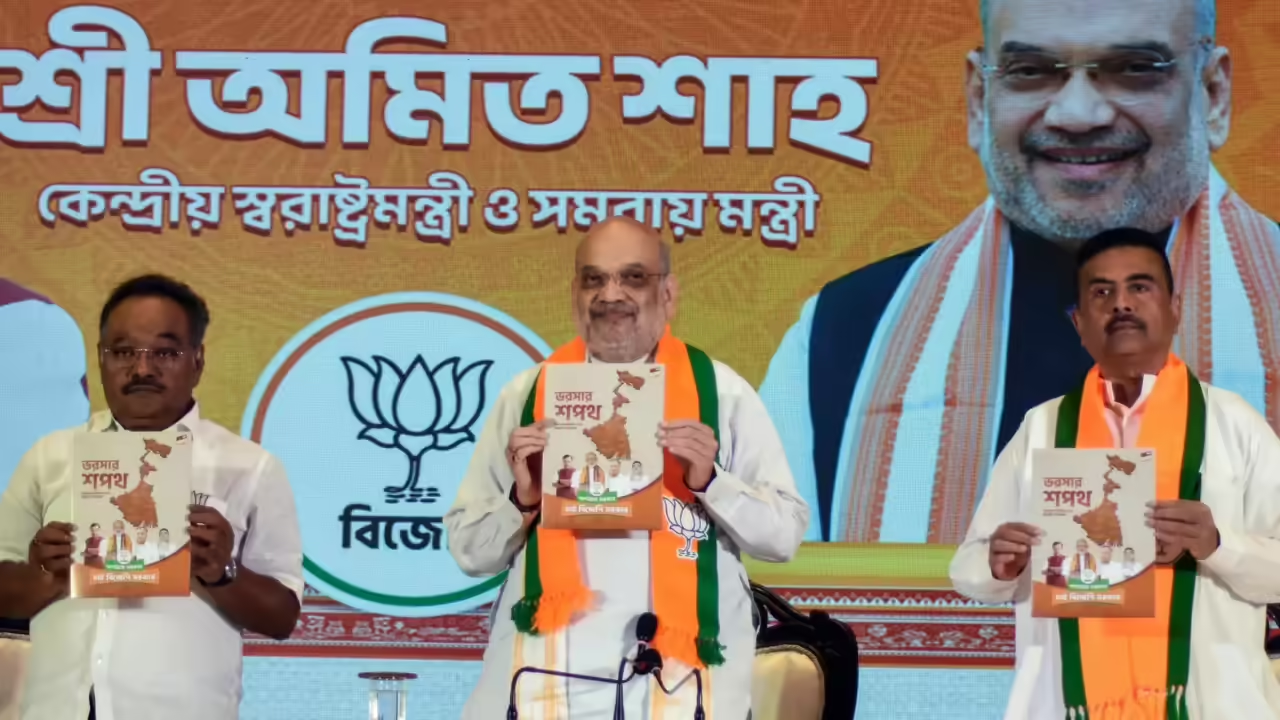
The Bharatiya Janata Party (BJP) released its election manifesto for the West Bengal Assembly polls on Friday, outlining a comprehensive array of promises aimed at welfare, governance reforms, security, and economic development. Union Home Minister Amit Shah presented the ‘Sankalp Patra,’ describing it as a strategy for the creation of a “Sonar Bangla.” During the event, he criticized the ruling All India Trinamool Congress government, accusing it of 15 years of misgovernance.
Key promises highlighted in BJP’s manifesto include financial assistance and job support for various demographics within West Bengal. The party committed to providing Rs 3,000 monthly financial assistance to women heads of families and a similar allowance for unemployed youth. It also pledged Rs 15,000 for youths preparing for competitive exams and a five-year age relaxation for those who lost job opportunities due to corruption.
Implementation of Pay Commission and Governance Reforms
The BJP’s manifesto indicates that the Seventh Pay Commission will be executed within 45 days of forming the government, alongside the clearance of dearness allowance (DA) arrears within the same timeframe. Furthermore, the party has promised 33% reservation for women in all state government jobs, including positions in the police force.
Another significant commitment from the manifesto is the implementation of the Uniform Civil Code (UCC) within six months. Additionally, the party plans to integrate the state health scheme with the Central government’s Ayushman Bharat scheme to ensure free medical treatment for economically disadvantaged individuals.
Policy Measures and Infrastructure Development
The BJP has outlined a strict policy titled “detect, delete, and deport” aimed at controlling illegal immigration. The manifesto also includes a commitment to a crackdown on cattle smuggling in border regions. The party assured that all Central government welfare schemes would be effectively executed in West Bengal, aiming to strengthen the state’s welfare framework.
On the infrastructure front, the BJP plans to establish prestigious institutions such as AIIMS, IIT, IIM, and a fashion design institute in northern Bengal districts. In addition, the manifesto proposes the development of four new townships to foster economic growth, and the construction of a Vande Mataram museum to enhance and preserve Bengal’s cultural heritage.
Political Messaging and Future Plans
Amit Shah emphasized that the manifesto serves as a blueprint for development and empowerment, encapsulating the BJP’s vision for a “Sonar Bangla.” He characterized the governance experience under the current administration as a “nightmare” for the residents of West Bengal. In a definitive political message, Shah asserted that the next Chief Minister would be a person from Bengal, showcasing the party’s commitment to local leadership.
The BJP’s plan is structured around key pillars of security, welfare delivery, and economic expansion, marking its strategic approach as the party prepares for the competitive electoral landscape ahead of the West Bengal Assembly polls.
Follow US
https://www.facebook.com/charchaexpress
https://www.youtube.com/@charcha-express
https://www.instagram.com/charcha.express/
Contents
Amit Shah Introduces the Party’s CommitmentsThe Bharatiya Janata Party (BJP) released its election manifesto for the West Bengal Assembly polls on Friday, outlining a comprehensive array of promises aimed at welfare, governance reforms, security, and economic development. Union Home Minister Amit Shah presented the ‘Sankalp Patra,’ describing it as a strategy for the creation of a “Sonar Bangla.” During the event, he criticized the ruling All India Trinamool Congress government, accusing it of 15 years of misgovernance.Key promises highlighted in BJP’s manifesto include financial assistance and job support for various demographics within West Bengal. The party committed to providing Rs 3,000 monthly financial assistance to women heads of families and a similar allowance for unemployed youth. It also pledged Rs 15,000 for youths preparing for competitive exams and a five-year age relaxation for those who lost job opportunities due to corruption.Implementation of Pay Commission and Governance ReformsThe BJP’s manifesto indicates that the Seventh Pay Commission will be executed within 45 days of forming the government, alongside the clearance of dearness allowance (DA) arrears within the same timeframe. Furthermore, the party has promised 33% reservation for women in all state government jobs, including positions in the police force.Another significant commitment from the manifesto is the implementation of the Uniform Civil Code (UCC) within six months. Additionally, the party plans to integrate the state health scheme with the Central government’s Ayushman Bharat scheme to ensure free medical treatment for economically disadvantaged individuals.Policy Measures and Infrastructure DevelopmentThe BJP has outlined a strict policy titled “detect, delete, and deport” aimed at controlling illegal immigration. The manifesto also includes a commitment to a crackdown on cattle smuggling in border regions. The party assured that all Central government welfare schemes would be effectively executed in West Bengal, aiming to strengthen the state’s welfare framework.On the infrastructure front, the BJP plans to establish prestigious institutions such as AIIMS, IIT, IIM, and a fashion design institute in northern Bengal districts. In addition, the manifesto proposes the development of four new townships to foster economic growth, and the construction of a Vande Mataram museum to enhance and preserve Bengal’s cultural heritage.Political Messaging and Future PlansAmit Shah emphasized that the manifesto serves as a blueprint for development and empowerment, encapsulating the BJP’s vision for a “Sonar Bangla.” He characterized the governance experience under the current administration as a “nightmare” for the residents of West Bengal. In a definitive political message, Shah asserted that the next Chief Minister would be a person from Bengal, showcasing the party’s commitment to local leadership.The BJP’s plan is structured around key pillars of security, welfare delivery, and economic expansion, marking its strategic approach as the party prepares for the competitive electoral landscape ahead of the West Bengal Assembly polls.