During a military parade in Beijing in September, President Xi Jinping, accompanied by Russian President Vladimir Putin and North Korean leader Kim Jong Un, observed the display of China’s advanced drone capabilities. The showcased models included drones capable of autonomously flying alongside fighter jets into battle. The demonstration raised concerns among U.S. officials, who assessed that America’s unmanned combat drone program was falling behind that of China. Sources indicated that Russia was also perceived to be making strides in developing advanced drone production facilities, although officials noted they could not speak publicly about the military capabilities of these nations.
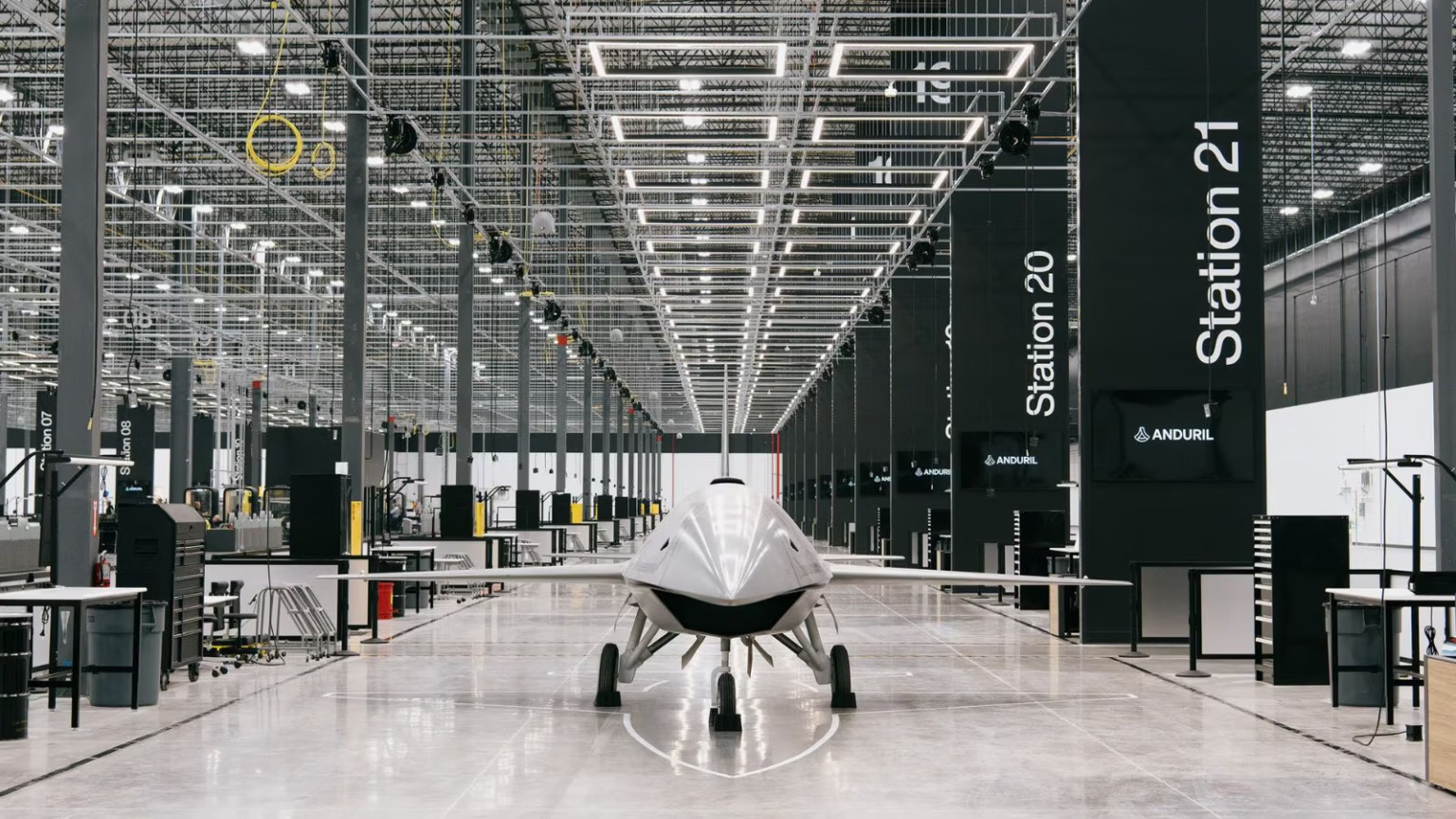
In reaction, officials from the United States urged domestic defense companies to enhance their efforts. Notably, Anduril, a California-based defense technology startup, announced the commencement of production for artificial intelligence-enabled self-flying drones, similar to those exhibited by China. This production began at a facility near Columbus, Ohio, ahead of schedule and is part of the U.S. ambition to narrow the technological gap with its global competitors.
AI-Backed Autonomous Weapons Development
The military display in China and the U.S. countermeasures underscore an escalating global arms race focused on AI-supported autonomous weaponry and defense systems. These technologies aim to operate independently, minimizing the necessity for human input in critical combat decisions. Countries worldwide, including India, Israel, Iran, and Ukraine, are reportedly investing significantly in military AI advancements. European nations such as France, Germany, and Poland are also increasing defense budgets amid uncertainties regarding NATO commitments.
As nations strive to maintain an edge in technological capabilities, the aim is to prepare for potential confrontations characterized by drone-to-drone and algorithmic warfare that surpass human capabilities. Russian, Chinese, and American leaders are building these AI arsenals, viewing them as essential for deterrence and a new form of “mutually assured destruction,” according to defense experts.
Historical Comparisons and Military Implications
The ongoing buildup of AI military capabilities has been likened to the onset of the nuclear age, which led to prolonged nuclear standoffs. However, the military implications of AI are still emerging, as this technology introduces unprecedented speed and unpredictability on the battlefield. Currently, the extent to which each nation has progressed remains uncertain due to classified budgets and varying development phases.
China and Russia are reportedly trialing systems that allow AI to autonomously make battlefield decisions. For instance, China is working on coordinated operations between multiple autonomous drones, while Russia is focused on its Lancet drone, which can identify targets without human intervention. Notably, insights from industry experts indicate the urgent need for nations to adapt to rapidly evolving AI capabilities and technologies.
Investment and Ethical Concerns
Billions of dollars are being injected into these military AI initiatives, with the Pentagon’s latest budget request exceeding $13 billion for autonomous systems. China is purportedly investing similarly in AI technologies through incentives for private sector collaborations. Meanwhile, Russia leverages its military activities in Ukraine as a testing ground for their drone systems.
Liu Pengyu, a spokesperson for the Chinese Embassy in Washington, emphasized China’s stance on establishing international regulations for military AI while advocating for a cautious approach to AI development. The dynamics surrounding AI weaponry reflect nuances distinct from those seen during the Cold War, given that private sector startups are increasingly influential in military advancements.
Developments in AI Technology
Progress in military AI has shifted dramatically. In 2016, China showcased a coordinated operation of 67 drones at an air show, while in 2014, Russia outlined goals to achieve a significant portion of its military capability through autonomous systems by 2025. Despite initial setbacks, the development persisted, and in recent conflicts like the one in Ukraine, novel unmanned systems have been successfully deployed.
The ongoing warfare in Ukraine has expedited advancements in drone technology, showcasing the effective use of inexpensive, repurposed devices for tactical advantages. Both Ukraine and Russia are enhancing autonomous capabilities in their respective drone programs, utilizing lessons from ongoing operations on the battlefield.
Future of AI Warfare
While various nations push forward with their military AI programs, experts highlight the urgency of clarifying the ethical boundaries regarding AI’s role in warfare. The only notable commitment between the U.S. and China thus far is a non-binding agreement to maintain human oversight over nuclear decisions. The rapid development of AI technologies may lead to unforeseen consequences, necessitating proactive measures from global powers before the control over such systems is lost.
The prospect of AI’s impact on warfare is profound, with some stating it will redefine military strategies much like past technological revolutions. As nations race to leverage AI in defense, the implications of this arms race continue to unfold amid ethical, strategic, and operational considerations that demand careful deliberation.