Madhya Pradesh Politicians Focus on Rajya Sabha Elections in Kerala and Tamil Nadu
Impact of Polling on Madhya Pradesh’s Political Landscape
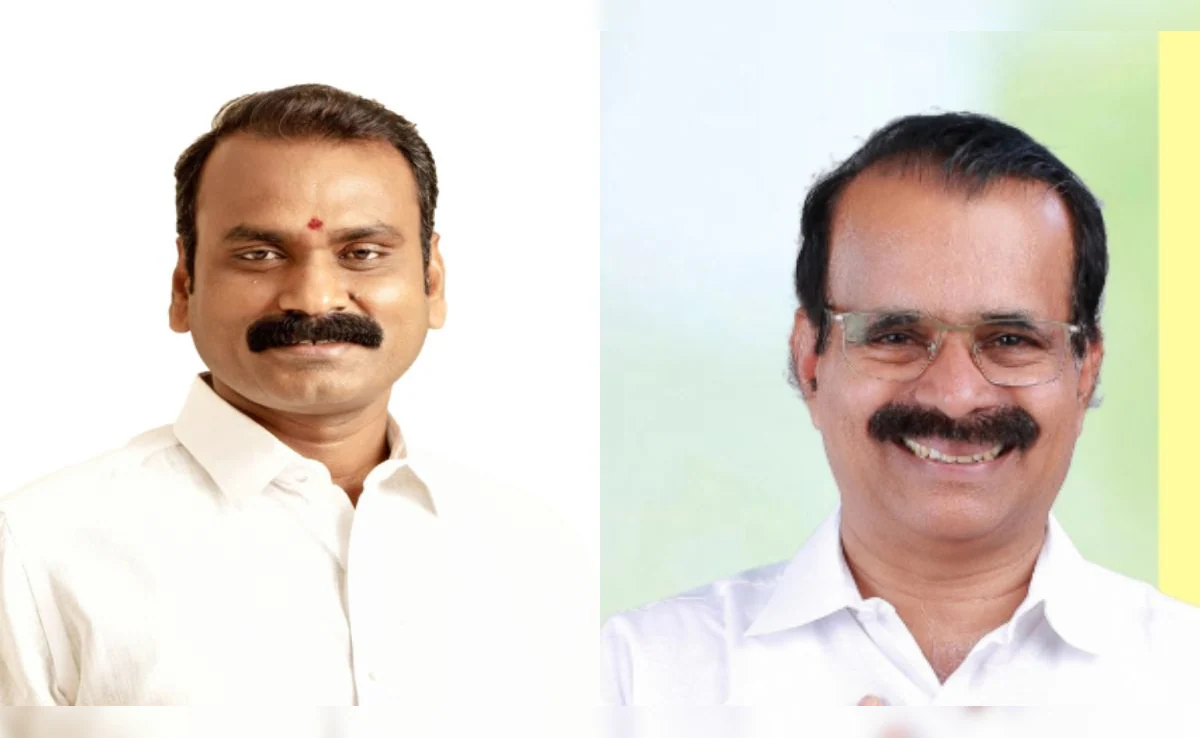
Bhopal: The results of elections for two Rajya Sabha seats in Kerala and Tamil Nadu could significantly influence political dynamics in Madhya Pradesh, located nearly 2,000 kilometers away. Union Ministers Dr. L Murugan and George Kurian, both Rajya Sabha MPs from Madhya Pradesh, are candidates in Tamil Nadu and Kerala, respectively. Their electoral outcomes may lead to vacancies in Madhya Pradesh’s Rajya Sabha representation, intensifying political maneuvering within the state.
This month, three Rajya Sabha seats from Madhya Pradesh became vacant following the completion of terms for veteran Congress leader Digvijaya Singh and BJP members Dr. Sumer Singh Solanki and George Kurian. Should Murugan win in Tamil Nadu and assume a role in the state Assembly, a fourth seat from Madhya Pradesh would open up. Such developments could catalyze significant political reconfiguration, potentially affecting the balance of power between the BJP and the Congress.
Understanding the Electoral Numbers
The election process for Rajya Sabha seats follows a specific voting formula: (Total MLAs divided by (Number of vacant seats + 1) + 1). In Madhya Pradesh’s case, with 230 MLAs, if three seats are vacated, the calculation would be (230 divided by (3 + 1) + 1), resulting in a required quota of 58 votes to secure a Rajya Sabha seat.
The BJP, which boasts over 160 MLAs, is well-positioned to win two seats comfortably. The Congress, holding 65 MLAs, can reasonably secure one seat. However, complications arise as Rajendra Bhati, a Congress member, has been disqualified following a conviction, and Mukesh Malhotra’s election has been annulled due to undisclosed criminal charges. Additionally, Nirmala Sapre, who defected from Congress to the BJP, cannot contribute to the voting pool. Consequently, the Congress effectively has 62 available votes, just four above the necessary threshold, implying that cross-voting by four MLAs could jeopardize their secured position.
Recent interactions among MLAs at events affiliated with the RSS, alongside visible ideological divides, suggest underlying tensions that further complicate the voting landscape. The BJP currently possesses 47 extra votes but remains 11 votes shy of the quota. There are indications that the party may reach out to some Congress MLAs, leveraging the internal strife to potentially alter the outcome in their favor.
Potential Political Shifts and New Candidates
If Dr. Murugan’s election leads to his departure from Rajya Sabha, the required quota would decrease to 47, intensifying the competition for the remaining seats. This scenario also carries further implications for the Union Cabinet. Should Murugan and Kurian transition to state politics, leaders in Madhya Pradesh are already positioning themselves for potential openings in Prime Minister Modi’s team.
Among those mentioned are Harsh Chouhan and Ranjana Baghel, whose names are circulating as possible candidates for government roles. Concurrently, discussions are heating up within state Congress ranks, particularly with Digvijaya Singh announcing he will not seek a third term in the Rajya Sabha. This has prompted a surge of lobbying efforts focused on various community representations, including Dalit, Brahmin, and Sindhi, turning the candidate selection process into a sensitive balancing act.
Additionally, Kamleshwar Dodiyar, the sole MLA from the Bharat Adivasi Party, has indicated his intention to field a candidate. In such a closely contested environment, even a single vote could dramatically influence the overall election outcome.