

Congress Councillors Reject Vande Mataram, Ignite Political Controversy in Madhya Pradesh
Incidents Unfold in Indore Municipal Corporation Meeting
On Wednesday, a routine budget discussion at the Indore Municipal Corporation escalated into a significant political and ideological conflict when two Congress councillors opted not to sing Vande Mataram during the proceedings, causing chaos in the assembly. The incident involved Congress councillors Fauzia Sheikh Aleem and Rubina Iqbal, who raised objections to the inclusion of the national song.
The confrontation began when Fauzia challenged the authority of the Chair and questioned the legal basis for the directive, demanding to see the specific law that mandates the singing of Vande Mataram within the municipal body. Her inquiry incited a swift and aggressive response from BJP councillors, who accused her of disrespecting national sentiments. The atmosphere grew tense as slogans were shouted, and the assembly descended into turmoil.
Calls for Order and Escalating Tensions
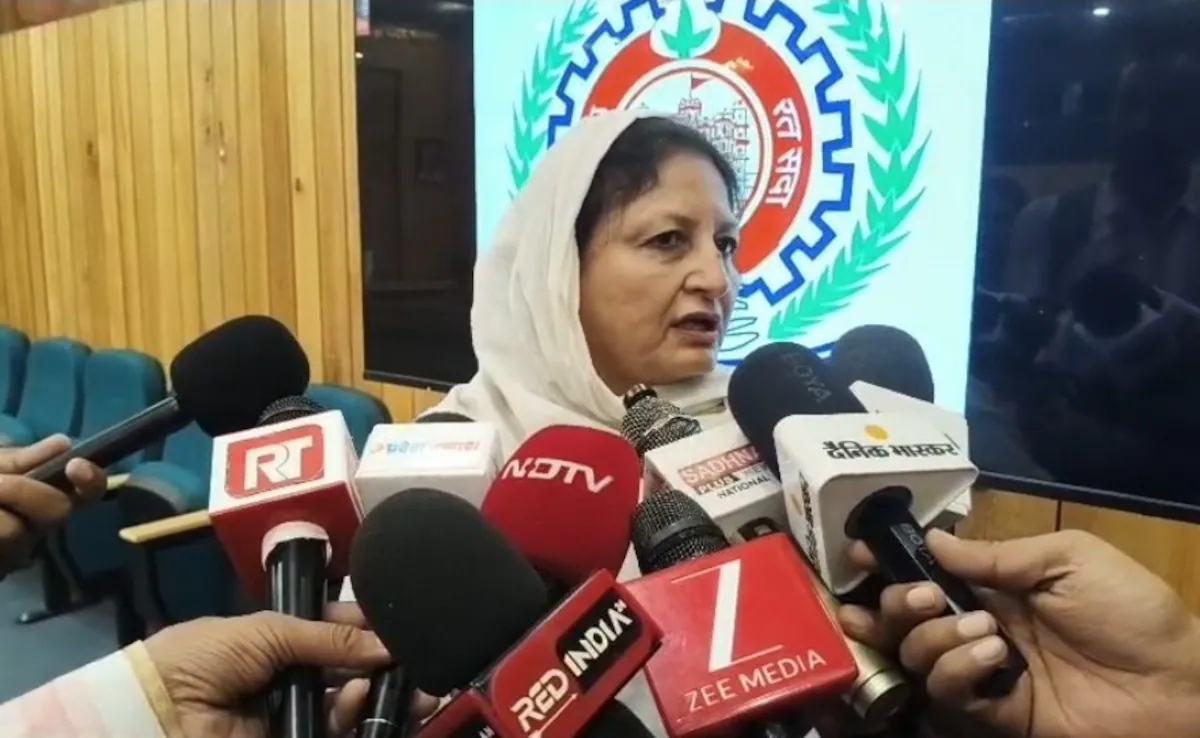
In an effort to restore order, Chairman Munnalal Yadav instructed Fauzia to leave the assembly. However, the situation continued to deteriorate. Outside the assembly, councillor Rubina Iqbal addressed the media, making a controversial statement expressing her refusal to submit to pressure. She stated, “We do not bow down to anyone’s bullying not even their father’s,” reinforcing her position on religious grounds by claiming, “In our Islamic faith, the singing of Vande Mataram is prohibited.”
Rubina elaborated on her perspective, emphasizing her belief that the Quran forbids the song as they worship only Allah, equating “Vande” (to worship) and “Mataram” (mother) to a practice that contradicts their faith. This stance led to heightened political tensions and reactions from various parties.
Political Responses and Internal Congress Divisions
Rubina’s comments prompted a strong backlash from the BJP, with party leaders signaling their intention to file a First Information Report (FIR) regarding the refusal to sing Vande Mataram. BJP city president Sumit Mishra invoked historical references to challenge the Congress stance, reminding that Vande Mataram was first sung at a Congress convention during the independence movement and was embraced by prominent figures like Mahatma Gandhi and Bhagat Singh.
The incident also illuminated divisions within the Congress party itself. Congress spokesperson KK Mishra criticized the dissenting councillors, suggesting that individuals unable to fulfill their national duties should leave the party. He labeled Rubina Iqbal’s remarks as “political blackmail,” suggesting they were a strategic maneuver in association with the BJP. Mishra’s statements called for firm action against the dissenting councillors, urging the party to expel anyone not willing to support national sentiments.
Potential Consequences for Dissenting Councillors
Rubina Iqbal warned of potential political repercussions, indicating that if the Congress party were to expel her and Fauzia, they could run as independent candidates or align with another political party, highlighting the precarious position of party unity amid the controversy. This incident continues to reverberate across Madhya Pradesh, escalating tensions between political factions and raising questions about national identity and loyalty.
The broader implications of this event remain to be seen, as both parties prepare for the fallout and possible legal actions while attempting to address the intense divisions within and outside their political ranks.
Follow US
https://www.facebook.com/charchaexpress
https://www.youtube.com/@charcha-express
https://www.instagram.com/charcha.express/
Contents
Incidents Unfold in Indore Municipal Corporation MeetingOn Wednesday, a routine budget discussion at the Indore Municipal Corporation escalated into a significant political and ideological conflict when two Congress councillors opted not to sing Vande Mataram during the proceedings, causing chaos in the assembly. The incident involved Congress councillors Fauzia Sheikh Aleem and Rubina Iqbal, who raised objections to the inclusion of the national song.The confrontation began when Fauzia challenged the authority of the Chair and questioned the legal basis for the directive, demanding to see the specific law that mandates the singing of Vande Mataram within the municipal body. Her inquiry incited a swift and aggressive response from BJP councillors, who accused her of disrespecting national sentiments. The atmosphere grew tense as slogans were shouted, and the assembly descended into turmoil.Calls for Order and Escalating TensionsIn an effort to restore order, Chairman Munnalal Yadav instructed Fauzia to leave the assembly. However, the situation continued to deteriorate. Outside the assembly, councillor Rubina Iqbal addressed the media, making a controversial statement expressing her refusal to submit to pressure. She stated, “We do not bow down to anyone’s bullying not even their father’s,” reinforcing her position on religious grounds by claiming, “In our Islamic faith, the singing of Vande Mataram is prohibited.”Rubina elaborated on her perspective, emphasizing her belief that the Quran forbids the song as they worship only Allah, equating “Vande” (to worship) and “Mataram” (mother) to a practice that contradicts their faith. This stance led to heightened political tensions and reactions from various parties.Political Responses and Internal Congress DivisionsRubina’s comments prompted a strong backlash from the BJP, with party leaders signaling their intention to file a First Information Report (FIR) regarding the refusal to sing Vande Mataram. BJP city president Sumit Mishra invoked historical references to challenge the Congress stance, reminding that Vande Mataram was first sung at a Congress convention during the independence movement and was embraced by prominent figures like Mahatma Gandhi and Bhagat Singh.The incident also illuminated divisions within the Congress party itself. Congress spokesperson KK Mishra criticized the dissenting councillors, suggesting that individuals unable to fulfill their national duties should leave the party. He labeled Rubina Iqbal’s remarks as “political blackmail,” suggesting they were a strategic maneuver in association with the BJP. Mishra’s statements called for firm action against the dissenting councillors, urging the party to expel anyone not willing to support national sentiments.Potential Consequences for Dissenting CouncillorsRubina Iqbal warned of potential political repercussions, indicating that if the Congress party were to expel her and Fauzia, they could run as independent candidates or align with another political party, highlighting the precarious position of party unity amid the controversy. This incident continues to reverberate across Madhya Pradesh, escalating tensions between political factions and raising questions about national identity and loyalty.The broader implications of this event remain to be seen, as both parties prepare for the fallout and possible legal actions while attempting to address the intense divisions within and outside their political ranks.