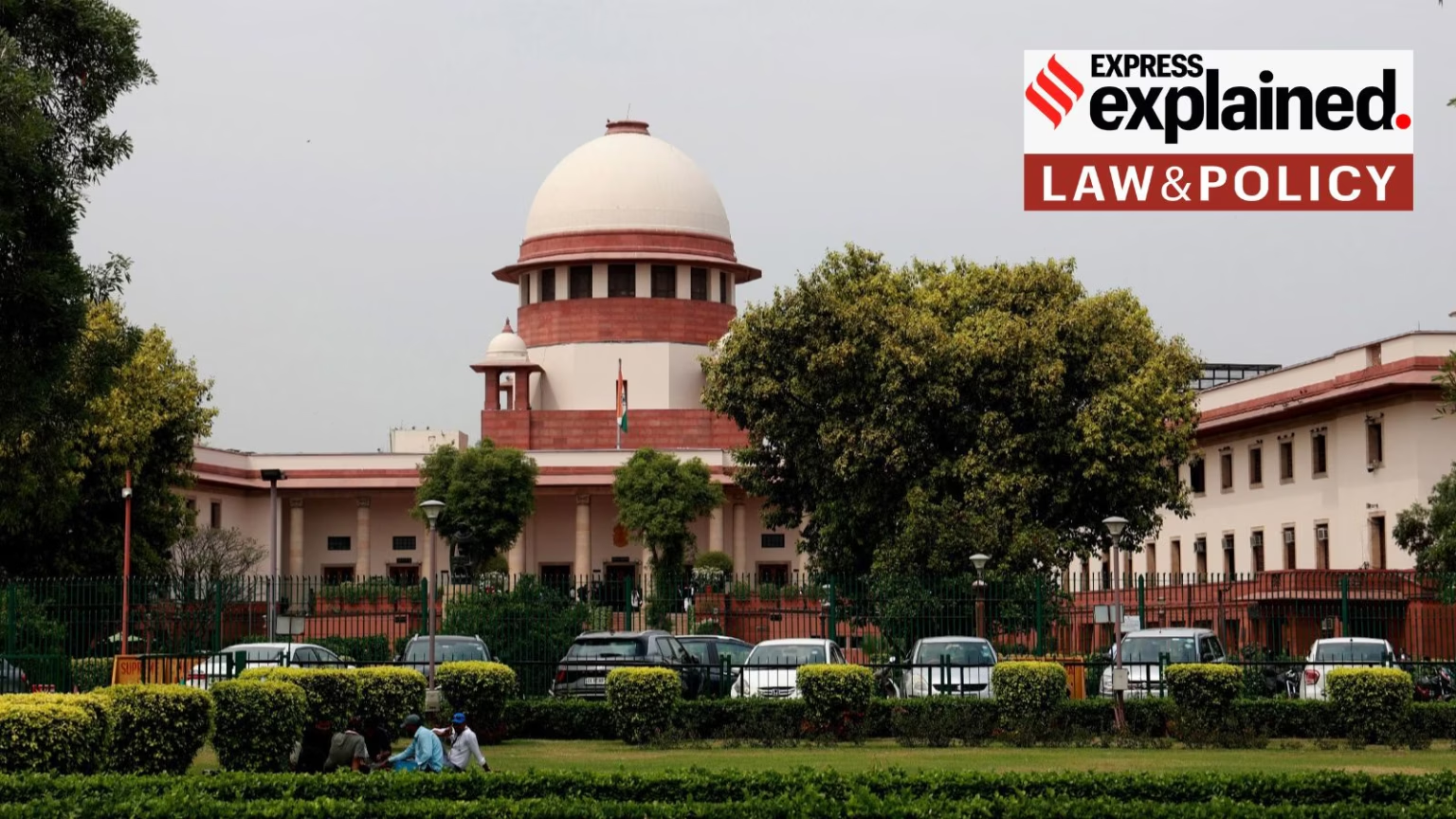
Supreme Court Ruling Clarifies Medical Negligence Claims After Doctor’s Death
Overview of the Ruling
The Supreme Court of India has determined that medical negligence lawsuits do not automatically conclude with the death of the accused physician. Legal heirs may be included in such cases, allowing proceedings to continue against them, but only in relation to claims for financial losses associated with the deceased doctor’s estate.
On May 4, 2023, a bench consisting of Justices JK Maheshwari and Atul S Chandurkar stated that while personal claims—including pain, suffering, and damage to reputation—cease upon the death of the doctor, those related to financial loss may persist. The bench emphasized that legal heirs can be included in the case, stating, “the extent of liability will be determined based on the pleadings and evidence presented.”
Details of the Case
This ruling arises from a case involving an eye surgery conducted in Bihar in 1990. The complainant, Suresh Chandra Roy, reported to Dr PB Lall after his wife experienced severe pain in her right eye. Following surgery in February 1990, the pain returned, leading the family to seek opinions from various medical professionals, who ultimately revealed severe vision impairment in the right eye and risks for the left eye, which was operated on in 1994.
A complaint was filed under the Consumer Protection Act of 1986, demanding Rs 4.5 lakh to cover treatment costs, loss of vision, travel expenses, and mental distress. In 2003, Dr Lall was found liable for negligence and ordered to pay Rs 2.6 lakh by the district consumer forum. However, this ruling was later overturned by the Bihar State Consumer Disputes Redressal Commission, which attributed the vision loss to pre-existing glaucoma and concluded that negligence was not proven through expert testimony.
The case was appealed to the National Consumer Disputes Redressal Commission (NCDRC). Following the death of Dr Lall in 2009, his wife and son were named as his legal heirs. They contended that medical negligence claims do not survive a defendant’s death. The NCDRC upheld the initial ruling, prompting the matter to be escalated to the Supreme Court.
Legal Framework and Examination
The Supreme Court analyzed the matter referencing the common law principle actio personalis moritur cum persona, which traditionally dictated that personal injury claims cease upon an individual’s death. However, Indian law has modified this principle through various statutes.
The Legal Representatives Suits Act of 1855 allows for suits to be initiated by or against a deceased person’s legal representatives, focusing specifically on pecuniary losses to the estate in cases of death caused within one year before an individual’s passing. The Fatal Accidents Act of 1855 also provides a legal framework for claiming damages in cases resulting from tortious acts, further codified in Section 306 of the Indian Succession Act of 1925, establishing that rights to litigate persist against a deceased individual’s estate, except in cases of defamation, assault, or other personal injuries not resulting in death.
The court noted that Orders governing the substitution of parties after a party’s death, as well as provisions of the Consumer Protection Act concerning deceased complainants or defendants, should work in conjunction to assess whether the right to sue continues in a claim. The court concluded that while personal claims terminate upon death, pecuniary claims may be pursued against the estate inherited by the legal representatives.
Impacts of the Ruling
Before this Supreme Court decision, a five-judge bench ruling in Balbir Singh Makol v. Chairman, Sir Ganga Ram Hospital, had established that medical negligence claims were personal to the accused doctor and did not persist posthumously against their estate. This ruling has now been overturned, allowing for claims pertaining to financial loss to continue against the legal representatives.
The Supreme Court stated that while personal claims die with the individual, those involving financial loss to the estate could survive, marking a significant shift in precedent. The court highlighted that personal rights are distinct from proprietary rights; personal claims concerning physical and reputational damage abate upon death, while financial claims, deemed to have economic value, survive.
Next Steps and Reactions
The NCDRC is now tasked with determining the extent of Dr Lall’s alleged negligence and which claims may be pursued against the estate. Reactions to the ruling suggest a blend of approval and concern, with legal experts acknowledging the need for accountability while also pointing to potential practical challenges for medical practitioners and their families.
Prof. SV Joga Rao expressed that the ruling delineates the responsible party from the estate, yet raised concerns over enforcement challenges, particularly when legal heirs lack inherited assets. Former Delhi Medical Council Registrar Dr. Girish Tyagi noted that the ruling could exacerbate pressures on medical professionals, who may already be facing undue litigation risks before and after their practice.