
40 Years Ago: Terror Attack in Punjab
Details of the Attack
On April 11, 1986, a coordinated terror attack took place in Punjab, resulting in the deaths of two personnel from the Government Railway Police (GRP) and one Sub-Inspector from the Punjab Police. The incident unfolded at Kotla Gujran railway station, located near Amritsar, where the assailants targeted GRP officers aboard a running train, leading to a tragic loss of life and one additional injury among the law enforcement personnel.
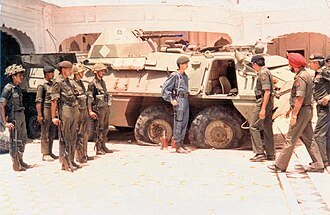
In response to the attack, security forces executed a “bullet-for-bullet” operation in Amritsar. This operation successfully resulted in the elimination of three terrorists identified as responsible for the assaults on the GRP and Punjab Police officers.
Significant Political Developments in Pakistan
On the same day, Benazir Bhutto made a historic political comeback in Pakistan after a two-year exile in Europe. Her return was marked by an unprecedented reception, drawing an estimated half a million supporters to her first political meeting. Bhutto, who is the chairperson of the Pakistan People’s Party, urged military ruler General Ziaul Haq to relinquish power and conduct elections, as indicated by the chanting crowds calling for “Zia jave, jave” (Zia is bound to leave).
Bhutto expressed that her entry into politics was not just a personal ambition but also a fulfillment of her father, Zulfikar Ali Bhutto’s, enduring political legacy. The atmosphere during the event was charged with enthusiasm, characterized by street dances and public displays of joy among her supporters.
Diplomatic Relations Between India and Turkey
The same day also marked a significant diplomatic moment, as Turgut Ozal, the first Turkish Prime Minister to undertake an official visit to India, expressed optimism regarding the potential for a new era of improved relations between the two nations. During his visit, he announced the establishment of a joint economic commission aimed at enhancing bilateral cooperation between India and Turkey.
Notably, Ozal highlighted the absence of high-level exchanges between India and Turkey since the visit of Jawaharlal Nehru in 1960. In a further step towards collaboration, it was revealed that both countries had signed an air services agreement earlier that day, signifying advancements in their diplomatic ties.
Changes in Military Command Structure
Moreover, the government made a pivotal decision regarding military command structures, declaring that attack helicopter squadrons would now operate under the command and control of the Army. While these squadrons will continue to be owned and maintained by the Indian Air Force, the shift is seen as a partial fulfillment of a long-standing demand from the Army for greater operational control over aerial capabilities.
Prime Minister’s remarks during the defense debate in the Lok Sabha indicated that this restructuring was intended to enhance the effectiveness and integration of military operations within India’s defense framework.
Follow US
https://www.facebook.com/charchaexpress
https://www.youtube.com/@charcha-express
https://www.instagram.com/charcha.express/
Contents
Details of the AttackOn April 11, 1986, a coordinated terror attack took place in Punjab, resulting in the deaths of two personnel from the Government Railway Police (GRP) and one Sub-Inspector from the Punjab Police. The incident unfolded at Kotla Gujran railway station, located near Amritsar, where the assailants targeted GRP officers aboard a running train, leading to a tragic loss of life and one additional injury among the law enforcement personnel.In response to the attack, security forces executed a “bullet-for-bullet” operation in Amritsar. This operation successfully resulted in the elimination of three terrorists identified as responsible for the assaults on the GRP and Punjab Police officers.Significant Political Developments in PakistanOn the same day, Benazir Bhutto made a historic political comeback in Pakistan after a two-year exile in Europe. Her return was marked by an unprecedented reception, drawing an estimated half a million supporters to her first political meeting. Bhutto, who is the chairperson of the Pakistan People’s Party, urged military ruler General Ziaul Haq to relinquish power and conduct elections, as indicated by the chanting crowds calling for “Zia jave, jave” (Zia is bound to leave).Bhutto expressed that her entry into politics was not just a personal ambition but also a fulfillment of her father, Zulfikar Ali Bhutto’s, enduring political legacy. The atmosphere during the event was charged with enthusiasm, characterized by street dances and public displays of joy among her supporters.Diplomatic Relations Between India and TurkeyThe same day also marked a significant diplomatic moment, as Turgut Ozal, the first Turkish Prime Minister to undertake an official visit to India, expressed optimism regarding the potential for a new era of improved relations between the two nations. During his visit, he announced the establishment of a joint economic commission aimed at enhancing bilateral cooperation between India and Turkey.Notably, Ozal highlighted the absence of high-level exchanges between India and Turkey since the visit of Jawaharlal Nehru in 1960. In a further step towards collaboration, it was revealed that both countries had signed an air services agreement earlier that day, signifying advancements in their diplomatic ties.Changes in Military Command StructureMoreover, the government made a pivotal decision regarding military command structures, declaring that attack helicopter squadrons would now operate under the command and control of the Army. While these squadrons will continue to be owned and maintained by the Indian Air Force, the shift is seen as a partial fulfillment of a long-standing demand from the Army for greater operational control over aerial capabilities.Prime Minister’s remarks during the defense debate in the Lok Sabha indicated that this restructuring was intended to enhance the effectiveness and integration of military operations within India’s defense framework.