Trump Announces Blockade of the Strait of Hormuz Amid Failed Diplomacy
New Maritime Restrictions Imposed
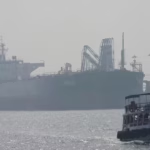
President Donald Trump has ordered the US Navy to enact a blockade of the Strait of Hormuz, a key maritime route, following unsuccessful talks in Islamabad. This order directs American naval forces to stop and inspect all vessels entering or exiting the strait. Ships that have paid transit fees to Iran will be intercepted in international waters, and any Iranian mines present in the strait are to be destroyed. Trump warned that any Iranian military aggression toward American or commercial ships would meet with overwhelming force. He further stated that the US military would eventually “finish up the little that is left of Iran.” The announcement, made via social media, lacked consultation with allies, a legal framework, or a coherent operational strategy.
The Strait of Hormuz is crucial for global oil transportation, with approximately 20% of the world’s oil passing through it daily prior to the ongoing conflict. Trump’s blockade raises concerns as it inadvertently impacts countries such as India, Japan, South Korea, and Germany, which have maintained diplomatic relations with Iran while navigating complex ties with the United States. These nations, having not opted into the conflict, now face unintended consequences stemming from Washington’s unilateral decision-making.
Impact on Global Oil Markets
As the world’s largest oil producer, the US is better insulated from disruptions in Gulf energy supplies compared to other nations. Trump’s recent statements indicated that empty tankers were already en route to the US to be filled with domestically produced oil. This approach appears to intertwine market strategy with national security objectives, raising concerns over whether it constitutes an exploitation of the situation.
Iran’s Preparedness for Blockade
Iran has historically prepared for potential military confrontations in the region by developing a range of defense mechanisms, such as sea mines, anti-ship missiles, and fast-attack boat swarms. These measures are aimed specifically at complicating and inflicting costs on American naval operations within the congested Strait of Hormuz. The lack of a comprehensive plan in the event of Iranian retaliation highlights the absence of foresight in the current American approach.
This pattern of governance is becoming increasingly familiar. Recent tariff announcements have disrupted global markets while American negotiators awaited concessions from other nations. Similarly, ceasefire negotiations have left allies bewildered while adversaries strategize their next moves. The approach of making bold public demands without a clear subsequent plan has become a characteristic of the administration’s foreign policy.
Geopolitical Ramifications for India and Others
The blockade presents direct challenges for India, which relies heavily on imports from the Gulf region. Furthermore, millions of Indian workers in these countries remit significant funds back home. New Delhi has invested years in cultivating relationships with both Washington and Tehran. The necessity to choose a side in every American-Iranian conflict poses substantial risks for India. In the backdrop of these crises, the pressure exerted on India complicates its diplomatic maneuverability.
The broader implications extend to the international order. The United States has historically bolstered its post-war reputation by ensuring the free flow of global trade and the security of maritime routes. By blocking one of the most vital shipping lanes while seemingly catering to American oil exporters, the current administration appears to be diverging from this longstanding role, utilizing the system established by predecessors for its own gain.