PM Modi Advocates for Women’s Reservation Bill in Parliament
Call for Legislative Cooperation
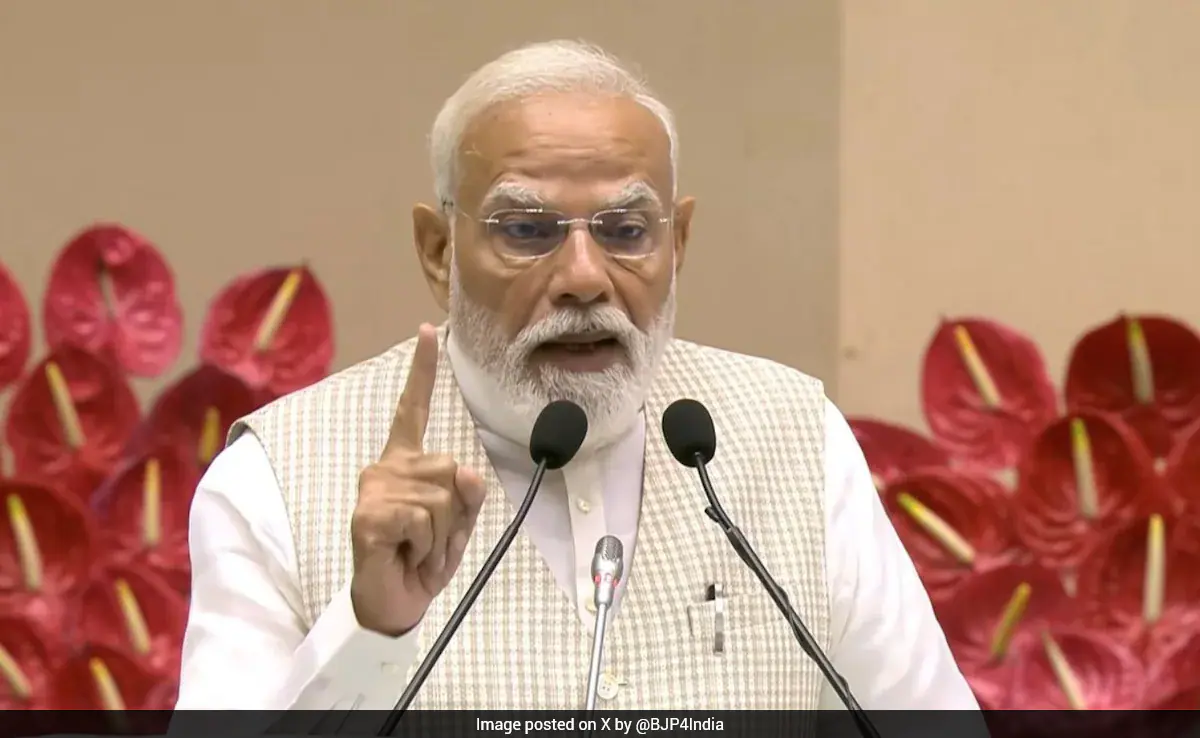
Prime Minister Narendra Modi emphasized the urgent need for cooperation among political parties to implement the Women’s Reservation Bill during a speech at the ‘Nari Shakti Vandan Sammelan’ in Delhi. He described the occasion as a pivotal moment in India’s legislative history, urging an end to decades of waiting for women’s empowerment in governance.
In a letter addressed to all floor leaders, PM Modi announced a special parliamentary session scheduled for April 16th, 17th, and 18th, where the agenda would focus on the Women’s Reservation Bill. He characterized this initiative as a commitment to recognizing and elevating women’s power in the nation’s decision-making processes.
Historical Significance of the Bill
During his address, PM Modi stated, “Our country’s Parliament is close to creating a new history,” suggesting that the passage of this bill would align past aspirations with future resolutions. He underlined the importance of fostering an egalitarian society where social justice permeates work culture and decision-making in India.
PM Modi argued that the nation is on the brink of making a transformative decision for the 21st century, portraying it as critical to the empowerment of women. He lauded the collective effort to ensure that women’s representation in governance becomes a reality, underscoring the respect and acknowledgment of womanhood through this legislative endeavor.
Amendments and Implementation Timeline
The Government has proposed two significant amendments to the 2023 Nari Shakti Vandan Act, which presently ties women’s reservations in legislative bodies to the completion of a new census and delimitation process. Given the delays in the census, the plan is to utilize the data from the 2011 census for the implementation of the bill.
Highlighting the legacy of women in India, PM Modi noted their presence in high-ranking positions, including that of President and Finance Minister, portraying these roles as a source of national pride. He reaffirmed the necessity of advancing women’s roles in governance, reflecting on how their contributions have historically shaped the nation.
Unity Across Parties for Implementation
Referring to the unanimous passage of the Nari Shakti Vandan Adhiniyam in 2023, PM Modi recalled the collective call from various political factions to ensure that the bill is enacted by 2029. He reiterated the Opposition’s strong advocacy for timely implementation, expressing a commitment to achieving this through dialogue and cooperation among parties.
To reinforce his argument, PM Modi cited research demonstrating that elevating women in decision-making roles leads to more responsive governance. He pointed to the Jal Jeevan Mission as an example, emphasizing the substantial impact of women’s involvement at the Panchayat level in driving the initiative’s success.