Access Challenges for Keytruda, India’s Leading Cancer Treatment
Patient Experiences Highlight the Struggles
Two years ago, a woman named Ekta found herself at her home in Gurugram, navigating the complexities of securing a treatment for her mother-in-law. On a call with a representative from the Kiran Patient Access Program, she remained on the line for over an hour, anxious about the necessity of obtaining an one-time password (OTP) for her mother-in-law’s impending infusion of Keytruda, a prominent cancer immunotherapy drug. Similar obstacles were faced by Ajit, a kidney cancer patient diagnosed in 2017, who managed to secure coverage through a cancer insurance policy. His story reflects the broader difficulties faced by patients trying to access this life-saving medication.
An investigation conducted by The Indian Express, in collaboration with the International Consortium of Investigative Journalists (ICIJ), sheds light on the hurdles that impede access to Keytruda in India. Obtaining the medication, even through the official patient assistance scheme, is marred by financial, logistical, and regulatory challenges, making it unattainable for many patients in need.
Understanding Keytruda and Its Challenges
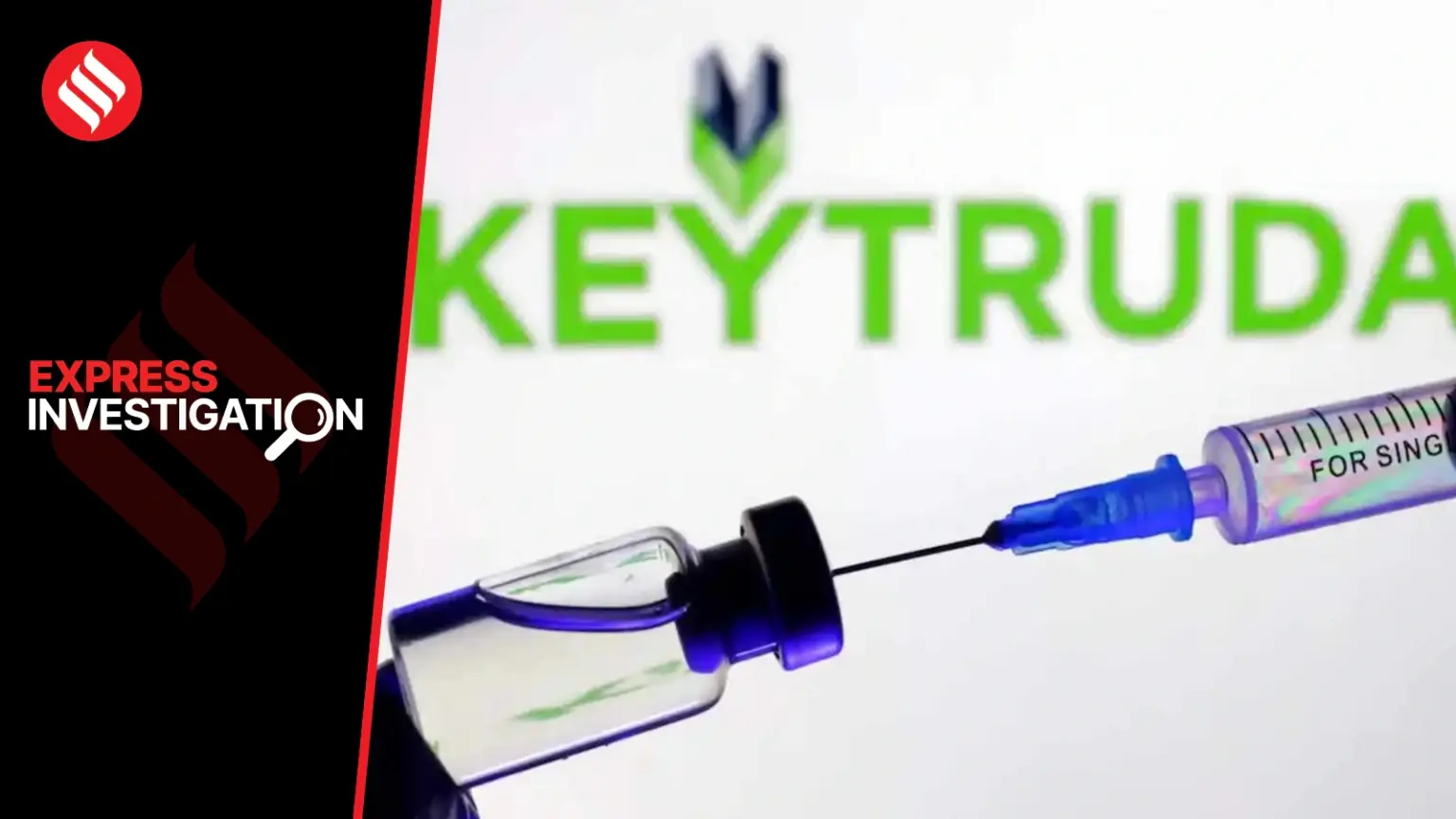
Keytruda, known scientifically as Pembrolizumab, is produced by pharmaceutical company Merck & Co. (MSD) and has demonstrated effectiveness against a variety of cancers. It has been approved worldwide for numerous cancer types, and in India, it is supported for ten types of cancer, including specific lung cancers, head and neck cancer, cervical cancer, renal cancer, and melanoma. Despite its classification as the best-selling drug globally, with expected sales of USD 29.5 billion in 2024, accessibility remains a significant issue in India.
The barriers to access begin with the financial demands of the Kiran Patient Access Programme. The market price for Keytruda exceeds Rs 3 lakh for a 200 mg infusion. Although the programme offers one free 100 mg vial for every 100 mg vial purchased for the first five infusions, patients need to pay upfront for at least five vials, totaling nearly Rs 10 lakh. If they require additional doses, they must re-enrol in the program and make another substantial payment.
Navigating the Application Process
Once enrolled, the administrative process remains cumbersome. Each dose requires patients to submit an infusion form along with a stamped outpatient department (OPD) card that includes a doctor’s prescription. Ekta faced constant hurdles with document verification, where discrepancies between mailed submissions and hospital records often necessitated additional trips to the hospital for corrections.
Patients must also ensure that a registered caregiver is present for each infusion session, which requires taking time off work. Ekta’s mother-in-law needed regular doses, scheduled every three weeks, but securing these appointments is complicated, often leaving families in distress if they need to reschedule.
Structural Barriers to Access
The Indian Express investigation identified four main barriers to accessing Keytruda. The limited availability of information about the Kiran Patient Access Programme often leaves patients reliant on their doctors for guidance. Some patients have reported being targeted by fraudulent schemes offering counterfeit drugs at lower prices, exacerbated by the lack of clear information around the official program.
Another barrier is the financial threshold required to enter the program, which many patients find prohibitive due to the upfront costs. Additionally, the program excludes individuals earning more than Rs 25 lakh annually or those with a sum-insured amount above Rs 25 lakh, further narrowing the eligible patient pool.
Even eligible patients frequently encounter challenges in effectively accessing the program. Dr. Atul Batra highlighted that among the 60,000 patients with triple-negative breast cancer who could benefit from Keytruda, only about 5% manage to gain access, often relying on government-sponsored programs instead.
Prescribing Protocols and Regulatory Delays
Furthermore, Keytruda can only be prescribed under the Kiran programme by registered medical oncologists or haematologists, many of whom are concentrated in urban areas. The requirement for these specialists to submit their credentials adds another layer of complexity for patients, particularly in rural settings where access to qualified prescribers is limited.
Additionally, regulatory delays may extend for months or even years before approvals are granted in India, affecting patients’ access during the interim. A request for comments from Merck & Co. regarding these access issues did not receive a response.