

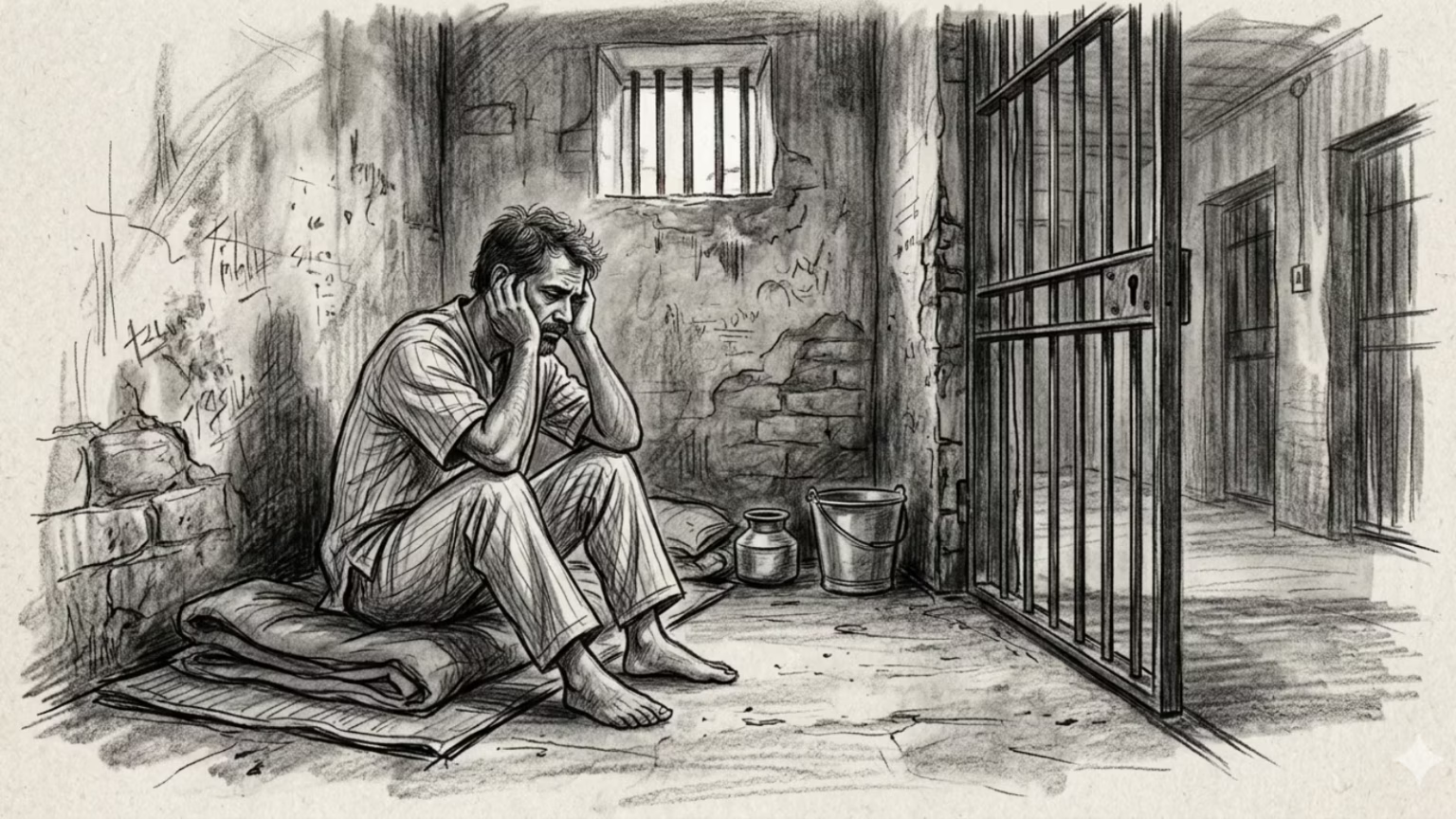
Gauhati High Court Commutes Death Sentence to Life Imprisonment in Familicide Case
Court’s Rationale for Judgment
The Gauhati High Court has spared a man from the death penalty, commuting his sentence to life imprisonment for the brutal murder of his wife and minor daughter. The decision was made following a review of the case, in which the court noted that the victims were defenseless and highlighted the crime as a significant breach of trust.
A division bench comprising Justices Ashutosh Kumar and Arun Dev Chaudhary delivered the judgment, addressing a claim by the accused, Rishab Das, seeking to overturn his conviction for the October 2023 murders that took place in Barpeta. The court emphasized that the crime occurred within the confines of the family’s home and involved repeated assaults with a sharp weapon, demonstrating extreme brutality.
Details of the Incident
The prosecution’s case presented an incident from October 13, 2023, where Rishab Das allegedly locked the gate to his residence before attacking his wife with an axe following a confrontation over the lock. Their minor daughter attempted to intervene during the assault but was also attacked by her father. Both victims died at the scene from their injuries.
The legal proceedings began in the Sessions Court of Barpeta, where Das faced charges under Section 302 of the Indian Penal Code. He pleaded not guilty, leading to a trial that highlighted the brutal nature of the crime. Initially, on October 22, 2025, Das was sentenced to death, with the court labeling the double murder as a “rarest of the rare” case.
Assessment of Sentencing Principles
The Gauhati High Court indicated that comprehending the finality of a death sentence requires thoughtful consideration of both aggravating and mitigating factors, rather than a mere reflexive response to the nature of the crime. The court referenced established principles from prior Supreme Court rulings, asserting that the death penalty should only be imposed in exceptional circumstances where life imprisonment is not suitable.
Justice Chaudhary articulated that the deprivation of life must adhere to principles of justice and fairness, in compliance with Article 21 of the Constitution of India. The court determined that, given the mitigating factors present, such as Das’s lack of prior convictions and his circumstances, life imprisonment was a more appropriate penalty.
Criteria for Sentencing Evaluation
In its deliberation, the court provided a framework for evaluating sentences that includes assessing the nature of the crime and associated aggravating circumstances, the offender’s background and potential for reform, and a balancing of these elements. Justice Chaudhary underscored that sentencing must be focused on both the crime and the criminal rather than being a mere response to the offense’s severity.
Applying this framework, the court found significant aggravating circumstances surrounding the crime but balanced these with mitigating factors that suggested the accused could still be reformed and rehabilitated.
Conclusion on Reformation and Sentencing
The court concluded that establishing the possibility of reform is vital before imposing the death penalty. There was no compelling evidence that Das was beyond reformation or posed a continuous threat to society. Furthermore, the trial court did not adequately address these considerations during sentencing.
The onus falls on the prosecution to demonstrate that the accused is irredeemable and that life imprisonment would be insufficient as a penalty. The court found a lack of substantiating material about the accused’s psychological profile or conduct while in custody that would suggest he could not be reformed, leading to the judgment that the death penalty would not be justified or constitutional under the circumstances.
Follow US
https://www.facebook.com/charchaexpress
https://www.youtube.com/@charcha-express
https://www.instagram.com/charcha.express/
Contents
Court’s Rationale for JudgmentThe Gauhati High Court has spared a man from the death penalty, commuting his sentence to life imprisonment for the brutal murder of his wife and minor daughter. The decision was made following a review of the case, in which the court noted that the victims were defenseless and highlighted the crime as a significant breach of trust.A division bench comprising Justices Ashutosh Kumar and Arun Dev Chaudhary delivered the judgment, addressing a claim by the accused, Rishab Das, seeking to overturn his conviction for the October 2023 murders that took place in Barpeta. The court emphasized that the crime occurred within the confines of the family’s home and involved repeated assaults with a sharp weapon, demonstrating extreme brutality.Details of the IncidentThe prosecution’s case presented an incident from October 13, 2023, where Rishab Das allegedly locked the gate to his residence before attacking his wife with an axe following a confrontation over the lock. Their minor daughter attempted to intervene during the assault but was also attacked by her father. Both victims died at the scene from their injuries.The legal proceedings began in the Sessions Court of Barpeta, where Das faced charges under Section 302 of the Indian Penal Code. He pleaded not guilty, leading to a trial that highlighted the brutal nature of the crime. Initially, on October 22, 2025, Das was sentenced to death, with the court labeling the double murder as a “rarest of the rare” case.Assessment of Sentencing PrinciplesThe Gauhati High Court indicated that comprehending the finality of a death sentence requires thoughtful consideration of both aggravating and mitigating factors, rather than a mere reflexive response to the nature of the crime. The court referenced established principles from prior Supreme Court rulings, asserting that the death penalty should only be imposed in exceptional circumstances where life imprisonment is not suitable.Justice Chaudhary articulated that the deprivation of life must adhere to principles of justice and fairness, in compliance with Article 21 of the Constitution of India. The court determined that, given the mitigating factors present, such as Das’s lack of prior convictions and his circumstances, life imprisonment was a more appropriate penalty.Criteria for Sentencing EvaluationIn its deliberation, the court provided a framework for evaluating sentences that includes assessing the nature of the crime and associated aggravating circumstances, the offender’s background and potential for reform, and a balancing of these elements. Justice Chaudhary underscored that sentencing must be focused on both the crime and the criminal rather than being a mere response to the offense’s severity.Applying this framework, the court found significant aggravating circumstances surrounding the crime but balanced these with mitigating factors that suggested the accused could still be reformed and rehabilitated.Conclusion on Reformation and SentencingThe court concluded that establishing the possibility of reform is vital before imposing the death penalty. There was no compelling evidence that Das was beyond reformation or posed a continuous threat to society. Furthermore, the trial court did not adequately address these considerations during sentencing.The onus falls on the prosecution to demonstrate that the accused is irredeemable and that life imprisonment would be insufficient as a penalty. The court found a lack of substantiating material about the accused’s psychological profile or conduct while in custody that would suggest he could not be reformed, leading to the judgment that the death penalty would not be justified or constitutional under the circumstances.