

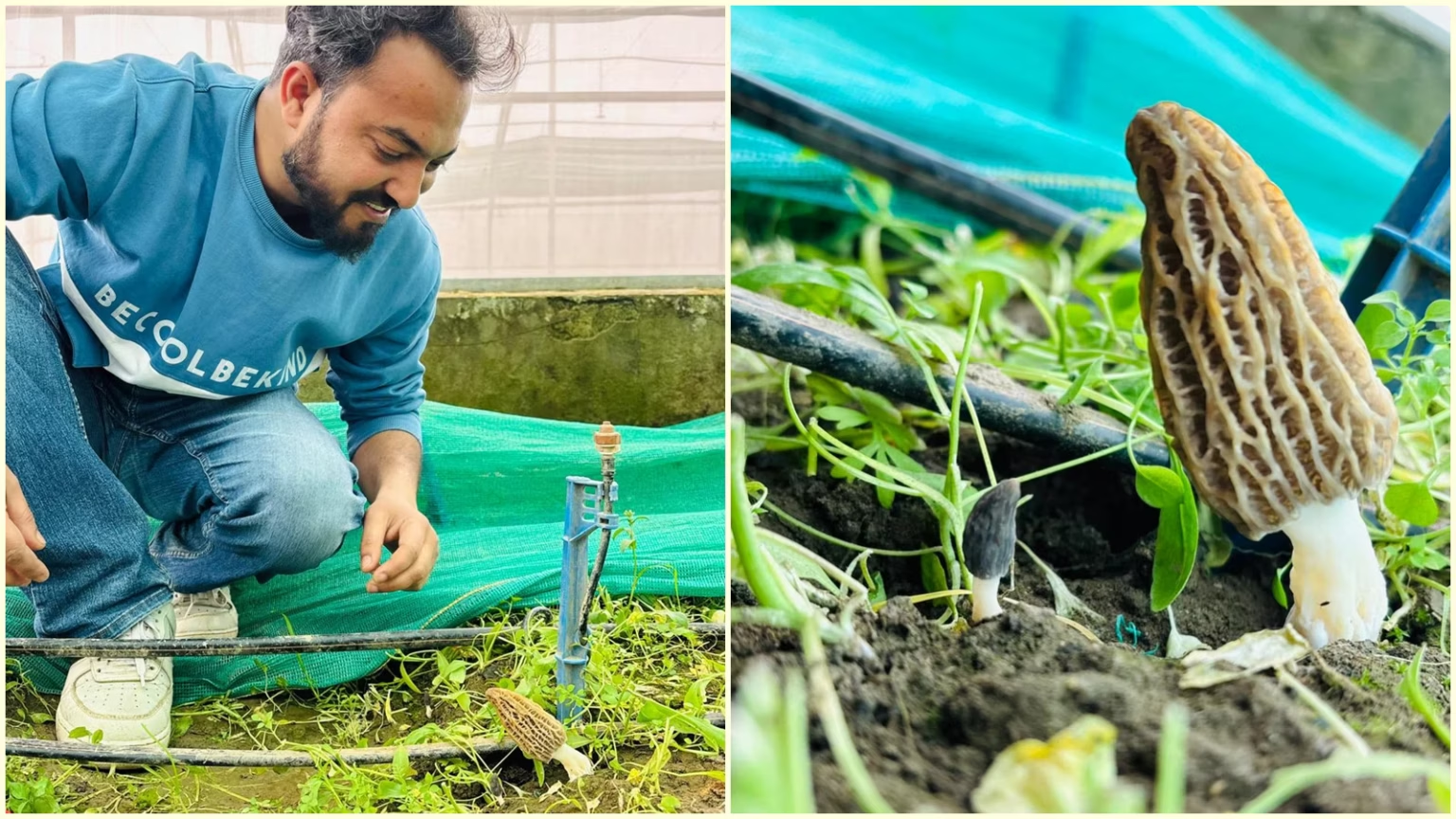
Kashmir Scientists Successfully Cultivate Rare Morel Mushrooms
Breakthrough in Controlled Cultivation
Researchers at Sheri Kashmir University of Agriculture and Sciences (SKUAST) in Srinagar have achieved a significant milestone by successfully cultivating morel mushrooms, known locally as Kangaech, under controlled conditions. This versatile fungus, which can fetch prices ranging from ₹15,000 to ₹40,000 per kilogram, is hailed as one of the most expensive edible mushrooms in the world.
Vice Chancellor of SKUAST, Prof Nazir Ahmad Ganai, described the development as a “game-changing breakthrough.” According to him, this innovation signifies a shift away from the unpredictable collection of wild mushrooms, enabling a more reliable and scalable production system. This advancement not only opens new avenues for farmers and entrepreneurs but also supports ecological conservation efforts.
Research and Collaboration
The cultivation project was undertaken by a team comprising Prof Tariq Ahmad Sofi, his student Kamran Muneer from the Faculty of Horticulture, and Prof Vikas Gupta from the faculty of agriculture. Over the span of five years, the team researched wild morels across more than 1,000 locations, examining the soil composition, microclimate, and surrounding flora and fauna to determine the best conditions for growth.
Dr. Sofi revealed that they identified ten different strains suitable for cultivation and successfully managed to induce fruiting in three of those strains. “We have created conditions in which they can thrive and are optimistic about achieving similar results with more strains in the future,” he stated.
Significance and Economic Potential
Morels are prized for their unique flavor, impressive nutritional value, and potential medicinal properties. However, the process of gathering wild mushrooms is labor-intensive and can yield uncertain results, as foragers often face challenging conditions in dense forests. The SKUAST team’s success in cultivation is expected to streamline production and enhance availability.
While Prof Sofi and his team have successfully grown morels in polyhouse environments, Prof Gupta has demonstrated the ability to cultivate them in open-air conditions. The team has already applied for a patent for their innovative cultivation methods.
Future Plans and Research Expansion
The researchers have successfully cultivated morels in various microclimatic zones within Jammu and Kashmir, including regions like Baramulla, Anantnag, and Srinagar. They also plan to expand their cultivation efforts to additional elevations and microclimates in the near future.
The cultivation of morels poses unique scientific challenges due to its complex life cycle and specific ecological requirements. According to Dr. Sofi, the mushrooms require precise moisture levels and temperatures in both soil and atmospheric conditions. Additionally, different strains of morels necessitate relationships with specific plant species for successful growth.
Impact on Jammu and Kashmir’s Agriculture
With a high export value, the controlled cultivation of morels is anticipated to contribute significantly to the bioeconomy of Jammu and Kashmir. Dr. Sofi expressed the belief that this technology could facilitate agricultural transformation, allowing farmers to diversify into high-value crops that could substantially improve their incomes.
“The potential for Morchella cultivation in this region holds great promise, particularly for boosting farm profitability and enhancing agricultural practices,” he concluded.
Follow US
https://www.facebook.com/charchaexpress
https://www.youtube.com/@charcha-express
https://www.instagram.com/charcha.express/
Contents
Breakthrough in Controlled CultivationResearchers at Sheri Kashmir University of Agriculture and Sciences (SKUAST) in Srinagar have achieved a significant milestone by successfully cultivating morel mushrooms, known locally as Kangaech, under controlled conditions. This versatile fungus, which can fetch prices ranging from ₹15,000 to ₹40,000 per kilogram, is hailed as one of the most expensive edible mushrooms in the world.Vice Chancellor of SKUAST, Prof Nazir Ahmad Ganai, described the development as a “game-changing breakthrough.” According to him, this innovation signifies a shift away from the unpredictable collection of wild mushrooms, enabling a more reliable and scalable production system. This advancement not only opens new avenues for farmers and entrepreneurs but also supports ecological conservation efforts.Research and CollaborationThe cultivation project was undertaken by a team comprising Prof Tariq Ahmad Sofi, his student Kamran Muneer from the Faculty of Horticulture, and Prof Vikas Gupta from the faculty of agriculture. Over the span of five years, the team researched wild morels across more than 1,000 locations, examining the soil composition, microclimate, and surrounding flora and fauna to determine the best conditions for growth.Dr. Sofi revealed that they identified ten different strains suitable for cultivation and successfully managed to induce fruiting in three of those strains. “We have created conditions in which they can thrive and are optimistic about achieving similar results with more strains in the future,” he stated.Significance and Economic PotentialMorels are prized for their unique flavor, impressive nutritional value, and potential medicinal properties. However, the process of gathering wild mushrooms is labor-intensive and can yield uncertain results, as foragers often face challenging conditions in dense forests. The SKUAST team’s success in cultivation is expected to streamline production and enhance availability.While Prof Sofi and his team have successfully grown morels in polyhouse environments, Prof Gupta has demonstrated the ability to cultivate them in open-air conditions. The team has already applied for a patent for their innovative cultivation methods.Future Plans and Research ExpansionThe researchers have successfully cultivated morels in various microclimatic zones within Jammu and Kashmir, including regions like Baramulla, Anantnag, and Srinagar. They also plan to expand their cultivation efforts to additional elevations and microclimates in the near future.The cultivation of morels poses unique scientific challenges due to its complex life cycle and specific ecological requirements. According to Dr. Sofi, the mushrooms require precise moisture levels and temperatures in both soil and atmospheric conditions. Additionally, different strains of morels necessitate relationships with specific plant species for successful growth.Impact on Jammu and Kashmir’s AgricultureWith a high export value, the controlled cultivation of morels is anticipated to contribute significantly to the bioeconomy of Jammu and Kashmir. Dr. Sofi expressed the belief that this technology could facilitate agricultural transformation, allowing farmers to diversify into high-value crops that could substantially improve their incomes.“The potential for Morchella cultivation in this region holds great promise, particularly for boosting farm profitability and enhancing agricultural practices,” he concluded.