As of May 04, 2026, vote counting for the Assembly elections in West Bengal, Tamil Nadu, Assam, Kerala, and the Union Territory of Puducherry is in progress. The Election Commission of India is providing live updates on leads, trends, and results across the 823 assembly seats being contested.
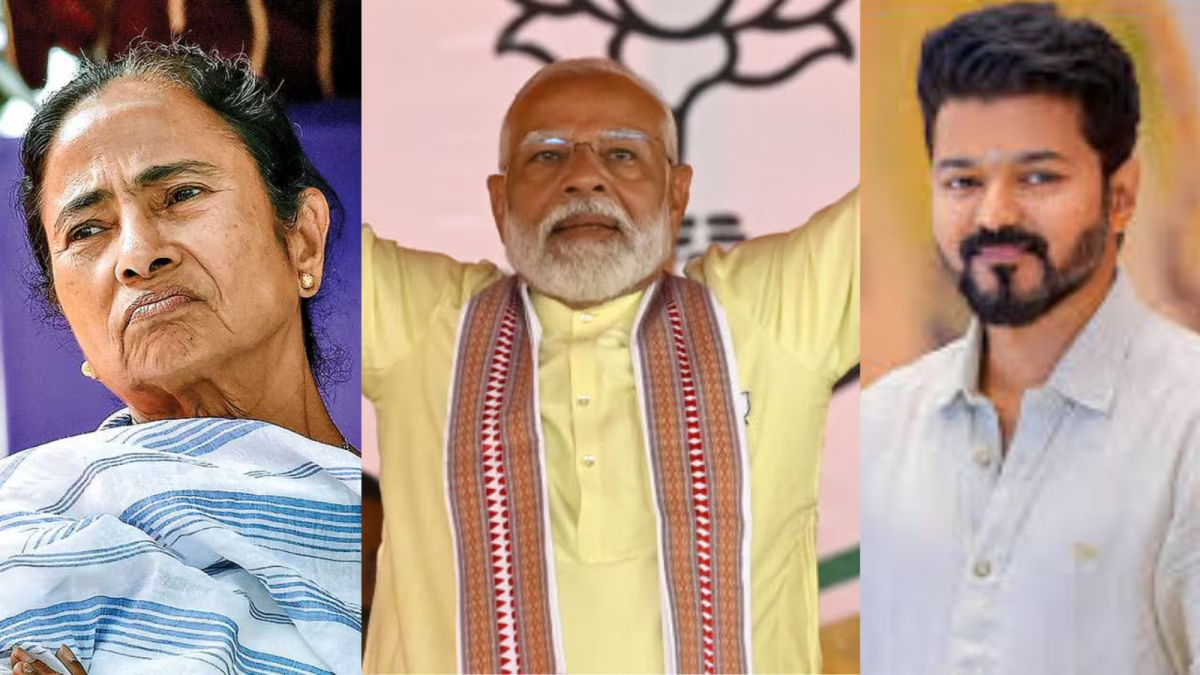
Initial trends show the Bharatiya Janata Party (BJP) taking a strong lead in Assam and West Bengal, suggesting a potentially significant electoral performance in those states. Meanwhile, in Tamil Nadu, the Tamilaga Vettri Kazhagam (TVK) party, led by actor Vijay, is emerging as a notable contender. In Kerala, the United Democratic Front (UDF) appears to be performing well, setting the stage for a competitive election as counting continues.
The live results can be tracked on the official Election Commission portal, where users can filter results by state, or through the Voter Helpline App available on mobile platforms.
Current Incumbent Governments in Key States
As voting trends are being counted, here’s a look at the current Chief Ministers in the mentioned states: Mamata Banerjee leads the Trinamool Congress in West Bengal, M. K. Stalin governs Tamil Nadu under the DMK, Pinarayi Vijayan heads the Left Democratic Front in Kerala, and Himanta Biswa Sarma leads the BJP in Assam.
Shifts in Political Landscape
The BJP’s emergence in West Bengal has transformed the state’s political scene over the last 15 years. From minimal presence in 2011 to becoming the primary opposition party in 2021 with significant vote shares, this election may confirm the BJP’s ongoing consolidation in the region.
In Kerala, the leadership question becomes pertinent as early trends indicate the UDF’s strong showing. Speculation surrounds Congress MP Shashi Tharoor as a potential candidate for Chief Minister, reflecting the UDF’s emphasis on securing a decisive mandate for future leadership discussions.
The situation in Tamil Nadu is evolving rapidly, with reports indicating a reduction in DMK influence amid a significant rise for TVK. The mood at the DMK headquarters reflects a growing concern as Vijay’s party takes early leads. Political analysts are closely monitoring how Vijay’s popularity is playing a substantial role in these trends.
The Stakes in West Bengal
The election has critical implications for Mamata Banerjee, who seeks re-election from Bhabanipur. Trailing behind BJP’s Suvendu Adhikari in early counts represents a significant challenge to her established authority and could reshape the opposition dynamics in Indian politics.
If current trends persist, the outcome may define the future of Mamata Banerjee’s ambition on a national scale, as a weaker mandate could jeopardize her status as an influential player in opposition circles.
Voter Turnout and Counting Process
Results from early trends show fluctuations, with the counting of postal ballots representing an initial glimpse into voter sentiment. As electronic voting machine (EVM) counting progresses, these early leads could shift significantly, emphasizing the importance of the continued counting process.
Observers note that counting will begin with postal ballots before transitioning to EVMs, which typically leads to dynamic shifts in candidate standings as votes from various constituencies are tallied in rounds, supervised by agency representatives from different parties.
What Lies Ahead for Assam
In Assam, early trends indicate a strong performance for the BJP, raising questions about leadership. The incumbent Chief Minister Himanta Biswa Sarma is widely viewed as a frontrunner to retain his position, while overall results remain in play.
This election is pivotal for the BJP, as strong outcomes could solidify its position heading into future electoral battles, providing insights into voter sentiment and potential shifts in political alliances ahead of the Lok Sabha elections.
Conclusion
As results continue to unfold throughout the day, high stakes across states reflect broader implications for political ecosystems, candidate standings, and party dynamics in India. The evolving narrative will be crucial as parties and leaders respond to voter sentiments, alongside potential changes in regional governance and national political strategies.