
AIMIM Ends Alliance with Humayun Kabir’s Party Ahead of West Bengal Elections
AIMIM Withdrawal from Alliance
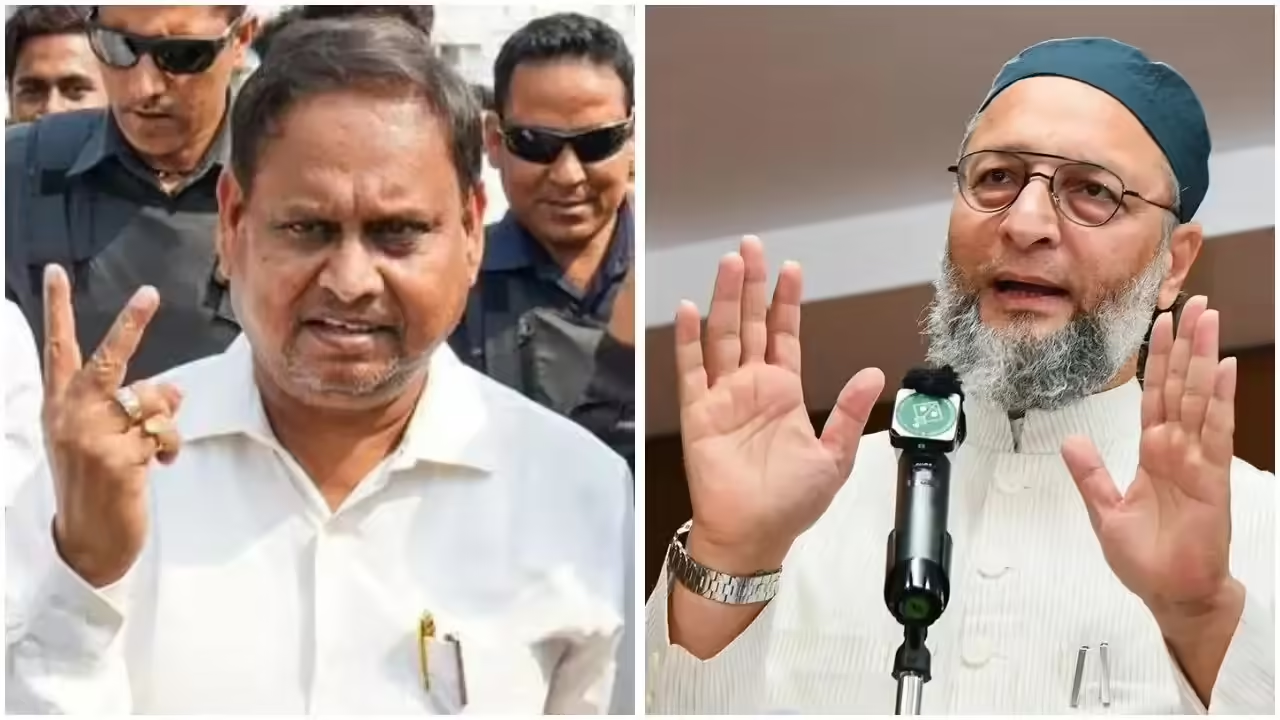
In a significant political move, the All India Majlis-e-Ittehadul Muslimeen (AIMIM), led by Asaduddin Owaisi, has officially severed its alliance with the Aam Janata Unnayan Party, headed by Humayun Kabir. The announcement was made in a statement released early Friday, highlighting the AIMIM’s concerns regarding remarks attributed to Kabir.
The AIMIM’s statement underscored its stance on maintaining the integrity of the Muslim community, declaring that it “cannot associate with any statements where the integrity of Muslims is brought into question.” The party affirmed that the alliance with Kabir’s party has been terminated immediately, citing his comments as revealing the vulnerabilities faced by Muslims in West Bengal.
AIMIM’s Electoral Strategy
Following the dissolution of the alliance, AIMIM has reaffirmed its intention to participate in the upcoming West Bengal Assembly elections independently. The party declared this strategy is part of its broader policy to ensure marginalized communities possess a distinct political voice in the electoral process.
In a post on X, AIMIM emphasized the socio-economic challenges confronting Muslims in West Bengal, labeling them as one of the poorest, neglected, and oppressed communities despite years of governance by parties advocating a secular agenda.
Controversy Surrounding Humayun Kabir
The fallout from the alliance’s termination has been exacerbated by ongoing controversies associated with Humayun Kabir. Previously a member of the All India Trinamool Congress (TMC), Kabir was expelled from the party before establishing his own political entity, the Aam Janata Unnayan Party.
A video surfaced on social media, purportedly featuring Kabir discussing strategic plans to sway Muslim voters and make financial arrangements for post-election support. The TMC shared the video, framing it as an “EXPLOSIVE sting operation” that purportedly reveals a conspiracy involving Kabir and the Bharatiya Janata Party (BJP), alleging that he received a sum of Rs 1,000 crore to mislead the minority community.
In response, Kabir has denied these allegations, asserting that the video is a product of artificial intelligence manipulation aimed at tarnishing his reputation.
Political Context and Potential Impact
Kabir’s faction emerged in the wake of disputes relating to a proposal about the Babri Masjid, prompting him to create his own party to participate in upcoming elections. Political analysts suggest that AIMIM’s decision to contest alone could have significant ramifications for electoral dynamics, especially in areas with large minority populations.
While there are concerns that the AIMIM’s solo run might lead to the splitting of votes, supporters argue that this approach could strengthen representation for communities that have historically faced marginalization.
The West Bengal Assembly, comprising 294 seats, is scheduled to hold elections in two phases on April 23 and April 29, with the counting of votes slated for May 4.
Follow US
https://www.facebook.com/charchaexpress
https://www.youtube.com/@charcha-express
https://www.instagram.com/charcha.express/
Contents
AIMIM Withdrawal from AllianceIn a significant political move, the All India Majlis-e-Ittehadul Muslimeen (AIMIM), led by Asaduddin Owaisi, has officially severed its alliance with the Aam Janata Unnayan Party, headed by Humayun Kabir. The announcement was made in a statement released early Friday, highlighting the AIMIM’s concerns regarding remarks attributed to Kabir.The AIMIM’s statement underscored its stance on maintaining the integrity of the Muslim community, declaring that it “cannot associate with any statements where the integrity of Muslims is brought into question.” The party affirmed that the alliance with Kabir’s party has been terminated immediately, citing his comments as revealing the vulnerabilities faced by Muslims in West Bengal.AIMIM’s Electoral StrategyFollowing the dissolution of the alliance, AIMIM has reaffirmed its intention to participate in the upcoming West Bengal Assembly elections independently. The party declared this strategy is part of its broader policy to ensure marginalized communities possess a distinct political voice in the electoral process.In a post on X, AIMIM emphasized the socio-economic challenges confronting Muslims in West Bengal, labeling them as one of the poorest, neglected, and oppressed communities despite years of governance by parties advocating a secular agenda.Controversy Surrounding Humayun KabirThe fallout from the alliance’s termination has been exacerbated by ongoing controversies associated with Humayun Kabir. Previously a member of the All India Trinamool Congress (TMC), Kabir was expelled from the party before establishing his own political entity, the Aam Janata Unnayan Party.A video surfaced on social media, purportedly featuring Kabir discussing strategic plans to sway Muslim voters and make financial arrangements for post-election support. The TMC shared the video, framing it as an “EXPLOSIVE sting operation” that purportedly reveals a conspiracy involving Kabir and the Bharatiya Janata Party (BJP), alleging that he received a sum of Rs 1,000 crore to mislead the minority community.In response, Kabir has denied these allegations, asserting that the video is a product of artificial intelligence manipulation aimed at tarnishing his reputation.Political Context and Potential ImpactKabir’s faction emerged in the wake of disputes relating to a proposal about the Babri Masjid, prompting him to create his own party to participate in upcoming elections. Political analysts suggest that AIMIM’s decision to contest alone could have significant ramifications for electoral dynamics, especially in areas with large minority populations.While there are concerns that the AIMIM’s solo run might lead to the splitting of votes, supporters argue that this approach could strengthen representation for communities that have historically faced marginalization.The West Bengal Assembly, comprising 294 seats, is scheduled to hold elections in two phases on April 23 and April 29, with the counting of votes slated for May 4.