The Influence of Women Voters in Tamil Nadu’s Political Landscape
Historical Context of Women’s Political Engagement
In the realm of Indian politics, the significance of women voters has been frequently articulated through the lens of government schemes, such as cash transfers, subsidized gas cylinders, and free transportation. However, Tamil Nadu’s approach to women’s political involvement predates these contemporary discussions. The state has long recognized women not merely as household dependents but as political stakeholders, actively engaged in the electoral process.
The evolution of women’s political influence began during the Dravidian movement in the 1960s and 1970s. This period was marked by a focus on language pride, caste mobility, and anti-Central government sentiment. Politicians acknowledged that issues like rising prices and the availability of ration shops were particularly pertinent to women, even in a male-dominated public political landscape.
The Role of Welfare Programs
In the 1980s, as M G Ramachandran, a former film star, became Chief Minister of Tamil Nadu, he expanded the noon-meal program in schools, recognizing its political significance. This program, which began modestly, later developed into one of India’s most comprehensive school nutrition initiatives, reflecting a sustained commitment from successive governments.
The program’s origins trace back to K Kamaraj, who revived the meal scheme in the 1950s. M Karunanidhi further expanded it in the 1970s, and MGR took it statewide in the 1980s. Over the years, the menu evolved, eventually providing a daily meal to over 5.5 million children across the state, including a variety of nutritious options.
Moreover, Chief Minister M K Stalin introduced the Chief Minister’s Breakfast Scheme, which ensured that primary school children received morning meals. While these initiatives aimed to benefit children, they also significantly impacted mothers by alleviating concerns about their children’s nutrition.
The Strategic Focus on Women Voters
Political scientists have noted that welfare programs addressing daily needs tend to foster loyalty among women voters, who often handle household responsibilities directly. MGR was instrumental in establishing the importance of women’s political roles. Later, Jayalalithaa further developed this concept by implementing various programs to provide direct practical support to women, addressing issues such as marriage assistance, maternity support, and subsidized essential goods.
Opponents may label these initiatives as mere handouts, but for millions of women, they represent crucial infrastructure. Notably, Amma canteens offered affordable meals, thus reducing the burden of domestic labor — a factor that is often underrated by male analysts.
Economists argue that the value of welfare should not only be measured in cash but also in the time and effort saved. Programs that alleviate travel burdens or allow women to engage in paid work may yield as much benefit as direct financial support.
Current Initiatives and Trends
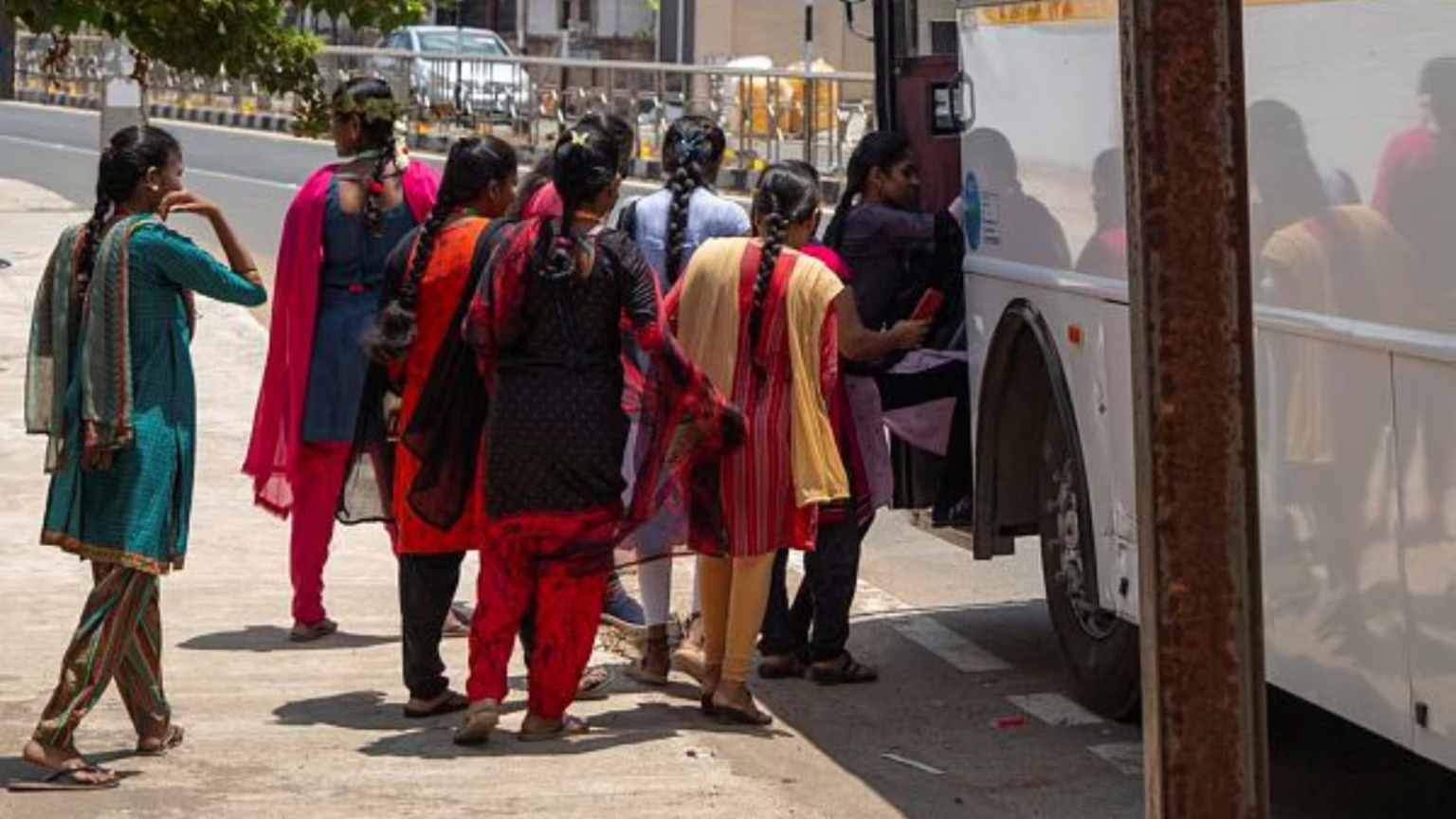
Despite historical perceptions of the DMK as a male-centric party, it has adapted over time. Under the leadership of M K Stalin, the party has actively engaged women voters. The introduction of free bus travel for women has notably improved mobility and accessibility across the state.
In September 2023, the government launched the Kalaignar Magalir Urimai Thittam, which provides monthly cash transfers to eligible women heads of households. This initiative acknowledges a long-recognized truth: financial resources in women’s hands can have far-reaching implications beyond mere monetary value.
As of early 2026, the program had expanded to around 1.31 crore beneficiaries. The state allocated a substantial budget to fund these initiatives, reflecting a commitment to support women’s daily needs and welfare expenses.
Women’s Voting Patterns and Economic Contributions
Tamil Nadu’s history of treating women as vital political agents is foundational to the high voter turnout among women in recent elections. Factors such as improved literacy rates, better public health, and existing welfare schemes contribute to this trend.
Women voters in Tamil Nadu represent a diverse demographic, spanning urban professionals, factory laborers, and homemakers. Their responses to political messages can vary significantly based on their socio-economic backgrounds and individual circumstances.
This election season, political parties are communicating with women through various platforms. The DMK champions its welfare model, while the AIADMK references its “Amma” legacy in an effort to connect with voters.
Ultimately, Tamil Nadu’s understanding of women’s political agency is deeply rooted in practical experiences and historical engagement, reflecting a progressive acknowledgment of women’s roles in the democratic process long before recent trends in direct benefits emerged.