Gulf Nations Accelerate Infrastructure Development to Mitigate Strait of Hormuz Risks
Regional Concerns Over Oil and Gas Flows
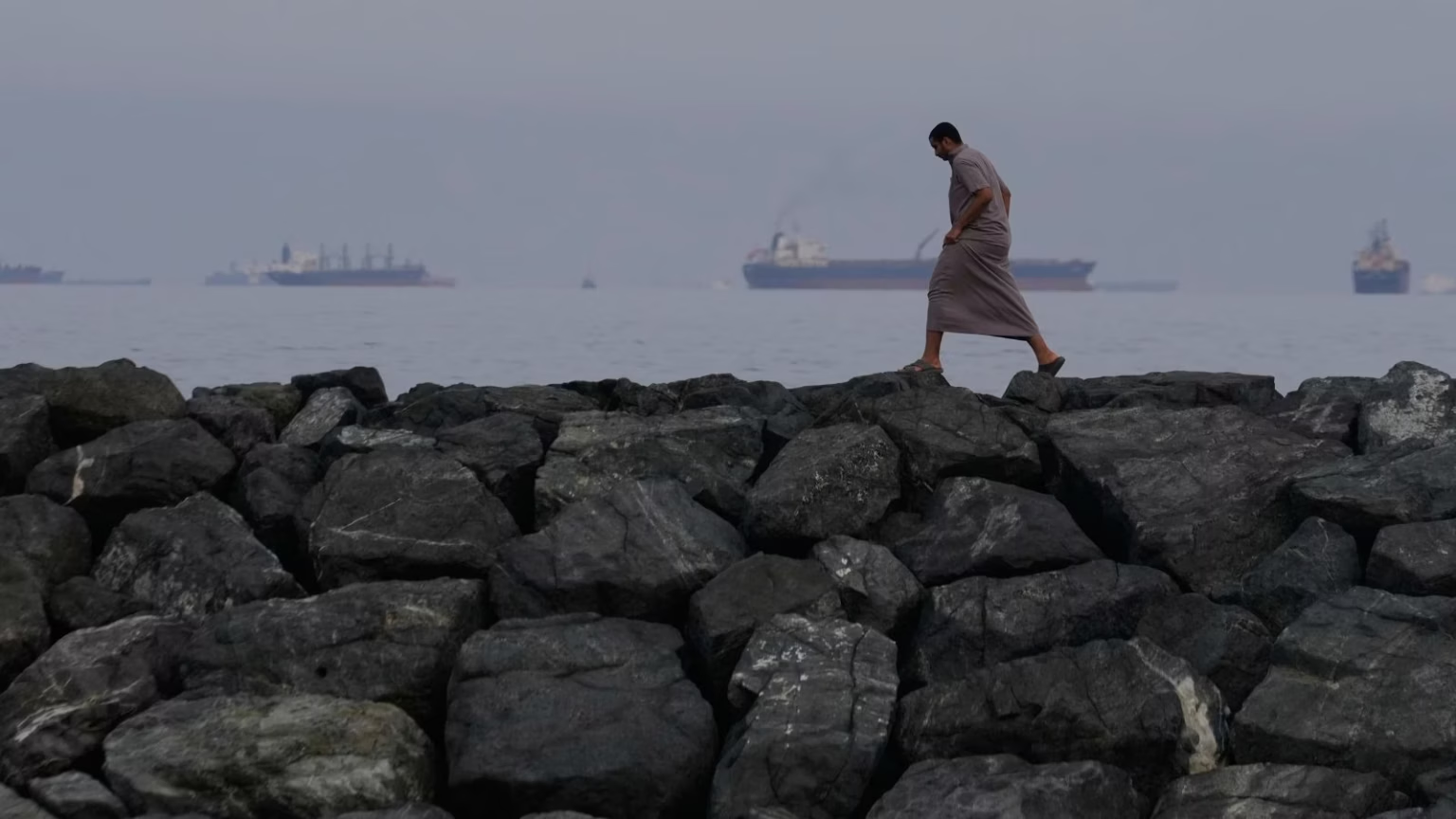
Amid rising tensions stemming from the conflict between Iran and Israel, Gulf countries, particularly the United Arab Emirates (UAE) and Saudi Arabia, are taking steps to enhance their infrastructure aimed at reducing their dependence on the Strait of Hormuz. This strategic waterway serves as a crucial channel for global oil and liquefied natural gas (LNG), facilitating about 20% of worldwide shipments. Recent military conflicts have led to an unprecedented halt in maritime traffic through this narrow channel, intensifying concerns over the region’s vulnerability and its impact on global energy supply.
The current conflict has prompted Gulf states to collaborate on revitalizing older pipelines and potentially constructing new ones, with preliminary efforts reportedly underway. Badr Jafar, a prominent businessman and the UAE’s Special Envoy for Business and Philanthropy, highlighted that discussions have shifted towards redesigning systems that have historically left the region exposed to crises, indicating a move towards regional economic integration in the face of adversity.
The Strait’s Geopolitical Significance
Historically, Iran has threatened to disrupt shipping routes through the Strait of Hormuz, yet actual closure was rare until the emergence of the recent conflict that began on February 28. This escalation demonstrated Tehran’s capability to obstruct vessel movements, thereby exerting significant pressure on global markets. The ongoing conflict underscores the critical nature of the Strait for transporting oil, gas, and essential commodities, with any disruptions reverberating throughout energy markets.
As the situation evolves, analysts are assessing various alternatives for expanding pipeline networks to lessen reliance on the Strait. According to Victoria Grabenwöger, a senior oil analyst, any such enhancements would necessitate substantial financial and logistical investments, with completion timelines stretching over several years. Saudi Arabia and the UAE have already shown the potential for export through existing pipelines, enabling some oil shipments despite ongoing maritime disruptions.
Pipeline Alternatives and Development
Saudi Arabia’s East-West pipeline and the UAE’s Abu Dhabi Crude Oil Pipeline (ADCOP) have been operational in bypassing the Strait of Hormuz, demonstrating early success despite lower export volumes compared to main routes. This could lead to possible long-term shifts in regional energy logistics, as stakeholders recognize the necessity of developing robust infrastructure to avoid concentration risks associated with a single chokepoint.
Experts suggest various pipeline projects could be revived or expanded, including Saudi Arabia’s East-West route and the UAE’s ADCOP. Furthermore, enhancing the Iraq-Turkey pipeline could facilitate larger volumes of Iraqi crude without passing through the Strait. Other projects such as the Basra-Aqaba pipeline linking Iraq to Jordan and the Iraqi Pipeline through Saudi Arabia (IPSA) could also be reconsidered, albeit with significant infrastructural and political hurdles ahead.
Challenges and Regional Dynamics
Despite the emphasis on pipeline infrastructure, the region’s historical record shows many existing oil export pipelines have faced shutdowns due to political conflicts and geopolitical instability. Naji Abi-Aad, a senior energy advisor, noted that all lines in the Gulf have been disrupted at least once, affecting their reliability.
Industry analysts believe that swift action is critical for nations like Iraq, which faces urgent demands for continuous oil exports. While the UAE may be positioned to implement incremental projects quickly, countries like Kuwait, Qatar, and Bahrain might focus more on risk management and storage solutions, given their geographical constraints and limited pipeline options.
Saudi Arabia and the UAE are expected to extend their efforts in establishing additional bypass pipelines. Potential collaboration between Kuwait and Saudi Arabia could also see the development of new infrastructural pathways. Given the current geopolitical landscape, it is likely that the Persian Gulf will possess enhanced bypass capabilities within the next five years, fundamentally altering the role of the Strait of Hormuz in global economics.