
Supreme Court of India Examines Religious Practices and Superstitions
Court’s Authority to Determine Superstitious Practices
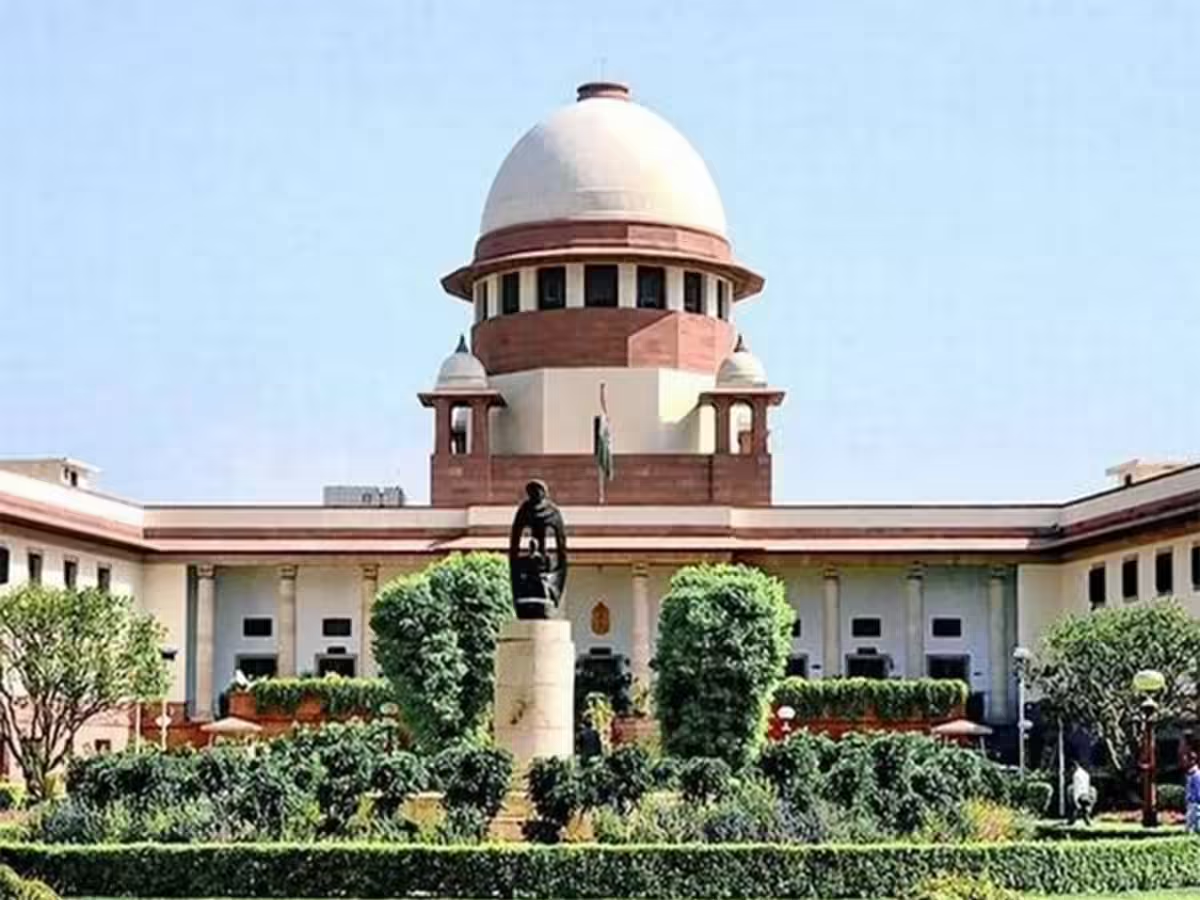
The Supreme Court of India has asserted its jurisdiction to determine the nature of practices within religions, including whether these practices are superstitious. This statement was made during hearings regarding the discrimination faced by women in places of worship, particularly at the Sabarimala temple in Kerala. The court is currently considering broader questions related to religious freedom as outlined in the Indian Constitution.
A nine-judge Constitution bench, led by Chief Justice Surya Kant, is delving into the interplay between religious practices and court interventions. The hearing comes in light of various petitions concerning women’s access to religious sites and the criteria under which courts can adjudicate on religious matters.
Contention Between Judiciary and Executive
Solicitor General Tushar Mehta, representing the Government of India, argued that it is not within the judiciary’s purview to label practices as superstitious. He informed the bench that the responsibility for defining and amending such practices lies with the legislature, referencing Article 25(2)(b) of the Constitution. He remarked that the legislature is adept at identifying superstitious practices that may require reform and provided examples of existing laws aimed at preventing black magic and other similar practices.
Justice Ahsanuddin Amanullah responded to Mehta’s assertions by contending that the argument simplifies the complex nature of the issue, emphasizing the courts’ role in examining whether a particular practice qualifies as superstition. He stated, “You cannot say that whatever the legislature decides is the last word.” This perspective emphasizes the participatory role of the judiciary in assessing such intricacies.
Concerns Over Cultural Diversity
Mehta further argued that the diverse religious landscape of India complicates any objective evaluation of superstitions, noting that practices perceived as religious in one region may not hold the same significance in another. He cited the example of differing religious practices in states like Nagaland and Maharashtra, which could complicate any legal interpretations of superstition under the Constitution.
Justice Joymalya Bagchi posed a hypothetical scenario about whether practices such as witchcraft could be defended as religious rights. He questioned Mehta on the court’s authority to intervene in matters where the legislature may remain silent on controversial practices. Justice Bagchi proposed using the ‘doctrine of unoccupied field’ to potentially prohibit such practices in the interest of public health, morality, and order.
Assessment of Essential Religious Practices
In continuing discussions, Justice B V Nagarathna emphasized the importance of analyzing essential religious practices through the framework of the respective religion’s philosophy. She stated that it is critical for the court to avoid imposing external religious views when evaluating practices that are deemed essential within a given religion. The assessment should always align with considerations of health, morality, and public order.
Background of the Current Proceedings
The ongoing hearings stem from a significant Supreme Court ruling made in September 2018, wherein a five-judge Constitution bench ruled by a 4:1 majority against the prohibition of women ages 10 to 50 from entering the Sabarimala Ayyappa temple. This landmark decision deemed the restriction unconstitutional. Following this, on November 14, 2019, another five-judge bench referred several related questions to a larger bench, focusing on women’s entry in religious places and the overarching implications for religious freedom across various faiths.
The legal discourse continues, with the Supreme Court actively exploring the delicate balance between religious practices and the principles of equity and justice as enshrined in the Indian Constitution.
Follow US
https://www.facebook.com/charchaexpress
https://www.youtube.com/@charcha-express
https://www.instagram.com/charcha.express/
Contents
Court’s Authority to Determine Superstitious PracticesThe Supreme Court of India has asserted its jurisdiction to determine the nature of practices within religions, including whether these practices are superstitious. This statement was made during hearings regarding the discrimination faced by women in places of worship, particularly at the Sabarimala temple in Kerala. The court is currently considering broader questions related to religious freedom as outlined in the Indian Constitution.A nine-judge Constitution bench, led by Chief Justice Surya Kant, is delving into the interplay between religious practices and court interventions. The hearing comes in light of various petitions concerning women’s access to religious sites and the criteria under which courts can adjudicate on religious matters.Contention Between Judiciary and ExecutiveSolicitor General Tushar Mehta, representing the Government of India, argued that it is not within the judiciary’s purview to label practices as superstitious. He informed the bench that the responsibility for defining and amending such practices lies with the legislature, referencing Article 25(2)(b) of the Constitution. He remarked that the legislature is adept at identifying superstitious practices that may require reform and provided examples of existing laws aimed at preventing black magic and other similar practices.Justice Ahsanuddin Amanullah responded to Mehta’s assertions by contending that the argument simplifies the complex nature of the issue, emphasizing the courts’ role in examining whether a particular practice qualifies as superstition. He stated, “You cannot say that whatever the legislature decides is the last word.” This perspective emphasizes the participatory role of the judiciary in assessing such intricacies.Concerns Over Cultural DiversityMehta further argued that the diverse religious landscape of India complicates any objective evaluation of superstitions, noting that practices perceived as religious in one region may not hold the same significance in another. He cited the example of differing religious practices in states like Nagaland and Maharashtra, which could complicate any legal interpretations of superstition under the Constitution.Justice Joymalya Bagchi posed a hypothetical scenario about whether practices such as witchcraft could be defended as religious rights. He questioned Mehta on the court’s authority to intervene in matters where the legislature may remain silent on controversial practices. Justice Bagchi proposed using the ‘doctrine of unoccupied field’ to potentially prohibit such practices in the interest of public health, morality, and order.Assessment of Essential Religious PracticesIn continuing discussions, Justice B V Nagarathna emphasized the importance of analyzing essential religious practices through the framework of the respective religion’s philosophy. She stated that it is critical for the court to avoid imposing external religious views when evaluating practices that are deemed essential within a given religion. The assessment should always align with considerations of health, morality, and public order.Background of the Current ProceedingsThe ongoing hearings stem from a significant Supreme Court ruling made in September 2018, wherein a five-judge Constitution bench ruled by a 4:1 majority against the prohibition of women ages 10 to 50 from entering the Sabarimala Ayyappa temple. This landmark decision deemed the restriction unconstitutional. Following this, on November 14, 2019, another five-judge bench referred several related questions to a larger bench, focusing on women’s entry in religious places and the overarching implications for religious freedom across various faiths.The legal discourse continues, with the Supreme Court actively exploring the delicate balance between religious practices and the principles of equity and justice as enshrined in the Indian Constitution.