India’s Trade Deficit Marginally Decreases to $21 Billion in March Amid West Asia Crisis
Overview of Trade Performance
In March 2026, India’s goods trade deficit decreased slightly to $20.67 billion compared to $21.69 billion in the same month last year. This change was influenced by a notable reduction in imports of petroleum products and a decline in exports of rice, gems & jewellery, and electronics to the West Asia region, according to data released by the Ministry of Commerce and Industry.
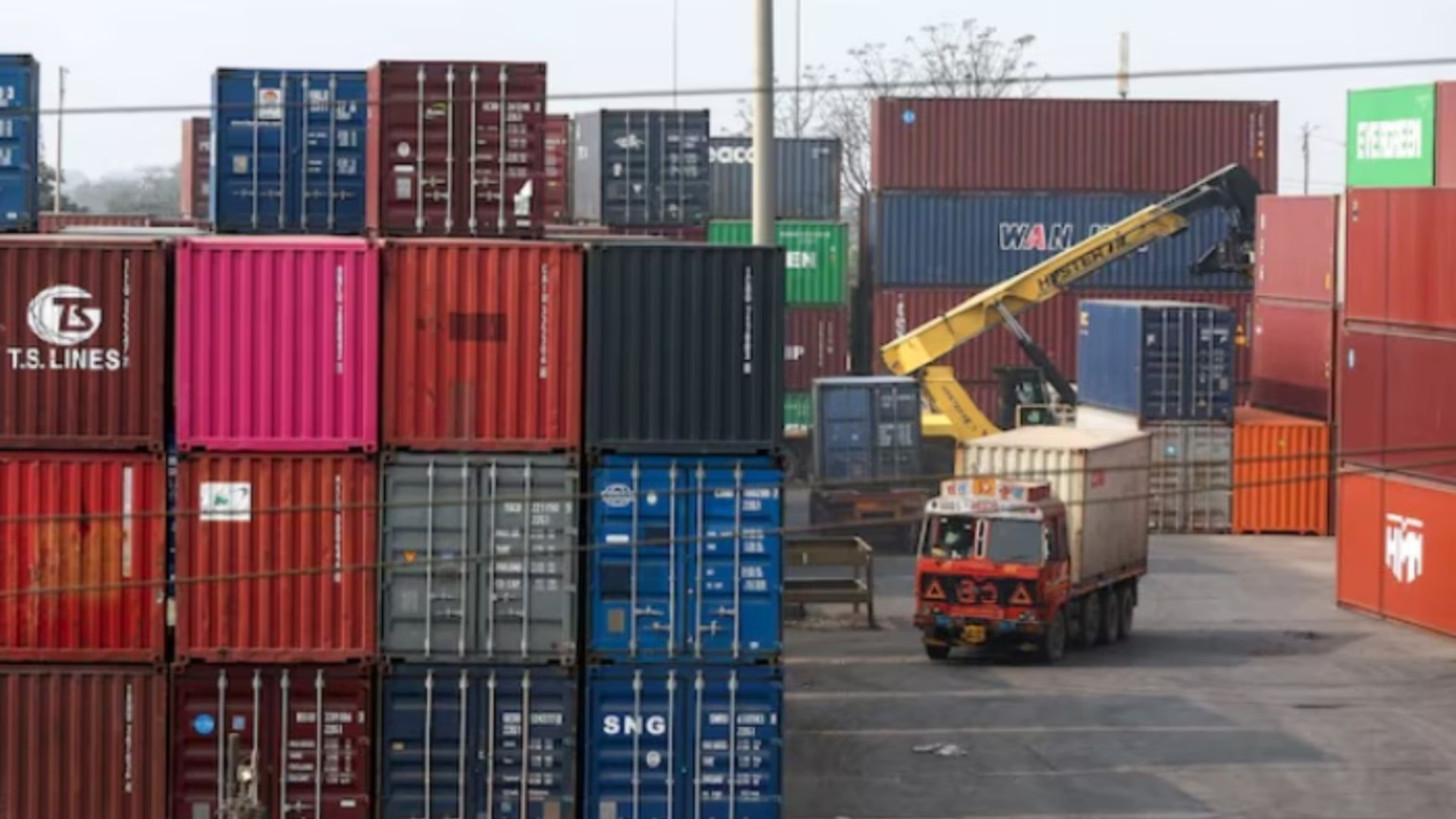
Despite the easing trade deficit, total goods exports in March saw a decline of 7.4% year-on-year, falling to $38.92 billion from $42.05 billion in March 2025. Concurrently, imports also decreased by 6.9% to $59.59 billion compared to $63.74 billion during the same period last year.
Impact of West Asia Crisis
The ongoing crisis in West Asia has significantly impacted trade dynamics. Exports to the region plummeted by 57.95%, while imports decreased by 51.64%. Monthly exports to West Asia, previously around $6 billion, reduced to $3.5 billion. Commerce Secretary Rajesh Agarwal indicated that April might prove challenging as well, but expressed confidence in the export sector’s adaptability.
In the previous financial year, total exports exceeded $860 billion, marking a growth of approximately 4.22% from the prior year. On the other hand, imports surged by 6.7% to reach $974 billion, primarily fueled by rising gold prices. Despite certain trade challenges, particularly related to tariffs, goods exports increased by 1% to $441 billion year-on-year.
Sector-Specific Dynamics
Data from March illustrates significant reductions in imports from key trading partners in the Gulf. Notable decreases included imports from the UAE (down 66.32%), Saudi Arabia (down 37.32%), Iraq (down 64.30%), and Qatar (down 47.89%). Exports to the UAE and Saudi Arabia also fell sharply by 61.93% and 45.67%, respectively. Even exports to major markets like the US declined by 20%.
Various labor-intensive sectors experienced sharp declines in export performance during March. Exports of gems and jewellery fell by nearly 30%, while readymade garments and drugs and pharmaceuticals saw decreases of 19% each.
Feedback from Industry Leaders
S.C. Ralhan, President of the Federation of Indian Export Organisations (FIEO), highlighted that the export growth in the previous financial year was supported by a diverse range of products, including engineering goods, petroleum products, electronics, and more. This diversification has strengthened India’s position within global value chains. Ralhan underscored the importance of leveraging free trade agreements to enhance market access and further expand India’s global presence.
Pankaj Chadha, Chairman of the Engineering Exports Promotion Council (EEPC), noted that the conflict in West Asia, which began on February 28, has led to significant disruptions in supply chains along with a spike in energy prices. He mentioned that several raw material prices are trending upward amid inflationary pressures, with the wholesale price index (WPI) inflation reaching a three-year high of 3.88% in March. Chadha expressed cautious optimism regarding the growth outlook for engineering exports in FY27.
In March 2026, during the sea route disruptions caused by the West Asia crisis, engineering goods exports did, however, post a slight increase of 1.1%, standing at $10.94 billion compared to $10.82 billion in March 2025.