The Election Dynamics in Madurai Central: A Detailed Examination
Introduction to the Contest
On April 14, I arrived at Madurai International Airport after an early morning flight from New Delhi, eager to witness a crucial election in Tamil Nadu between former finance minister Palanivel Thiaga Rajan (PTR) and filmmaker Sundar C. The competition was situated in a constituency where the DMK’s welfare record, the rising Tamilaga Vettri Kazhagam (TVK), and the resources of a BJP-backed alliance were about to intersect.
Initially, Madurai Central was regarded as a secure DMK seat, as the AIADMK had not fielded a candidate there since 1977. However, the political climate shifted dramatically due to anti-incumbency sentiments fueled by popular actor Vijay and his newly established TVK party. Allegations regarding governance failures circulated extensively on social media, raising concern in the national political landscape about a potential surprise outcome. To gain firsthand insight into the unfolding situation, I decided to visit the constituency.
Campaigning in Challenging Conditions
Upon my arrival in Madurai, I was struck by the extreme heat, which made campaigning challenging during the day. Despite the conditions, candidates persevered, participating in rallies, door-to-door outreach, and temple visits, each attempting to outdo the other in attracting larger crowds and making bold accusations against their opponents.
The atmosphere turned contentious when Sundar C accused PTR of financial misconduct, alleging a 200 crore rupee scam that he claimed highlighted PTR’s inadequate contributions to the constituency. This sparked a heated exchange, with PTR countering Sundar C’s claims and accusing him and his wife, actress Khushbu Sundar, of being aligned with “cinema sanghis.” Additionally, PTR faced accusations regarding his accessibility, exemplified by an unrelated incident involving dogs at his home.
Political Shifts and Reframed Narratives
The political landscape shifted with a special session of Parliament on delimitation and women’s reservation shortly before the election, prompting Chief Minister M K Stalin to publicly denounce the Constitution (131st Amendment) Bill. This provided PTR with an opportunity to frame the election as a struggle to safeguard the Dravidian ethos against perceived overreach from New Delhi while labeling the AIADMK as traitors to the Tamil populace.
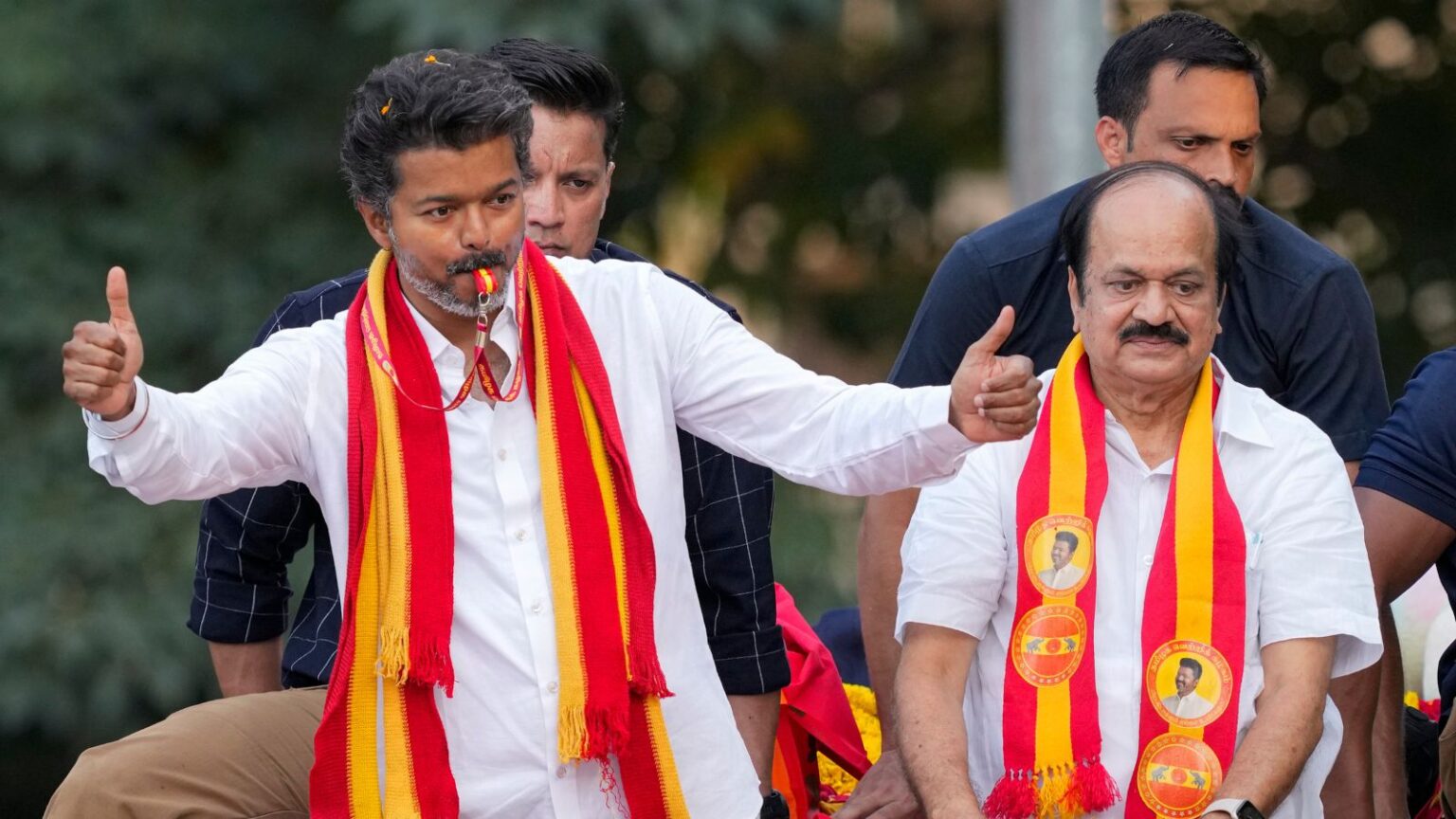
Amid these narratives, a previously underestimated factor emerged: actor Joseph Vijay’s significant influence over the youth. Initial surveys had predicted TVK’s support at 10 percent, but this number surged to 20 percent, with notably high backing from younger voters. In Madurai Central, TVK candidate V M S Mustafa was polling at over 20 percent, positioning him ahead of more established contenders despite having a less vigorous campaign schedule.
Voter Sentiments and Last-Minute Allegations
The contest’s human aspect became evident in two significant encounters. At the Kalaignar Centenary Library, civil services aspirants expressed their preference for TVK, believing in the possibility of meaningful change influenced by Vijay’s star power. In contrast, at the market near Meenakshi Amman temple, a young Muslim trans man cautioned that voting for TVK could risk splitting votes essential for the DMK.
As election day approached, reports surfaced about substantial financial influence in the constituency, with reports of vote-buying schemes offering a thousand rupees per vote in support of the AIADMK’s symbol. Furthermore, allegations were made that Sundar C and Khushbu Sundar had failed to disclose three companies related to their film production in their affidavits, which were said to have concealed over 600 crores in revenue from tax authorities.
Campaign Differences and Election Outcomes
Sundar C’s concluding rally did not match the high expectations generated by social media. Despite initially projecting significant momentum, the turnout was modest, with more BJP flags present than AIADMK ones, suggesting a disconnect between online marketing and actual grassroots support.
In contrast, PTR’s final speech resonated emotionally, expressing that the trust earned through years of public service could not be measured by monetary contributions. Early indications suggest that this sentiment has not succeeded in maintaining his constituency, as PTR faces a tight race with Mustafa for a third term, while Sundar C trails in third place. The discrepancy between the campaign’s anticipated success and the actual results raises critical questions about the effectiveness of monetarily driven campaigns versus those grounded in ideological principles and community connection.
Implications for the Future
The electoral environment in Madurai Central poses significant lessons relevant beyond Tamil Nadu. For the INDIA bloc, which will confront a ruling coalition willing to leverage financial and state resources in future contests, these results indicate the limitations of money and power. They suggest that politics rooted in core values and principles can still be viable in the electoral arena.
While the future of the DMK’s Dravidian compact, the prospects of the TVK’s rise, and the potential for the INDIA bloc to unify these insights into a broader national strategy remain open questions, the events in Madurai Central provide valuable insights worthy of consideration in future elections.