John Ternus Appointed as New CEO of Apple, Facing Challenges Amid Executive Changes and AI Push
Transition of Leadership
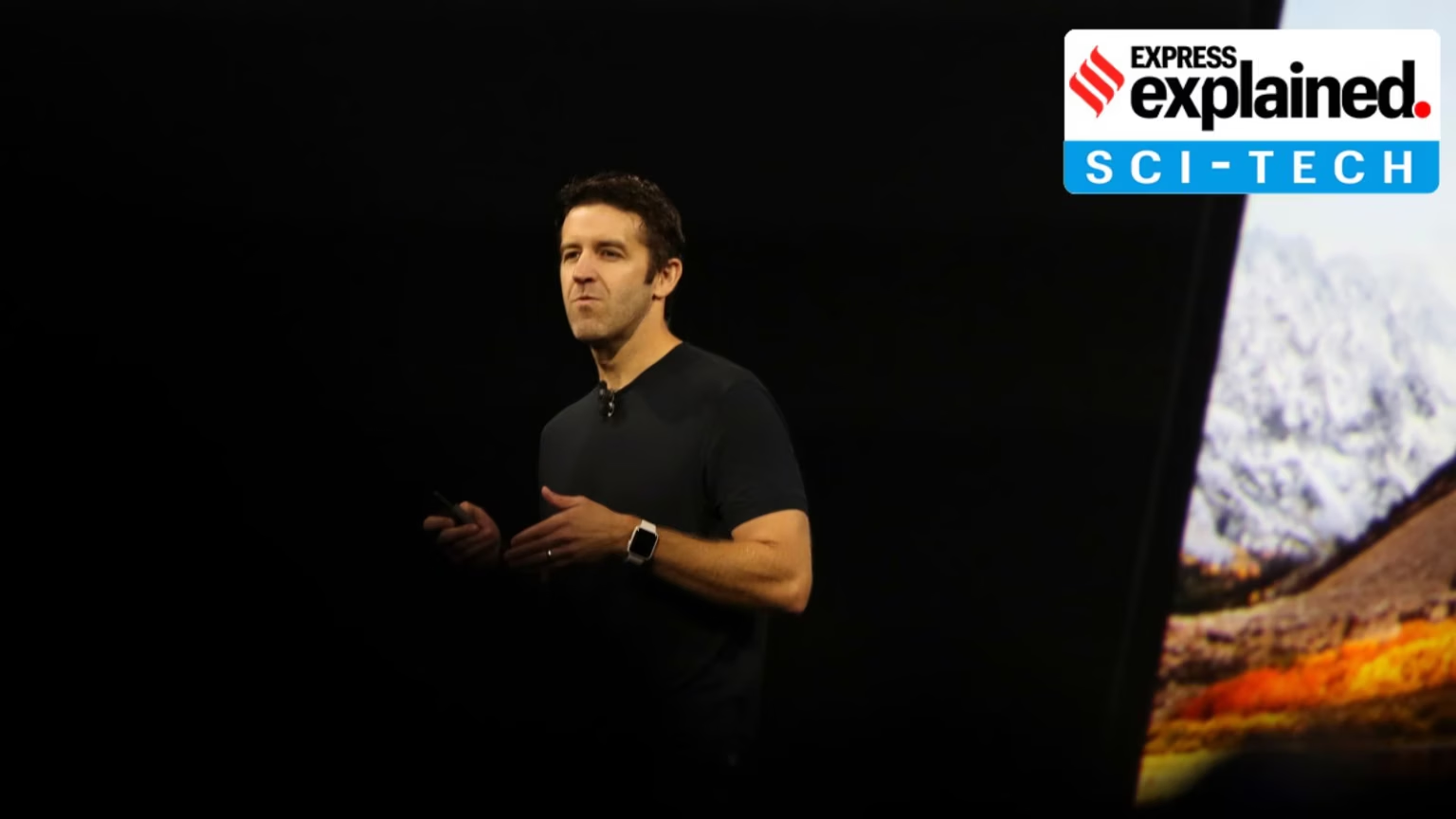
Apple has announced the appointment of John Ternus as its new chief executive officer, succeeding Tim Cook, who will step down after leading the company for 15 years. Tim Cook has been at the forefront of Apple since 2011, following the resignation of co-founder Steve Jobs due to health issues before his eventual passing. Ternus, currently serving as the head of hardware engineering, is set to officially assume the role on September 1.
With over 25 years at Apple, Ternus is considered a seasoned insider and has long been seen as a key candidate for the CEO position. His extensive experience encompasses involvement in major product launches, including various generations of the iPad, iPhone, Apple Watch, and AirPods, along with the company’s transition to its custom chip lineup. In a recent statement, Ternus acknowledged Cook as his mentor and noted that Cook will remain with the company during the transition phase and will take on the role of executive chairman, focusing on engaging with global policymakers.
Challenges Ahead for Ternus
Despite the positive aspects of Ternus’s appointment, he is set to face considerable challenges. His leadership follows a series of high-profile departures from Apple, including chief operating officer Jeff Williams, who left last year. Furthermore, the company’s previous CFO and general counsel opted for reduced roles leading up to their retirements. In December alone, the heads of Apple’s AI, user interfaces, and environmental initiatives announced their exits, raising questions about the stability of the management team.
Another major obstacle for Ternus is the diversified supply chain of Apple, which is currently under pressure from geopolitical tensions and rising memory chip prices caused by increased demand for AI technology in the United States. The most significant challenge that Ternus will confront is the need to advance Apple’s position in the AI landscape, where the company is perceived to be lagging behind competitors such as Microsoft, Google, Meta, and Amazon.
AI Advancements and Product Developments
In October 2022, when Apple introduced iOS 26, it was seen as a major redesign aiming to bolster its standing in the competitive AI landscape. The pivotal question for Ternus is whether Apple can reclaim its reputation in software and AI innovation. The anticipated enhancements to Siri, Apple’s virtual assistant, have been slow to materialize, with analysts suggesting that the company might need a fresh approach rather than merely refining existing systems, as seen with other tech companies.
During its 2023 Worldwide Developers Conference, Apple unveiled a mixed-reality headset, which has been categorized as a niche product. The 2024 conference emphasized new AI features and improvements to Siri under the “Apple Intelligence” initiative. Following this announcement, Apple’s stock experienced a notable surge, gaining over $200 billion in value, marking one of the largest single-day increases in U.S. corporate history.
However, the subsequent 2025 WWDC received criticism for underwhelming results, prompting suggestions from analysts that Apple might have benefited from starting over with its AI efforts rather than attempting to enhance existing features. In contrast, some rivals have made strategic investments in AI companies to accelerate their development, raising concerns about Apple’s ability to compete effectively.
Future Directions and Opportunities
While Apple has indicated awareness of the declining relevance of smartphones and is exploring new opportunities, competitors like Google and Meta have made significant strides in integrating AI into smart glasses and other technologies. Additionally, companies such as OpenAI, which recently acquired a firm co-founded by Apple’s former chief designer Jony Ive, are building devices that could pose challenges to Apple’s innovation pipeline.
Despite facing stiff competition and challenges, Apple maintains a strong user base with a billion active iPhones globally. However, the company’s commitment to user privacy has hindered its ability to gather personal data, impacting the development of customized AI models. Apple’s focus on differential privacy has led to a reliance on aggregated data rather than individual insights, which may limit its competitiveness in AI offerings.
As John Ternus prepares to take on his new role in just under four months, it will be crucial for him to prioritize the company’s transition toward AI, potentially shaping the future direction of Apple’s hardware and software endeavors.