Opposition Parties Express Concerns Over Women’s Reservation Legislation
Prime Minister’s Pitch and Opposition Response
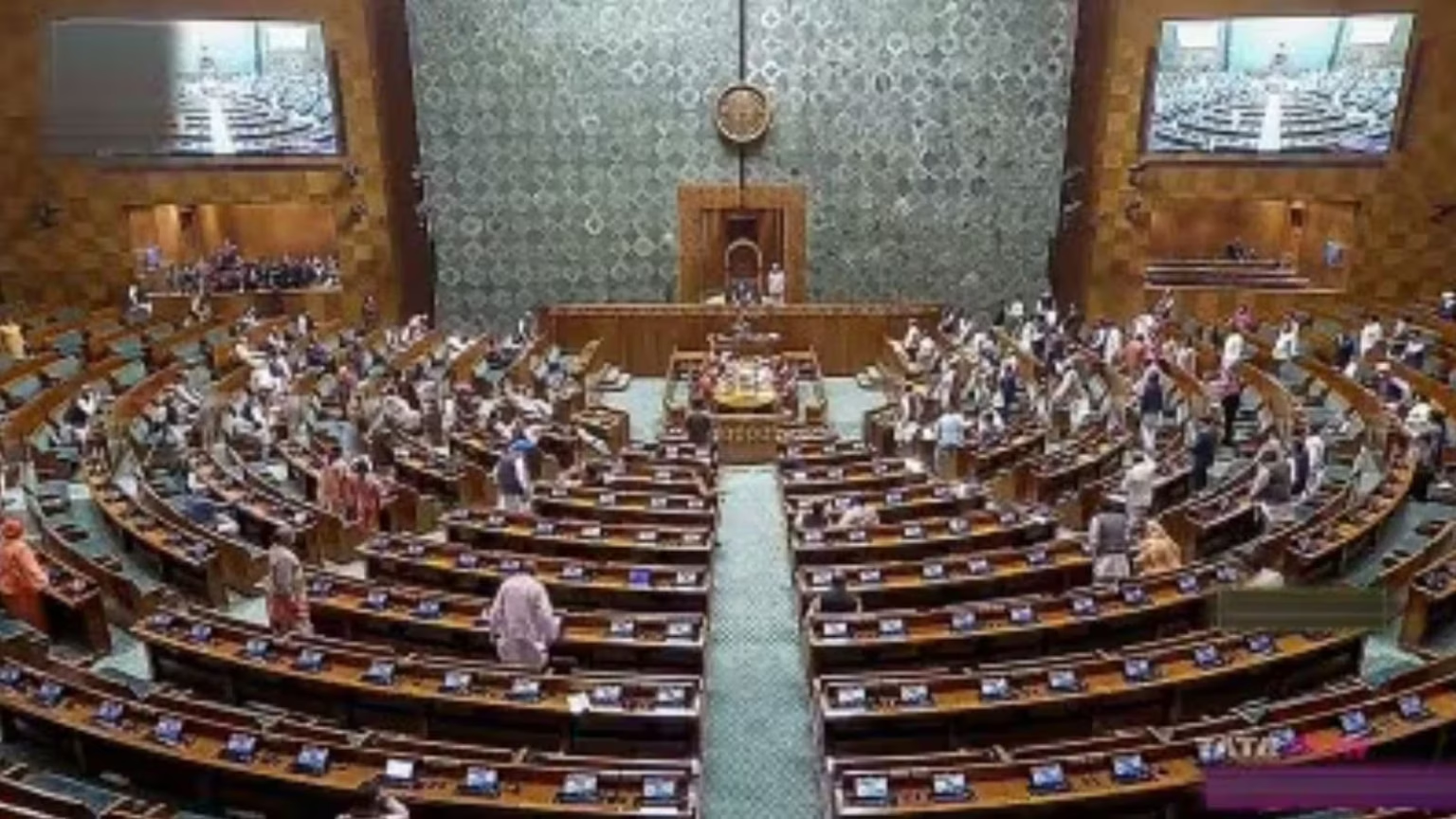
Prime Minister Narendra Modi has characterized the upcoming three-day special session of Parliament focusing on amendments to the Women’s Reservation Act as a potentially pivotal decision for the 21st century. However, divisions within the opposition, particularly among the INDIA bloc parties, indicate strong resistance to the proposed three Bills. Critics allege that the government is using the push for women’s reservation as a facade to implement population-based delimitation without conducting a national census.
Sonia Gandhi, the chairperson of the Congress Parliamentary Party, expressed her dissatisfaction with the expedited process of introducing these Bills, highlighting that the government has not shared any drafts with the opposition prior to the discussion. Echoing her sentiments, Telangana Chief Minister Revant Reddy accused the government of utilizing women’s reservation as a distraction to implement a delimitation model linked to voter demographics. He suggested an alternative framework for assigning seats based on Gross State Domestic Product (GSDP). The focus is on a crucial meeting arranged by Congress leaders scheduled for April 15, the day before the special session, where opposition leaders will strategize regarding their response to the proposed legislation.
Awaiting High Command Instructions
Members of the INDIA bloc are currently waiting for directives from their party leadership regarding their official stance on the Bills once they are presented in Parliament. According to various sources, many opposition MPs believe that they will likely refrain from supporting the Bills due to concerns surrounding issues like the lack of a census prior to delimitation, sub-categories for women’s quotas, and the apparent sidelining of a caste census by the current government. These apprehensions were previously conveyed to Union Home Minister Amit Shah in discussions, wherein opposition leaders indicated that they suspect the delimitation process might be manipulated to advance the ruling party’s agenda.
A senior member of the Congress opined that Sonia Gandhi’s public remarks suggest that the party may ultimately decide against supporting the legislation. Factors influencing this potential stance include considerations regarding southern states in relation to the proposed changes and broader implications surrounding the Parliament’s future structural integrity with an increase in member numbers. Another Congress MP mentioned that the party plans to bring attention to the caste census issue, which Rahul Gandhi highlighted as a significant topic leading up to the forthcoming Lok Sabha elections.
Concerns Over Legislative Process
Congress leader Manish Tewari raised specific concerns about the government’s failure to distribute the text of the Bills to MPs, emphasizing that such substantive legislative matters necessitate advance circulation for adequate scrutiny, which has not occurred. A member from the Rajya Sabha representing the Samajwadi Party stated that their party would assess the situation further post the April 15 meeting before taking a definitive stand on the Bills. The inability to acquire copies of the proposed legislation has also raised questions about transparency and due process.
SP MP Iqra Choudhary articulated that her party is advocating for sub-categorization, calling for quotas specifically for OBC women within the broader reservation framework. She criticized the government’s linkage of delimitation to women’s reservation, questioning the urgency to pass legislation without thorough deliberation, particularly in light of impending state elections.
Regional Concerns and Broader Implications
Regional parties, particularly those from southern India, express trepidation regarding potential negative impacts of increased representation for populous northern states. Concerns have been raised that this could disadvantage southern constituents, who may receive fewer seats in the Lok Sabha as a result of the proposed changes. The DMK, representing major opposition voices from the south, signaled its willingness to oppose the legislation, framing it as more of a delimitation measure rather than a genuine women’s reservation initiative.
In contrast, parties within the National Democratic Alliance (NDA) appear largely supportive of the proposed women’s reservation legislation. JDU spokesperson Sanjay Kumar argued that the move is part of a broader political vision for women’s empowerment, while TDP officials expressed their commitment to supporting reservation policies, citing historical precedents. The BJP has mobilized its parliamentary members, issuing directives for their attendance throughout the upcoming special session to ensure legislative support for the Bills, which require a supermajority for passage.