
Slight Dip in CPM’s Kannur Strongholds, Uptick in Urban Thiruvananthapuram: Insights on Kerala’s Voter Turnout
Voter Turnout Overview
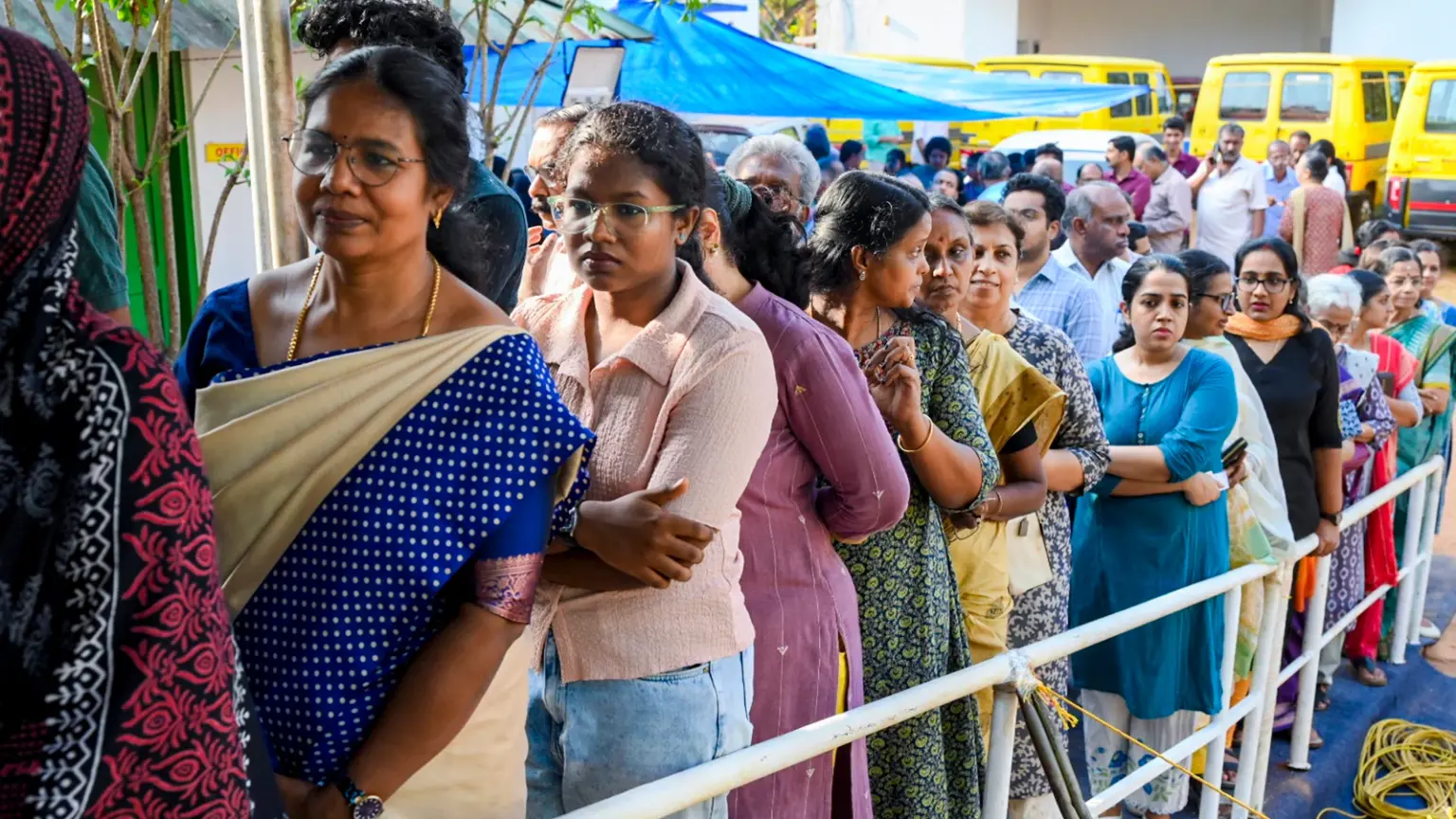
Kerala experienced a notable voter turnout of 78.27% in its recent Assembly elections, surpassing figures from previous elections. Based on data from the Election Commission’s Special Intensive Revision of electoral rolls, polling occurred across 140 constituencies on Thursday, with 42 seats achieving more than 80% turnout.
The Ranni constituency in the Pathanamthitta district reported the lowest turnout at 68.98%, although this marked an increase from 65.84% in 2021. Conversely, the Kunnamangalam constituency recorded the highest turnout at 84.83%.
District-Level Insights
Malappuram district, a stronghold of the Indian Union Muslim League, witnessed its highest voter turnout since the 2011 Assembly elections, with eight constituencies surpassing the 80% mark.
Ernakulam district also showed a strong showing, with eight of its 14 seats reporting over 80% voting. The urban areas within this district, including Thrikkakara, Ernakulam, Thripunithura, Kunnathunadu, and Kochi, exhibited significant increases in voter participation.
Urban Thiruvananthapuram’s Performance
The urban area of Thiruvananthapuram, traditionally known for lower voter turnout, saw a remarkable rise in participation. The BJP, aiming to secure wins in the five high-stakes constituencies, noted increases in various areas.
At Nemom, where BJP state president Rajeev Chandrasekhar is contesting, the turnout rose from 71.33% in 2021 to 80.62%. Kattakkada saw an uptick to 80.72% from 74.05% in the previous election, while substantial increases were recorded in Kazhakootam, Vattiyoorkavu, and Thiruvananthapuram Central seats.
Decline in CPI(M) Strongholds
Conversely, several CPI(M) strongholds in Kannur district reported a slight decline in voter turnout. Key constituencies including Payyannur, Kalyasseri, Taliparamba, Dharmadam, and Azhikode, which are currently held by the CPI(M), experienced decreased participation.
In particular, Taliparamba and Payyannur are noteworthy as they face challenges from rebels supported by Congress. The opposition UDF alliance is looking to capitalize on the discontent within the ruling LDF.
The reduced turnout in Kannur could be attributed to a lower number of expat voters participating in the election, possibly linked to ongoing conflicts in West Asia, an area from which many expatriates in the region originate.
Historical Context of Voter Turnout
Historical trends in Kerala suggest that voter turnout figures do not always greatly favor any particular party. For instance, in 1991, a turnout of 73.42% preceded a Congress victory with 90 seats. Conversely, in 1996, a turnout decrease to 71.16% resulted in a Left victory with 80 seats.
Subsequent elections have shown varying results, with the Congress winning 99 seats in 2001 when turnout was 72.47%. The LDF regained power in 2006 with 92 seats despite a turnout of 72.08%. In the most recent election held in 2021, the LDF retained power with 99 seats while turnout dipped to 76%.
Political Reactions
Following the elections, LDF convener T P Ramakrishnan expressed confidence, asserting that anti-incumbency would not be a factor in this election. He emphasized the LDF’s continued governance and accused the UDF of spreading misinformation.
In opposition, UDF Leader V D Satheesan stated that the UDF anticipates winning over 100 seats. He highlighted the party’s strong performance, signaling that increased polling reflects a favorable shift for the UDF. He mentioned that the election serves as a clear indication against any perceived alliance between the CPI(M) and BJP.
Follow US
https://www.facebook.com/charchaexpress
https://www.youtube.com/@charcha-express
https://www.instagram.com/charcha.express/
Contents
Voter Turnout OverviewKerala experienced a notable voter turnout of 78.27% in its recent Assembly elections, surpassing figures from previous elections. Based on data from the Election Commission’s Special Intensive Revision of electoral rolls, polling occurred across 140 constituencies on Thursday, with 42 seats achieving more than 80% turnout.The Ranni constituency in the Pathanamthitta district reported the lowest turnout at 68.98%, although this marked an increase from 65.84% in 2021. Conversely, the Kunnamangalam constituency recorded the highest turnout at 84.83%.District-Level InsightsMalappuram district, a stronghold of the Indian Union Muslim League, witnessed its highest voter turnout since the 2011 Assembly elections, with eight constituencies surpassing the 80% mark.Ernakulam district also showed a strong showing, with eight of its 14 seats reporting over 80% voting. The urban areas within this district, including Thrikkakara, Ernakulam, Thripunithura, Kunnathunadu, and Kochi, exhibited significant increases in voter participation.Urban Thiruvananthapuram’s PerformanceThe urban area of Thiruvananthapuram, traditionally known for lower voter turnout, saw a remarkable rise in participation. The BJP, aiming to secure wins in the five high-stakes constituencies, noted increases in various areas.At Nemom, where BJP state president Rajeev Chandrasekhar is contesting, the turnout rose from 71.33% in 2021 to 80.62%. Kattakkada saw an uptick to 80.72% from 74.05% in the previous election, while substantial increases were recorded in Kazhakootam, Vattiyoorkavu, and Thiruvananthapuram Central seats.Decline in CPI(M) StrongholdsConversely, several CPI(M) strongholds in Kannur district reported a slight decline in voter turnout. Key constituencies including Payyannur, Kalyasseri, Taliparamba, Dharmadam, and Azhikode, which are currently held by the CPI(M), experienced decreased participation.In particular, Taliparamba and Payyannur are noteworthy as they face challenges from rebels supported by Congress. The opposition UDF alliance is looking to capitalize on the discontent within the ruling LDF.The reduced turnout in Kannur could be attributed to a lower number of expat voters participating in the election, possibly linked to ongoing conflicts in West Asia, an area from which many expatriates in the region originate.Historical Context of Voter TurnoutHistorical trends in Kerala suggest that voter turnout figures do not always greatly favor any particular party. For instance, in 1991, a turnout of 73.42% preceded a Congress victory with 90 seats. Conversely, in 1996, a turnout decrease to 71.16% resulted in a Left victory with 80 seats.Subsequent elections have shown varying results, with the Congress winning 99 seats in 2001 when turnout was 72.47%. The LDF regained power in 2006 with 92 seats despite a turnout of 72.08%. In the most recent election held in 2021, the LDF retained power with 99 seats while turnout dipped to 76%.Political ReactionsFollowing the elections, LDF convener T P Ramakrishnan expressed confidence, asserting that anti-incumbency would not be a factor in this election. He emphasized the LDF’s continued governance and accused the UDF of spreading misinformation.In opposition, UDF Leader V D Satheesan stated that the UDF anticipates winning over 100 seats. He highlighted the party’s strong performance, signaling that increased polling reflects a favorable shift for the UDF. He mentioned that the election serves as a clear indication against any perceived alliance between the CPI(M) and BJP.