

Clashes Erupt Between Police and Tribals in Odisha Over Bauxite Mining
Overview of Clashes
Recent clashes between police and tribal communities in Odisha’s Rayagada district resulted in injuries to at least 40 police personnel and 25 residents. The violence occurred on Tuesday and was reportedly sparked by the construction of a 3-kilometer approach road leading to the Sijimali bauxite mine in Kashipur. This event highlights ongoing tensions surrounding bauxite mining in the region, which have persisted since Vedanta Ltd was awarded the mine in 2023.
Local communities have expressed concerns over the bauxite mining project, which they believe threatens their livelihoods. Discontent has grown since the mine’s auction, leading to protests against the road construction.
Contentions Surrounding the Mining Project
The approval process for the bauxite mining project has been a topic of contention. The district administration claims that local Gram Sabhas, or village meetings, convened on December 8, 2023, under the Forest Rights Act, yielded unanimous consent from residents in all eight affected villages. Vedanta has also submitted a proposal to the central government seeking necessary clearances for mining activities.
Residents, however, contest the validity of the Gram Sabhas, alleging that they were conducted under fraudulent circumstances and that their signatures were falsified. They have been vocal in their opposition, expressing fears that the mining project will jeopardize their means of survival.
Vedanta’s Progress and Regulatory Clearances
In response to community apprehensions, Vedanta has announced that it received Stage-1 forest clearance from the Union government, with plans to commence the project next year. The Stage-1 clearance indicates a conditional approval subject to compliance with requirements such as compensatory afforestation and financial deposits for the diversion of forest land.
Geographical and Mineral Significance of Sijimali
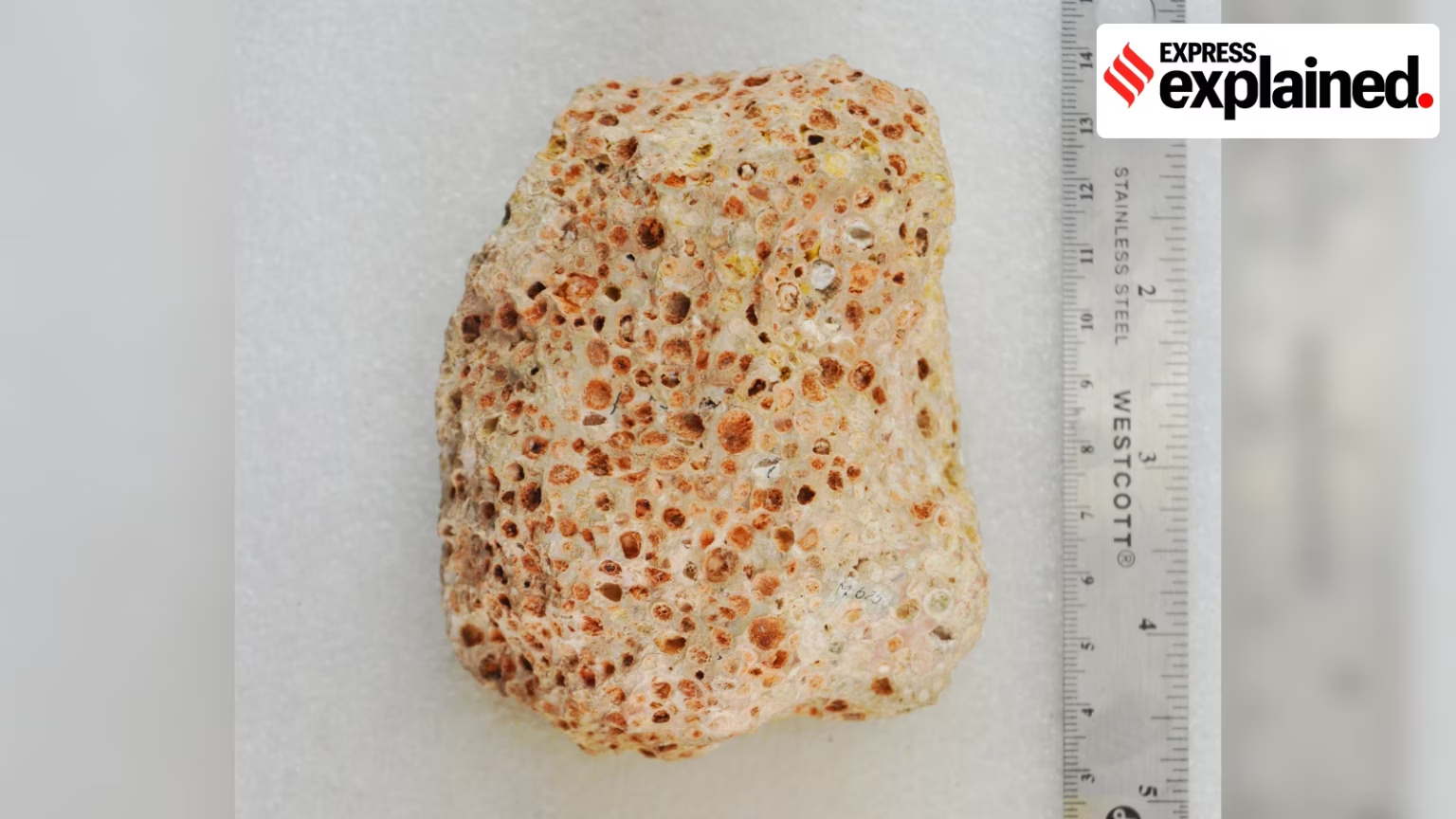
Sijimali, part of the Eastern Ghats hill ranges, spans 1,500 hectares across the Rayagada and Kalahandi districts. It is estimated to house approximately 311 million tonnes of high-grade bauxite and is located in proximity to Vedanta’s alumina refinery in Lanjigarh, Kalahandi district. Bauxite is crucial for alumina refining, which in turn is essential for aluminium production.
Aluminium is widely used in various applications due to its strength, light weight, and conductivity, and is the most abundant metal in the Earth’s crust. According to the Indian Bureau of Mines, Odisha accounted for 41% of India’s bauxite resources and was its leading producer in the 2021-22 fiscal year, contributing about 73% of the country’s total bauxite production. Beyond bauxite, the state is rich in other minerals, including high-grade iron ore, coal, nickel, gemstones, and graphite, collectively representing nearly 17% of India’s total mineral reserves.
History of Protests Against Mining
Vedanta has faced challenges in its mining endeavors in Odisha previously. The company attempted to mine bauxite from the eco-sensitive Niyamgiri hill, home to the Dongria Kondhs, a Particularly Vulnerable Tribal Group. This initiative met resistance due to environmental and cultural concerns, particularly regarding the local deity Niyam Raja, who is worshipped as the protector of the Niyamgiri forest.
The venture to extract bauxite for the Lanjigarh alumina refinery faced significant setbacks after the Centre denied Stage-II forest clearance in 2010, which was crucial for the diversion of 660 hectares of forest land. A Supreme Court ruling in 2013 mandated that the mining project required clearance from the Gram Sabhas, leading to all 12 Gram Sabhas rejecting Vedanta’s proposal later that year.
Follow US
https://www.facebook.com/charchaexpress
https://www.youtube.com/@charcha-express
https://www.instagram.com/charcha.express/
Contents
Overview of ClashesRecent clashes between police and tribal communities in Odisha’s Rayagada district resulted in injuries to at least 40 police personnel and 25 residents. The violence occurred on Tuesday and was reportedly sparked by the construction of a 3-kilometer approach road leading to the Sijimali bauxite mine in Kashipur. This event highlights ongoing tensions surrounding bauxite mining in the region, which have persisted since Vedanta Ltd was awarded the mine in 2023.Local communities have expressed concerns over the bauxite mining project, which they believe threatens their livelihoods. Discontent has grown since the mine’s auction, leading to protests against the road construction.Contentions Surrounding the Mining ProjectThe approval process for the bauxite mining project has been a topic of contention. The district administration claims that local Gram Sabhas, or village meetings, convened on December 8, 2023, under the Forest Rights Act, yielded unanimous consent from residents in all eight affected villages. Vedanta has also submitted a proposal to the central government seeking necessary clearances for mining activities.Residents, however, contest the validity of the Gram Sabhas, alleging that they were conducted under fraudulent circumstances and that their signatures were falsified. They have been vocal in their opposition, expressing fears that the mining project will jeopardize their means of survival.Vedanta’s Progress and Regulatory ClearancesIn response to community apprehensions, Vedanta has announced that it received Stage-1 forest clearance from the Union government, with plans to commence the project next year. The Stage-1 clearance indicates a conditional approval subject to compliance with requirements such as compensatory afforestation and financial deposits for the diversion of forest land.Geographical and Mineral Significance of SijimaliSijimali, part of the Eastern Ghats hill ranges, spans 1,500 hectares across the Rayagada and Kalahandi districts. It is estimated to house approximately 311 million tonnes of high-grade bauxite and is located in proximity to Vedanta’s alumina refinery in Lanjigarh, Kalahandi district. Bauxite is crucial for alumina refining, which in turn is essential for aluminium production.Aluminium is widely used in various applications due to its strength, light weight, and conductivity, and is the most abundant metal in the Earth’s crust. According to the Indian Bureau of Mines, Odisha accounted for 41% of India’s bauxite resources and was its leading producer in the 2021-22 fiscal year, contributing about 73% of the country’s total bauxite production. Beyond bauxite, the state is rich in other minerals, including high-grade iron ore, coal, nickel, gemstones, and graphite, collectively representing nearly 17% of India’s total mineral reserves.History of Protests Against MiningVedanta has faced challenges in its mining endeavors in Odisha previously. The company attempted to mine bauxite from the eco-sensitive Niyamgiri hill, home to the Dongria Kondhs, a Particularly Vulnerable Tribal Group. This initiative met resistance due to environmental and cultural concerns, particularly regarding the local deity Niyam Raja, who is worshipped as the protector of the Niyamgiri forest.The venture to extract bauxite for the Lanjigarh alumina refinery faced significant setbacks after the Centre denied Stage-II forest clearance in 2010, which was crucial for the diversion of 660 hectares of forest land. A Supreme Court ruling in 2013 mandated that the mining project required clearance from the Gram Sabhas, leading to all 12 Gram Sabhas rejecting Vedanta’s proposal later that year.