CBSE Introduces New AI Curriculum for Middle School Students
Overview of the Curriculum
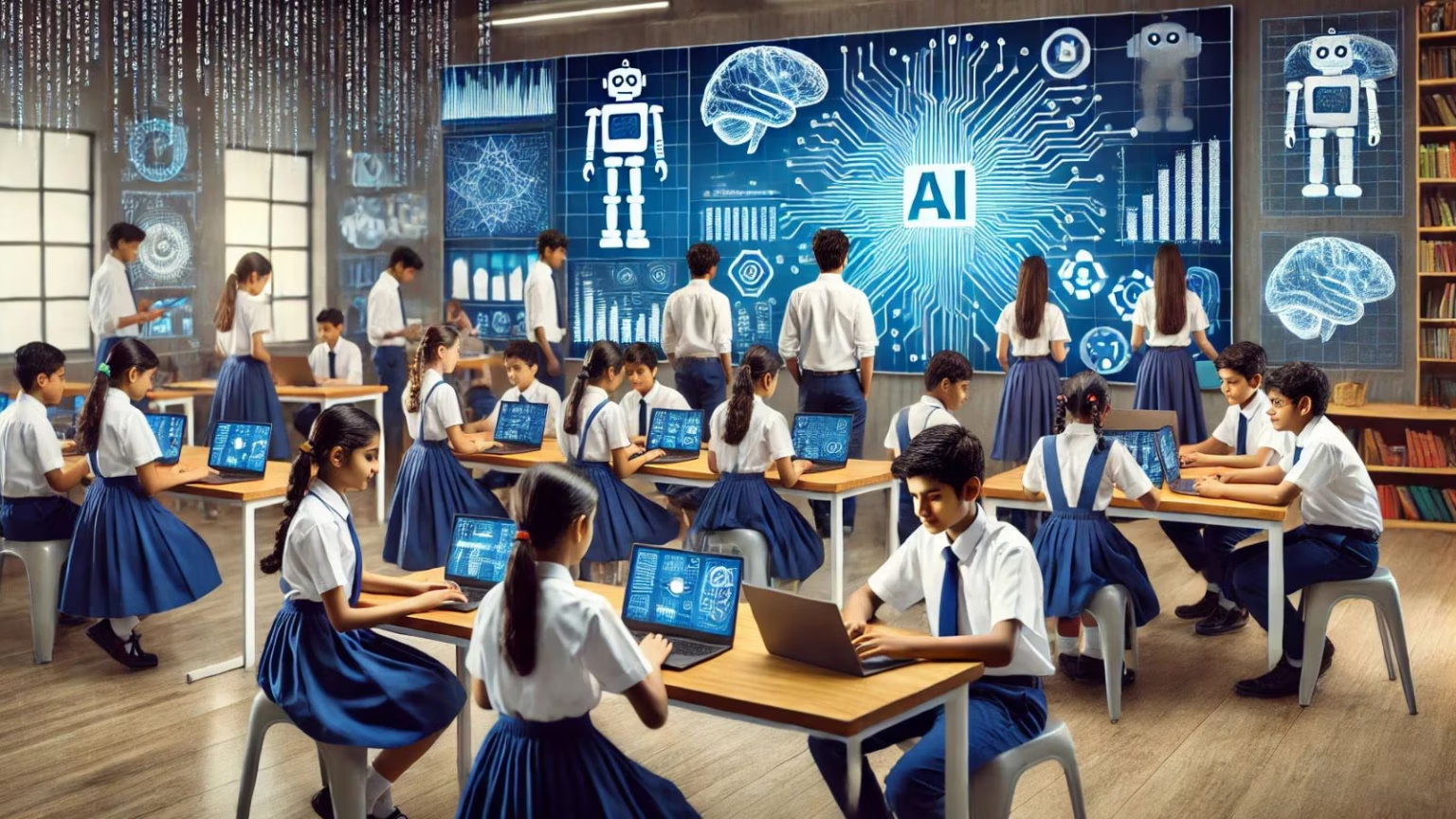
The Central Board of Secondary Education (CBSE) has unveiled a curriculum focused on Computational Thinking (CT) and Artificial Intelligence (AI) targeted at students from classes III to VIII. Set to be implemented in the 2026-27 academic session, the curriculum aims to enhance learners’ abilities in logical thinking, problem-solving, and understanding AI’s role in everyday life. However, the specifics of how these components are interconnected remain ambiguous.
As students increasingly interact with AI and social media, concerns have emerged among parents and educators regarding safety and privacy, as well as the potential impact on critical thinking skills. The new AI literacy initiative could provide a platform to address these issues, although its effectiveness in doing so is yet to be determined.
Curricular Structure by Class Level
The curriculum introduces CT to students in classes III to V, while classes VI to VIII will focus on “advanced CT” and foundational knowledge of AI, including a segment on AI ethics. The learning outcomes for Class VI include tasks such as differentiating between machine intelligence and human intelligence, and explaining machine automation versus AI through practical examples. Questions arise regarding the appropriateness of these expectations for 11-year-olds, especially in terms of their capacity for introspection.
For Class VII, the learning objectives include distinguishing between predictive techniques like regression and classification—concepts typically explored in Data Science undergraduate programs. While the terminology may be conveyed to 12-year-olds, comprehension of these concepts within the framework of AI poses additional challenges. Class VIII students are expected to engage with no-code tools to solve real-world problems, yet the curriculum lacks clarity on equipping them with a nuanced understanding of such tools.
Concerns About AI Perception and Bias
While the curriculum includes discussions on bias in AI, it fails to address how children, particularly those from vulnerable backgrounds, perceive AI as an infallible source of information. This reinforces a view of AI as a human-like entity that responds without judgment, which could mislead students about the limitations and ethical considerations surrounding AI technologies.
The framework for CT encompasses areas such as abstraction and algorithmic thinking, already integrated into the Mathematics curriculum for the relevant school years. However, the possibility of a cross-curricular integration involving Science and Social Studies is under exploration globally, and many educators remain skeptical about its implementation in a national context until more effective integration strategies are identified through research.
Disconnect in Curriculum Goals
The curriculum presents a noticeable disconnect between the discussions on CT and the intent to enhance AI literacy. It asserts that CT forms the foundation for AI, claiming that the reasoning involved in CT mirrors the processes of AI and machine learning systems. However, the fundamental differences between these two types of reasoning call this assertion into question.
Research on AI education at the primary and middle-school levels is limited, casting doubt on the curriculum’s foundation. Additionally, significant disparities in access to digital education and tools persist across the country, and many teachers lack adequate preparation and training in AI. The educational system has struggled to move beyond rote learning and create strong connections between related disciplines, a challenge that could complicate the proposed curriculum’s effectiveness.
Ultimately, the introduction of this AI curriculum could exacerbate information overload among students, while still not fully addressing the critical concerns regarding the influence of AI on middle school children.
Follow US
https://www.facebook.com/charchaexpress
https://www.youtube.com/@charcha-express
https://www.instagram.com/charcha.express/
Contents
Overview of the CurriculumThe Central Board of Secondary Education (CBSE) has unveiled a curriculum focused on Computational Thinking (CT) and Artificial Intelligence (AI) targeted at students from classes III to VIII. Set to be implemented in the 2026-27 academic session, the curriculum aims to enhance learners’ abilities in logical thinking, problem-solving, and understanding AI’s role in everyday life. However, the specifics of how these components are interconnected remain ambiguous.As students increasingly interact with AI and social media, concerns have emerged among parents and educators regarding safety and privacy, as well as the potential impact on critical thinking skills. The new AI literacy initiative could provide a platform to address these issues, although its effectiveness in doing so is yet to be determined.Curricular Structure by Class LevelThe curriculum introduces CT to students in classes III to V, while classes VI to VIII will focus on “advanced CT” and foundational knowledge of AI, including a segment on AI ethics. The learning outcomes for Class VI include tasks such as differentiating between machine intelligence and human intelligence, and explaining machine automation versus AI through practical examples. Questions arise regarding the appropriateness of these expectations for 11-year-olds, especially in terms of their capacity for introspection.For Class VII, the learning objectives include distinguishing between predictive techniques like regression and classification—concepts typically explored in Data Science undergraduate programs. While the terminology may be conveyed to 12-year-olds, comprehension of these concepts within the framework of AI poses additional challenges. Class VIII students are expected to engage with no-code tools to solve real-world problems, yet the curriculum lacks clarity on equipping them with a nuanced understanding of such tools.Concerns About AI Perception and BiasWhile the curriculum includes discussions on bias in AI, it fails to address how children, particularly those from vulnerable backgrounds, perceive AI as an infallible source of information. This reinforces a view of AI as a human-like entity that responds without judgment, which could mislead students about the limitations and ethical considerations surrounding AI technologies.The framework for CT encompasses areas such as abstraction and algorithmic thinking, already integrated into the Mathematics curriculum for the relevant school years. However, the possibility of a cross-curricular integration involving Science and Social Studies is under exploration globally, and many educators remain skeptical about its implementation in a national context until more effective integration strategies are identified through research.Disconnect in Curriculum GoalsThe curriculum presents a noticeable disconnect between the discussions on CT and the intent to enhance AI literacy. It asserts that CT forms the foundation for AI, claiming that the reasoning involved in CT mirrors the processes of AI and machine learning systems. However, the fundamental differences between these two types of reasoning call this assertion into question.Research on AI education at the primary and middle-school levels is limited, casting doubt on the curriculum’s foundation. Additionally, significant disparities in access to digital education and tools persist across the country, and many teachers lack adequate preparation and training in AI. The educational system has struggled to move beyond rote learning and create strong connections between related disciplines, a challenge that could complicate the proposed curriculum’s effectiveness.Ultimately, the introduction of this AI curriculum could exacerbate information overload among students, while still not fully addressing the critical concerns regarding the influence of AI on middle school children.