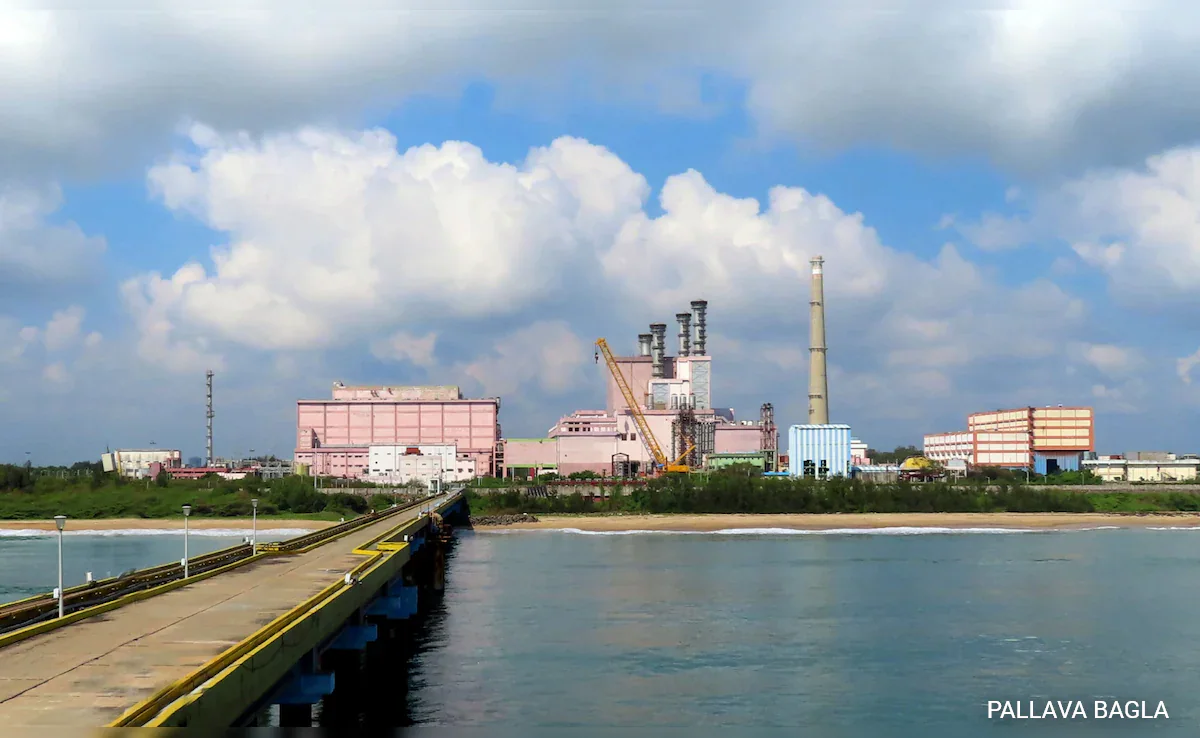
India Achieves First Criticality of Prototype Fast Breeder Reactor
Significant Milestone in Nuclear Power Programme
India has marked a monumental advancement in its civil nuclear programme with the achievement of criticality in the Prototype Fast Breeder Reactor (PFBR) located at Kalpakkam, Tamil Nadu. This event signifies the establishment of a sustained nuclear fission reaction, a key milestone in a project that has spanned over two decades. The progress positions India toward the second phase of its three-stage nuclear power initiative, originally envisioned by Dr. Homi J. Bhabha, the pioneer of India’s atomic program, more than fifty years ago.
Dr. Sreekumar G. Pillai, Director of the Indira Gandhi Centre for Atomic Research (IGCAR), referred to this event as historic, emphasizing that the PFBR represents much more than the simple commissioning of a reactor. He stated that it embodies a major technological breakthrough essential for India’s energy security, leveraging both limited uranium and extensive thorium resources.
Exclusive Technological Club
The PFBR stands out as India’s first commercial-scale fast breeder reactor and joins a small group of similar reactors around the globe, with Russia being the only other country currently operating a commercial fast breeder reactor in Yekaterinburg. This achievement places India in an elite category of advanced nuclear technology.
This reactor is the result of collaborative efforts by generations of scientists, engineers, and policymakers. Dr. Pillai highlighted that the success was made possible due to ongoing support from the Government of India, under the guidance of Prime Minister Narendra Modi. He acknowledged the contributions of Dr. Jitendra Singh, Minister of State for Atomic Energy, and praised previous leaders of the Department of Atomic Energy, as well as the strategic insight of Dr. Ajit Kumar Mohanty.
Challenges Encountered in Development
Despite some describing the project as delayed, Dr. Pillai reframed this as a necessary learning experience. He explained that difficulties encountered were primarily related to handling high-temperature sodium, ensuring material reliability, and developing control systems and sensors. Such challenges required meticulous engineering precision, with sodium being used as the coolant due to its exceptional heat transfer properties but reactivity with water and air.
Dr. Pillai remarked that the testing phase involved data collection that was unique, as previous literature did not cover similar situations. He described the comprehensive process as a valuable learning experience that generated essential knowledge for India’s scientific community.
Understanding Fast Breeder Reactor Technology
The PFBR represents a significant technological advancement compared to India’s initial Pressurized Heavy Water Reactors (PHWRs), which predominantly utilize natural uranium. As Dr. Pillai detailed, the operational methodology of PHWRs not only consumes fuel but also produces plutonium-239, which is crucial for fast breeder reactors. The unique design of the PFBR allows for a breeding ratio greater than one, meaning that it generates more fissile material than it consumes, enhancing fuel sustainability.
Dr. Pillai noted that with the existing oxide fuel, the expected breeding ratio is between 1.03 and 1.05, with potential increases using metallic fuels currently under research.
Encouragement of the Closed Fuel Cycle
India’s capability with fast breeder reactors is closely tied to its mastery of the closed fuel cycle. Dr. Pillai explained that to utilize the plutonium generated, a country must have reprocessing capabilities, a system India has developed since the 1960s. India now has sufficient reprocessing capacity to support the PFBR and future fast reactors, ensuring a steady supply of plutonium.
Safety Measures in Place
Safety considerations, particularly those related to the use of liquid sodium, remain a priority. IGCAR has extensive experience managing sodium safely, having developed specialized materials and sensors to mitigate risks. The reactor’s design adheres to the defense-in-depth safety philosophy, ensuring maximum containment of sodium.
Future Prospects and Energy Independence
With criticality achieved, the PFBR will now undergo a series of physics experiments and gradual power increases, with commercial power production expected within six to eight months. Preparations for two additional fast breeder reactors at the Kalpakkam site are already underway.
Dr. Pillai emphasized the long-term significance of the PFBR as it sets the framework for India’s energy independence, particularly due to the country’s abundant thorium reserves. Through the use of thorium, the PFBR can produce uranium-233, vital for the next phase of India’s nuclear ambitions. As the reactor functions toward equilibrium, Dr. Pillai described it as an “Akshay Patra” of energy, a self-sustaining source contributing to low-carbon electricity essential for combating climate change and striving for net-zero emissions by 2070.
Long or Short, get news the way you like. No ads. No redirections. Download Newspin and Stay Alert, The CSR Journal Mobile app, for fast, crisp, clean updates!