

Ministry of Faith: The Dynamics of Conversion in Punjab
Sunday Gatherings at The Church of Signs and Wonders
On a Sunday morning in Khambra village, the streets leading to The Church of Signs and Wonders become bustling hours before services commence. Buses from surrounding villages and various vehicles are filled with families heading to a large gathering in Jalandhar for sermons conducted by ‘pastor’ Ankur Narula. Inside the church, a vibrant atmosphere prevails as hundreds of attendees stand in organized rows, hands clasped in prayer. A live orchestra soon fills the space with hymns in Punjabi and Hindi, resembling traditional bhajans in local temples. Individuals dressed in matching black-and-white outfits lead the singing, while large LED screens enhance the uplifting experience. The crowd claps and sways in unison.
After a half-hour of musical performances, personal narratives take center stage. A couple with two children steps up, sharing, “We had lost hope after years of marriage. We came here, prayed, and today we are blessed.” Another young man recounts, “I struggled with drug addiction for years. Nothing worked for me. I came here, and now I’m clean.” A woman from Bihar also shares her experience: “I couldn’t walk for years, but now I can.” Each testimony, amplified by dramatic lighting and music, elicits applause, while some audience members weep, and others raise their hands in prayer.
After hours of music and stories, pastor Narula appears on stage, dressed in a white kurta-pyjama. He opens with a Hindi hymn before delivering his sermon, stating, “Medicine can manage. But only faith can heal completely.” Narula claims a following of around 300,000 to 400,000 people in India and abroad. During his sermon, some congregants tremble or fall to the ground, with volunteers swiftly moving to assist them.
Independent Ministries and Political Scrutiny
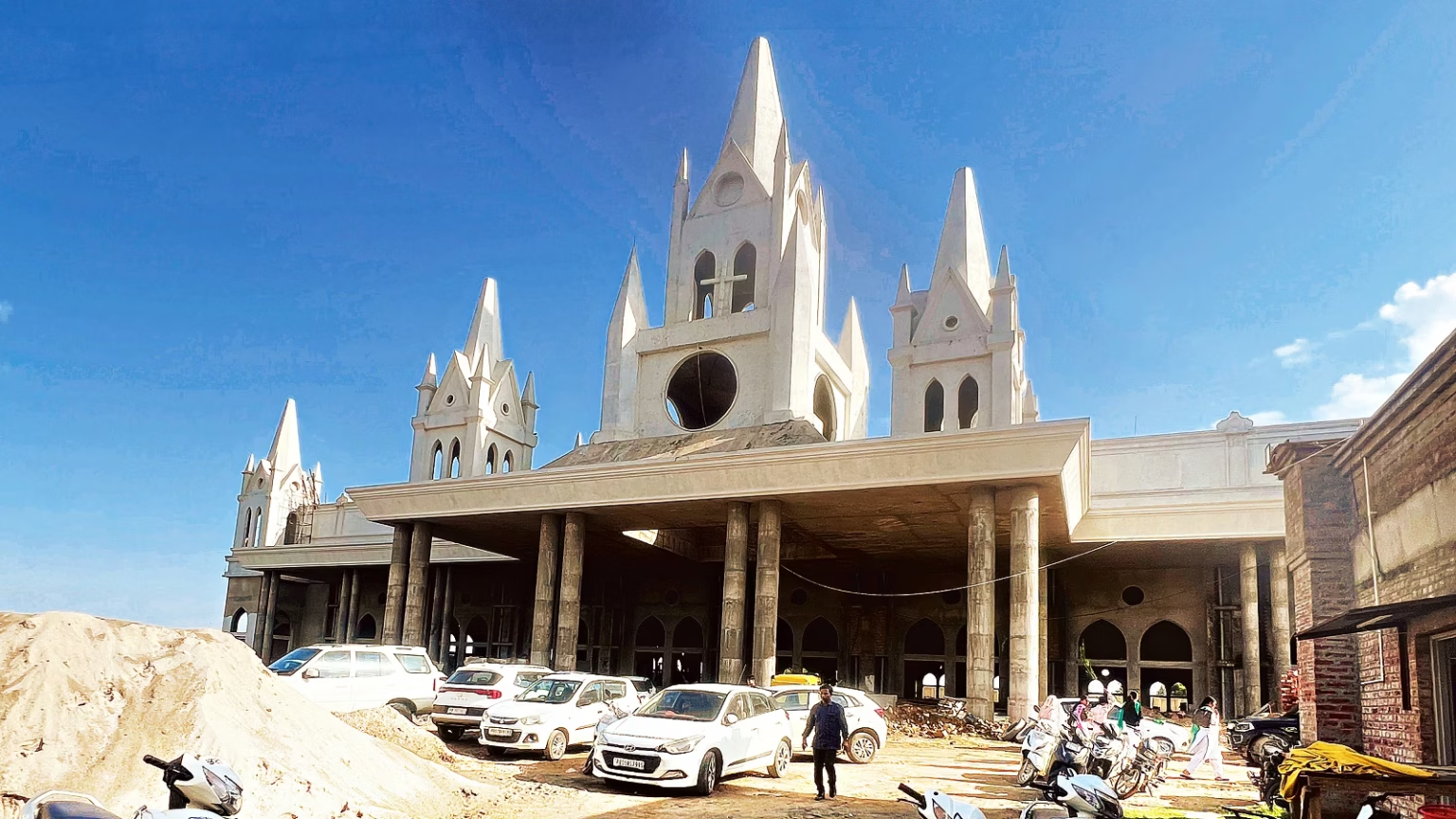
Unlike established institutions such as the Roman Catholic Church or the Church of North India, independent ministries like Narula’s represent a contemporary and popular form of Christianity in Punjab. Recent comments by Union Home Minister Amit Shah indicated that his party would introduce a law to prevent “forcible conversions” in Punjab if elected in 2027, raising more questions about the rising number of such churches across the state. According to Albert Dua, president of the United Christian Federation, over 80% of the approximately 5,000 churches in Punjab belong to newer denominations. While some, such as Narula’s Church of Signs and Wonders, operate from large structures spanning acres, many smaller churches are housed in private residences.
The political discussion surrounding conversion is complicated by the flexible nature of faith practiced in these ministries. Churches like Narula’s are independent entities that draw from the Pentecostal movement, emphasizing a direct connection with God rather than adhering to structured conversion processes. Outside the prayer enclosure, the atmosphere resembles a fair, with food stalls and families enjoying home-packed meals.
Faithful congregants, such as Sunita Verma, share their experiences: “I have not changed my religion. I used to visit temples. Now I believe in Jesus, but I still identify as a Hindu.” Like her, many attendees participate in church activities without undergoing formal conversion or changing their official religious status. This grey area presents challenges for any proposed anti-conversion legislation in Punjab.
The Fluid Nature of Religious Identity
Dua describes the political discourse over the anti-conversion law as a distraction. “If thousands gather, believe, and leave without formally converting, what does conversion truly mean?” he questions. Officially, Christians represent 1.5% of Punjab’s 27.7 million population, but community leaders suggest the number of “informal believers” may reach 15%.
Nearly one century has passed since Rev. John C. Lowrie arrived in Ludhiana, starting organized missionary work that includes preaching and social outreach. While Christianity remains a small yet notable aspect of Punjab’s religious landscape, many new Pentecostal Christian missions allow followers to retain elements of their former faiths while participating in worship and community life.
Sermons are commonly delivered in Punjabi and Hindi, hymns mimic traditional bhajans, and community meals follow the langar practice on special occasions. Religious processions, known as shobha yatras, are organized similarly to Sikh ceremonies. Pastors often adopt traditional attire such as turbans and beards. Statements like “Jesus doesn’t change your religion; he changes your heart” resonate during these gatherings.
Personal Experiences and Caste Dynamics
In Sadiq village of Faridkot district, a mix of places of worship exists, including three Roman Catholic churches and one independent church, Ishwar Satya Bhawan, founded by Barkat Singh in 2010. As a Majhabi Sikh, Barkat established his church for personal reasons, attracting approximately 50 followers. He acknowledges the increase in Christians in Punjab, although he notes this is less significant than what is often claimed. “We must all coexist peacefully,” he adds.
Despite significant changes in religious affiliation, caste remains a significant factor for many followers. For example, additional testimony from Sadiq identifies that inter-caste marriages are not common even among converted Christians. The individuals attending these churches often cite witnessing miracles rather than experiences of discrimination as their motivation for conversion.
Gurcharan Singh, a Majhabi Sikh laborer, shares his journey of conversion in 2021 after attending a church gathering. “We saw how those who couldn’t walk began to dance. It was a miracle,” he explains. Favoring a church nearly 80 kilometers away from his home, he recounts how his family found relief from afflictions after prayer at Pastor Jaspreet’s church.
Controversies and Community Leadership
As the number of new churches grows, so do controversies, including accusations of sexual harassment and financial irregularities. Notable is Bajinder Singh of the Church of Glory and Wisdom, currently imprisoned following a conviction related to sexual offenses. Singh reportedly garnered a following through claims of miraculous events. His church was later raided by financial authorities.
Although Narula’s ministry has faced scrutiny and undergone inspections, he asserts that church activities are conducted transparently, with events broadcast live online. He claims no foreign funding, stating that contributions come voluntarily from followers in India.
Traditional Christian denominations express concern over the rise of Pentecostal-style ministries in Punjab. The disconnect is emphasized by representatives of the Catholic Church, who distinguish their structured approach from the more casual dynamics of newer ministries. Leaders argue that anti-conversion laws are unnecessary as forced conversions are not a reality they face.
Fr. Jose Sebastian, Bishop of the Jalandhar Diocese, suggests that what attracts followers to these new spaces is a spiritual longing rather than mere numbers, indicating that larger congregations do not necessarily reflect the authenticity of faith. Nonetheless, at Narula’s service, attendees like Mahesh and his wife Reena have traveled from Chhattisgarh, hopeful for a blessing after years of trying to conceive.
Follow US
https://www.facebook.com/charchaexpress
https://www.youtube.com/@charcha-express
https://www.instagram.com/charcha.express/
Contents
Sunday Gatherings at The Church of Signs and WondersOn a Sunday morning in Khambra village, the streets leading to The Church of Signs and Wonders become bustling hours before services commence. Buses from surrounding villages and various vehicles are filled with families heading to a large gathering in Jalandhar for sermons conducted by ‘pastor’ Ankur Narula. Inside the church, a vibrant atmosphere prevails as hundreds of attendees stand in organized rows, hands clasped in prayer. A live orchestra soon fills the space with hymns in Punjabi and Hindi, resembling traditional bhajans in local temples. Individuals dressed in matching black-and-white outfits lead the singing, while large LED screens enhance the uplifting experience. The crowd claps and sways in unison.After a half-hour of musical performances, personal narratives take center stage. A couple with two children steps up, sharing, “We had lost hope after years of marriage. We came here, prayed, and today we are blessed.” Another young man recounts, “I struggled with drug addiction for years. Nothing worked for me. I came here, and now I’m clean.” A woman from Bihar also shares her experience: “I couldn’t walk for years, but now I can.” Each testimony, amplified by dramatic lighting and music, elicits applause, while some audience members weep, and others raise their hands in prayer.After hours of music and stories, pastor Narula appears on stage, dressed in a white kurta-pyjama. He opens with a Hindi hymn before delivering his sermon, stating, “Medicine can manage. But only faith can heal completely.” Narula claims a following of around 300,000 to 400,000 people in India and abroad. During his sermon, some congregants tremble or fall to the ground, with volunteers swiftly moving to assist them.Independent Ministries and Political ScrutinyUnlike established institutions such as the Roman Catholic Church or the Church of North India, independent ministries like Narula’s represent a contemporary and popular form of Christianity in Punjab. Recent comments by Union Home Minister Amit Shah indicated that his party would introduce a law to prevent “forcible conversions” in Punjab if elected in 2027, raising more questions about the rising number of such churches across the state. According to Albert Dua, president of the United Christian Federation, over 80% of the approximately 5,000 churches in Punjab belong to newer denominations. While some, such as Narula’s Church of Signs and Wonders, operate from large structures spanning acres, many smaller churches are housed in private residences.The political discussion surrounding conversion is complicated by the flexible nature of faith practiced in these ministries. Churches like Narula’s are independent entities that draw from the Pentecostal movement, emphasizing a direct connection with God rather than adhering to structured conversion processes. Outside the prayer enclosure, the atmosphere resembles a fair, with food stalls and families enjoying home-packed meals.Faithful congregants, such as Sunita Verma, share their experiences: “I have not changed my religion. I used to visit temples. Now I believe in Jesus, but I still identify as a Hindu.” Like her, many attendees participate in church activities without undergoing formal conversion or changing their official religious status. This grey area presents challenges for any proposed anti-conversion legislation in Punjab.The Fluid Nature of Religious IdentityDua describes the political discourse over the anti-conversion law as a distraction. “If thousands gather, believe, and leave without formally converting, what does conversion truly mean?” he questions. Officially, Christians represent 1.5% of Punjab’s 27.7 million population, but community leaders suggest the number of “informal believers” may reach 15%.Nearly one century has passed since Rev. John C. Lowrie arrived in Ludhiana, starting organized missionary work that includes preaching and social outreach. While Christianity remains a small yet notable aspect of Punjab’s religious landscape, many new Pentecostal Christian missions allow followers to retain elements of their former faiths while participating in worship and community life.Sermons are commonly delivered in Punjabi and Hindi, hymns mimic traditional bhajans, and community meals follow the langar practice on special occasions. Religious processions, known as shobha yatras, are organized similarly to Sikh ceremonies. Pastors often adopt traditional attire such as turbans and beards. Statements like “Jesus doesn’t change your religion; he changes your heart” resonate during these gatherings.Personal Experiences and Caste DynamicsIn Sadiq village of Faridkot district, a mix of places of worship exists, including three Roman Catholic churches and one independent church, Ishwar Satya Bhawan, founded by Barkat Singh in 2010. As a Majhabi Sikh, Barkat established his church for personal reasons, attracting approximately 50 followers. He acknowledges the increase in Christians in Punjab, although he notes this is less significant than what is often claimed. “We must all coexist peacefully,” he adds.Despite significant changes in religious affiliation, caste remains a significant factor for many followers. For example, additional testimony from Sadiq identifies that inter-caste marriages are not common even among converted Christians. The individuals attending these churches often cite witnessing miracles rather than experiences of discrimination as their motivation for conversion.Gurcharan Singh, a Majhabi Sikh laborer, shares his journey of conversion in 2021 after attending a church gathering. “We saw how those who couldn’t walk began to dance. It was a miracle,” he explains. Favoring a church nearly 80 kilometers away from his home, he recounts how his family found relief from afflictions after prayer at Pastor Jaspreet’s church.Controversies and Community LeadershipAs the number of new churches grows, so do controversies, including accusations of sexual harassment and financial irregularities. Notable is Bajinder Singh of the Church of Glory and Wisdom, currently imprisoned following a conviction related to sexual offenses. Singh reportedly garnered a following through claims of miraculous events. His church was later raided by financial authorities.Although Narula’s ministry has faced scrutiny and undergone inspections, he asserts that church activities are conducted transparently, with events broadcast live online. He claims no foreign funding, stating that contributions come voluntarily from followers in India.Traditional Christian denominations express concern over the rise of Pentecostal-style ministries in Punjab. The disconnect is emphasized by representatives of the Catholic Church, who distinguish their structured approach from the more casual dynamics of newer ministries. Leaders argue that anti-conversion laws are unnecessary as forced conversions are not a reality they face.Fr. Jose Sebastian, Bishop of the Jalandhar Diocese, suggests that what attracts followers to these new spaces is a spiritual longing rather than mere numbers, indicating that larger congregations do not necessarily reflect the authenticity of faith. Nonetheless, at Narula’s service, attendees like Mahesh and his wife Reena have traveled from Chhattisgarh, hopeful for a blessing after years of trying to conceive.