Ram Gopal Varma Discusses Underworld Influence on Bollywood Figures
Overview of the 1990s Terror in Bollywood
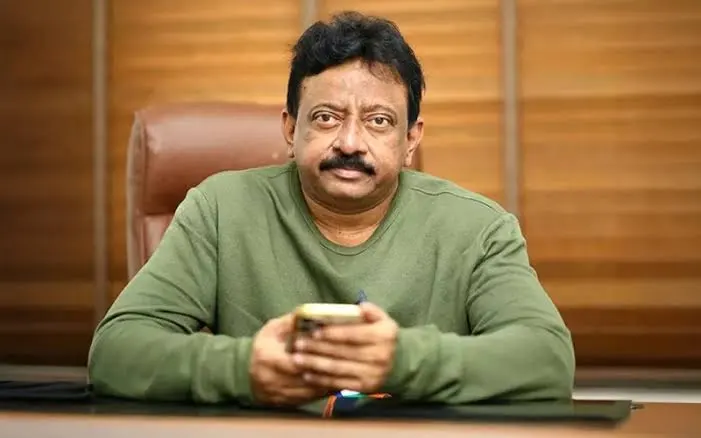
Filmmaker Ram Gopal Varma has revisited a troubling period in the Hindi film industry during the 1990s, characterized by its struggles against the Mumbai underworld. This era was marked by extortion threats, involvement of overseas financers, and casting pressures frequently associated with crime syndicates led by notorious figures such as Dawood Ibrahim. In a recent dialogue with crime writer Hussain Zaidi on his YouTube channel, Varma shared insights into why prominent individuals like Rakesh Roshan and Gulshan Kumar became targets during this turbulent time.
Varma emphasized that the underworld’s approach was not arbitrary violence, but rather a methodical strategy aimed at instilling fear and demonstrating power. “When the underworld wants to show its dominance, it targets big names—such as Rakesh Roshan, Salman Khan, and Shah Rukh Khan,” Varma stated. He explained that gangsters often perceived themselves as larger-than-life figures and aimed to overpower established stars to assert their own control.
Power and Intimidation
According to Varma, the motivations behind such actions extended beyond mere monetary gain. He highlighted the desire for dominance within the industry, explaining that achieving the status of a ‘hero’ in the underworld required overpowering someone of greater significance. “These are major stars, and you can’t simply get Hrithik Roshan’s dates. Therefore, they instill fear. The idea is: if a star refuses, what consequences await him?” he noted.
Varma also touched upon the ambiguity surrounding the identities of the individuals responsible for these threats, as confusion lingered over whether they originated from Chhota Shakeel, Dawood Ibrahim’s network, or other associates. He illustrated the tactic employed by gangsters to enforce compliance, wherein they would make an example of someone resistant to their demands to deter others. “There’s a saying in the underworld: ‘Kill one, extort money from ten,’” Varma asserted.
Rakesh Roshan’s Shooting Incident
Varma directly related this climate of fear to the shooting of Rakesh Roshan in January 2000, shortly after the success of his film Kaho Naa… Pyaar Hai. He alleged that the attack was connected to the underworld’s pressure on Roshan regarding the availability of his son Hrithik Roshan for a film project that would have been managed behind the scenes by Chhota Shakeel. When Rakesh resisted these demands, he became the target of gunfire, an event widely believed to have been orchestrated due to underworld intimidation.
Rakesh Roshan survived the attack, which occurred outside his office on January 21, 2000. In a subsequent interview, he described the intense pressure he faced from the underworld, noting, “I never indicated that Hrithik could do a film for them. I kept saying that Hrithik had no dates, which was the truth. They then asked me to take dates away from other producers.” He characterized the period as one filled with fear.
The Murder of Gulshan Kumar
Transitioning to the murder of Gulshan Kumar in August 1997, Varma pointed to several contributing factors behind this tragedy. Describing Kumar’s peak success, Varma noted that he was generating considerable wealth and promoting new talent, which incited jealousy among peers. This hostile environment fueled rumors about Kumar, leading some to believe that eliminating him might elevate their own status.
Moreover, Varma referenced the extortion demands that Kumar faced and his refusal to comply, noting, “He was not someone who would get scared. A man of his stature wouldn’t be intimidated by a phone call.” Varma further elaborated on the ambitions of Abu Salem, who sought to distance himself from D-Company by making a name for himself through the murder, which, according to Varma, temporarily eclipsed even Dawood Ibrahim’s notoriety.
Rich with personal accounts, Varma recalled the day of the murder, stating, “I was at Jhamu Sugandh’s house when he received the call about Gulshan Kumar’s murder. He was visibly shaken and immediately left for Kumar’s home.” Throughout his career, Varma has drawn from these real-life events in crafting films that explore the gritty realities of the Mumbai underworld.
Impact of the Underworld on Bollywood
The 1990s were a challenging decade for Bollywood, as the industry faced pervasive influence from the Mumbai underworld, with extortion demands and allegations of interference in casting and financing. This hidden tension within the industry was detailed by D Sivanandhan, Mumbai’s joint CP Crime from 1998 to 2001, who claimed in a recent book that various films glorifying gangsters were financed by them. He recounted instances where stars were compelled to travel to the Middle East for engagements, highlighting the symbiotic yet dangerous relationship between Bollywood stars and underworld figures.
Sivanandhan reminisced, “Dawood Ibrahim could summon cinema actresses to Dubai, presenting them with rewards before sending them back.” He also recounted how film stars would participate in entertainment shows in Dubai under pressure from crime lords.