

Mumbai-Ahmedabad Bullet Train Project Achieves Milestone with Heaviest Girder Launch
Record-Breaking Launch of Heavy Girder
The National High-Speed Rail Corporation Limited (NHSRCL) has successfully launched one of the heaviest girders for India’s first bullet train corridor, which spans 508 kilometers from Mumbai to Ahmedabad. The project traverses the states of Gujarat, Maharashtra, and the Union Territory of Dadra & Nagar Haveli.
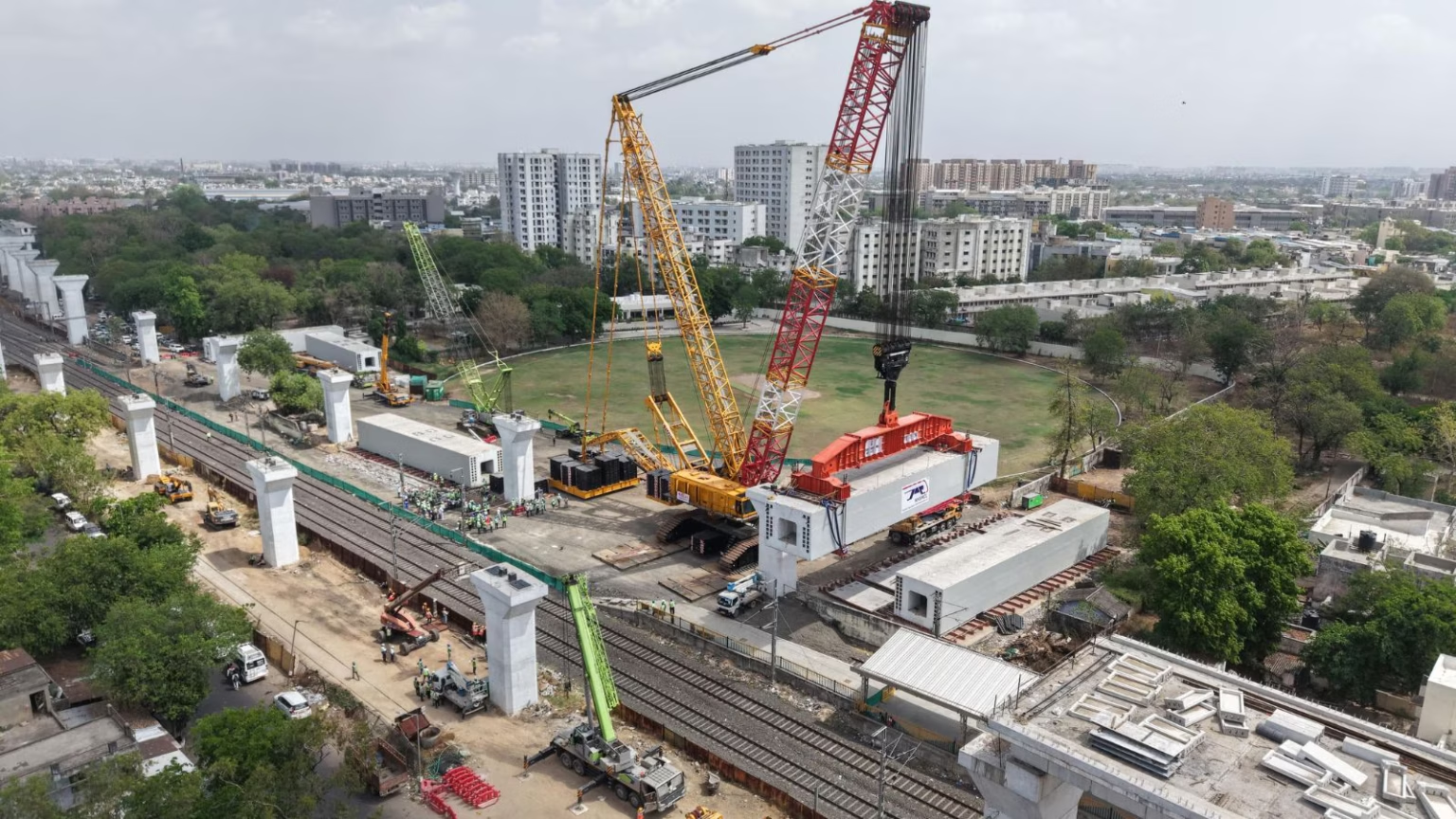
According to NHSRCL, the precast-prestressed portal beam, weighing approximately 1,360 metric tonnes, was installed over the Amdavad-Vadodara railway line in Maninagar, Gujarat. The beam measures 34 meters in length, with a cross-section of 5.5 meters by 4.5 meters. NHSRCL has plans to install five such beams near the Maninagar railway station, with the production of these beams occurring on-site and their erection being conducted as heavy integrated units.
Efficient Execution of Launch Activity
The entire process of launching this heavy girder was accomplished in a remarkably short time of approximately 3.5 hours. This operation took place during a complete traffic and power block, coordinated with Indian Railways, proving to be significantly faster than the previously planned duration which could have exceeded six months, requiring nearly nine hours for similar operations.
NHSRCL noted that through careful planning and optimization, the execution time was substantially reduced to just 3.5 hours for both lines of the Amdavad-Vadodara section. This achievement highlights the efficiency and effectiveness of the approaches taken in the project’s execution.
Engineering Challenges and Equipment Used
In a press statement, NHSRCL detailed the operations involved in lifting the girder, stating that a 2,200 metric tonne crawler crane served as the main equipment for this heavy lift. Additional machinery, including a 260-ton standby crane, an 80-ton crane, man lifters, and a lifter beam system with anchoring frames, supported the operation. Prestressed macalloy bars, 75 mm in diameter, along with lifting beams and heavy-duty slings were employed to manage the substantial weight safely.
NHSRCL acknowledged the various engineering difficulties associated with the operation, including performing an ultra-heavy lift of around 1,360 metric tonnes, which is considered one of the heaviest lifts executed on Indian Railways infrastructure. Additionally, the project required completing the entire erection within a limited time frame.
Continuing Developments in Bullet Train Infrastructure
The Mumbai-Ahmedabad bullet train project represents a significant advancement in Indian railway infrastructure and aims to provide faster connectivity between two major urban centers. As construction progresses, NHSRCL continues to implement innovative solutions to meet project goals efficiently while ensuring safety and reliability in its operations.
Follow US
https://www.facebook.com/charchaexpress
https://www.youtube.com/@charcha-express
https://www.instagram.com/charcha.express/
Contents
Record-Breaking Launch of Heavy GirderThe National High-Speed Rail Corporation Limited (NHSRCL) has successfully launched one of the heaviest girders for India’s first bullet train corridor, which spans 508 kilometers from Mumbai to Ahmedabad. The project traverses the states of Gujarat, Maharashtra, and the Union Territory of Dadra & Nagar Haveli.According to NHSRCL, the precast-prestressed portal beam, weighing approximately 1,360 metric tonnes, was installed over the Amdavad-Vadodara railway line in Maninagar, Gujarat. The beam measures 34 meters in length, with a cross-section of 5.5 meters by 4.5 meters. NHSRCL has plans to install five such beams near the Maninagar railway station, with the production of these beams occurring on-site and their erection being conducted as heavy integrated units.Efficient Execution of Launch ActivityThe entire process of launching this heavy girder was accomplished in a remarkably short time of approximately 3.5 hours. This operation took place during a complete traffic and power block, coordinated with Indian Railways, proving to be significantly faster than the previously planned duration which could have exceeded six months, requiring nearly nine hours for similar operations.NHSRCL noted that through careful planning and optimization, the execution time was substantially reduced to just 3.5 hours for both lines of the Amdavad-Vadodara section. This achievement highlights the efficiency and effectiveness of the approaches taken in the project’s execution.Engineering Challenges and Equipment UsedIn a press statement, NHSRCL detailed the operations involved in lifting the girder, stating that a 2,200 metric tonne crawler crane served as the main equipment for this heavy lift. Additional machinery, including a 260-ton standby crane, an 80-ton crane, man lifters, and a lifter beam system with anchoring frames, supported the operation. Prestressed macalloy bars, 75 mm in diameter, along with lifting beams and heavy-duty slings were employed to manage the substantial weight safely.NHSRCL acknowledged the various engineering difficulties associated with the operation, including performing an ultra-heavy lift of around 1,360 metric tonnes, which is considered one of the heaviest lifts executed on Indian Railways infrastructure. Additionally, the project required completing the entire erection within a limited time frame.Continuing Developments in Bullet Train InfrastructureThe Mumbai-Ahmedabad bullet train project represents a significant advancement in Indian railway infrastructure and aims to provide faster connectivity between two major urban centers. As construction progresses, NHSRCL continues to implement innovative solutions to meet project goals efficiently while ensuring safety and reliability in its operations.