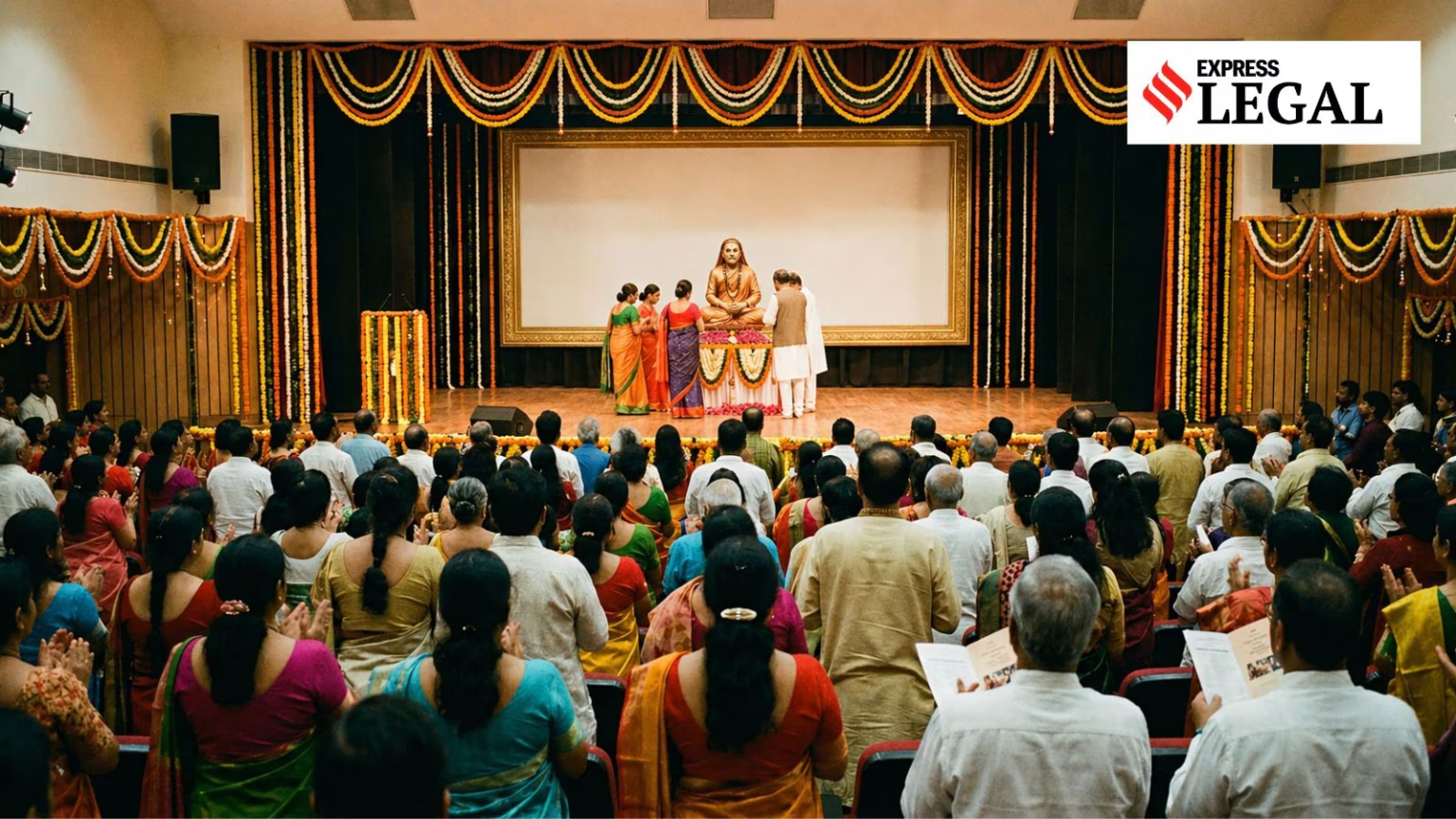
Karnataka High Court Orders Review on Denial of Shankaracharya Jayanti Event
High Court Ruling on Cultural Activities
The Karnataka High Court has mandated the Bengaluru civic authorities to reevaluate their decision to deny permission to the Malleshwaram Brahmana Sabha Trust for conducting a Sri Shankaracharya Jayanti function at a public auditorium. The court, while holding that India is a secular nation, emphasized that this does not preclude the celebration of dharmic and cultural activities.
Justice M I Arun, presiding over the case on April 16, stated that removing such traditions from India’s civilization would be equivalent to “removing the soul from the country.” He pointed out the historical significance of dharmic practices as essential components of Indian culture, which is reflected in the country’s Constitution through various symbols and texts.
Evaluation of Auditorium Regulations
The court highlighted that there are no existing guidelines or regulations that explicitly govern the use of the auditorium, affirming that “what is not prohibited is permitted.” This statement emphasizes that the absence of legal restrictions allows for a broader interpretation of permissible activities within civic spaces.
The Trust had sought permission to host the Jayanti celebration, which recognizes the contributions of Shankaracharya, a prominent figure in Indian philosophy. Considering the cultural importance of the event, the court stressed that the celebration should be viewed as both a cultural and dharmic gathering.
Consideration of Prior Usage
The Karnataka High Court also noted that while the auditorium is primarily designated for yoga activities, it has historically been used for various other events. The court emphasized that the celebration of Indian culture, which is deeply connected to dharmic values, is not illegal or unconstitutional.
The ruling highlighted the necessity to promote such cultural expressions for societal enhancement, stating that the civic body’s prior rejection of the event lacked any prohibitory basis in government policy or law. Consequently, the court indicated that the petitioner’s request should be considered if it meets other established criteria and if the auditorium is available for use.
Trust’s Petition and City Corporation’s Justification
The Trust’s petition was prompted by the rejection from the Bangalore West City Corporation, which maintained that the venue could not be used for dharmic activities. The Trust contested this decision, arguing that there are presently no laws delineating what activities can occur in the auditorium, noting past occurrences of other types of events being held.
In support of their position, the Trust presented evidence showing that the auditorium has allowed concerts and programs organized by private entities. The government pleader, Spoorthi V, argued that the venue is not normally rented out for religious or political purposes; however, the court pointed out that he was unable to counter specific claims made by the petitioner’s counsel regarding past usages.
Next Steps for the Civic Authorities
Justice Arun concluded the hearing by directing civic authorities to assess the Trust’s request and make a decision within five days. The High Court’s directive is anticipated to review the appropriateness of the event’s location and the legality of the previous denial by the city corporation.
The Sri Shankaracharya Jayanti, celebrated on April 21, highlights the enduring legacy of the Shankaracharya and his philosophy within Indian thought. The Trust continues to advocate for cultural and dharmic activities to be recognized as integral aspects of communal life in India.