Modernization of Indian Railways: A Comprehensive Transformation
Introduction to the Transformation
Indian Railways, an integral part of the nation’s infrastructure, is undergoing a significant transformation aimed at aligning with global safety and service standards. Under the PM Gati Shakti National Master Plan, an ambitious initiative has been launched, earmarking an investment of ₹1.53 lakh crore for 100 projects in financial year 2025-26. This extensive program aims to expand the railway network by more than 6,000 kilometers, involving the addition of new lines, doubling of existing tracks, and various modernization efforts.
The evolution of Indian Railways can be categorized into distinct historical phases that highlight its development and impact on the country.
Historical Evolution of Indian Railways
Indian Railways is often recognized as one of the most significant contributions during the British colonial period, serving as a crucial link for unifying the diverse nation over 150 years. The first passenger train ran on April 16, 1853, covering 34 kilometers from Bori Bunder to Thane. Its evolution can be divided into three key eras.
The first phase, from 1853 to 1947, constituted the pre-independence era, characterized by the establishment of a foundational railway network mainly for resource extraction. This infrastructure, however, became instrumental in mobilizing citizens for the freedom struggle, allowing leaders like Mahatma Gandhi to travel extensively.
The next phase, spanning from 1947 to 2014, marked a period of expansion focused on affordability and accessibility. Railways reached remote areas of India, enhancing socio-economic integration and fulfilling the obligation to connect major cities with accessible transport options. Despite progress, the increasing transport needs, saturated tracks, and aging infrastructure necessitated modernization efforts.
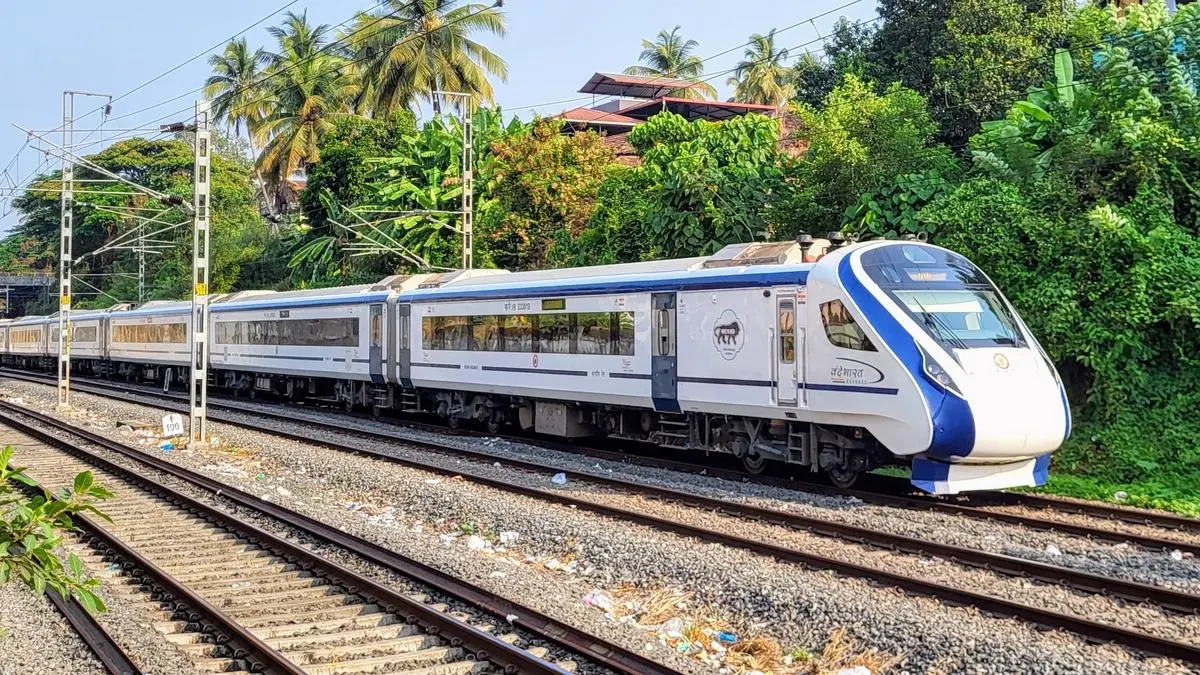
Since 2014, Indian Railways has entered a transformative era focused on improving quality through advanced technologies and passenger comfort. This includes implementing track segregation, developing dedicated freight corridors, and introducing modern trains such as the Vande Bharat series.
Key Developments
Significant reforms included the merger of the railway budget with the union budget in 2017, aiming for integrated multi-modal transport planning and reorienting financial frameworks from subsidies to capital expenditure, facilitating long-term growth.
Among notable initiatives is the Vande Bharat Express, launched in 2019, which represents a leap in Indian railway technology. These high-speed, indigenous trains offer air-conditioned comfort and amenities, operating at speeds of up to 160 km/h. The introduction of sleeper versions aims to enhance quality overnight travel.
The Amrit Bharat Station Scheme, initiated in 2022, seeks to upgrade over 1,300 railway stations, focusing on tier-2 and tier-3 cities. This initiative aims to enrich station experiences and promote local economies by establishing stalls to showcase regional products and implementing Transit-Oriented Development strategies.
High-Speed Rail Initiatives
In addition to modern trains and improved station facilities, Indian Railways has ambitious plans for high-speed rail projects, including the development of seven new High-Speed Rail (HSR) corridors announced in the Union Budget for 2026-27. These corridors will form part of a ‘diamond quadrilateral’ aimed at enhancing connectivity between major urban and economic centers across approximately 4,000 kilometers.
The flagship Mumbai-Ahmedabad High-Speed Rail (MAHSR) project, with an estimated budget of ₹1,08,000 Crore and supported by Japanese technology, sets a benchmark for high-speed travel in India, employing state-of-the-art construction techniques.
Regional Connectivity and Modernization
Efforts to enhance regional connectivity, particularly in the Northeast, highlight significant modernization aspects. New railway lines like the Bairabi-Sairang connection in Mizoram exemplify these efforts, employing advanced engineering to suit the region’s challenging geography.
Construction of the new Pamban Bridge in Tamil Nadu reflects innovative engineering capabilities in linking challenging terrains, ensuring that previously inaccessible areas are integrated into the national economic framework.
Balancing Passenger and Freight Operations
Despite advancements, Indian Railways faces challenges balancing passenger and freight services on congested tracks. A clear strategy towards separating heavy freight operations from passenger services aims to improve both sectors’ efficiencies. The establishment of Dedicated Freight Corridors (DFCs) seeks to facilitate this balance, ensuring high-speed rail can thrive without compromising cargo transport.
This modern approach to railway operations signals a shift from a mass transport system to a quality-centered network, while continued modernization initiatives bode well for the future of Indian Railways.