Tribute to Asha Bhosle and Global Tensions Impacting Oil Prices
Remembrance of Asha Bhosle
The passing of Asha Bhosle at the age of 92 has left a profound void in Indian cinema and music. Renowned for her unique style and boldness, Bhosle’s death marks the loss of one of the most iconic voices in the industry. Unlike Lata Mangeshkar, often referred to as the “Nightingale of India,” Bhosle carved out her own path marked by versatility and experimentation.
Throughout her illustrious career, Bhosle recorded over 12,000 songs, spanning a variety of genres from classical to cabaret. She transformed playback singing, distinguished by her ability to capture a wide range of emotions and adapt to different eras and actresses. Her longstanding collaboration with composer R. D. Burman resulted in some of the most memorable soundtracks in Hindi cinema.
Over seven decades, Bhosle received numerous accolades, including the prestigious Dadasaheb Phalke Award and the Padma Vibhushan. Her capacity to remain relevant and irreplaceable within the music industry underscores her remarkable legacy.
Global Oil Price Surge
Following the breakdown of talks between the United States and Iran in Islamabad, President Donald Trump has ordered a comprehensive Navy blockade of the Strait of Hormuz, raising tensions significantly in the West Asia region. This decision comes after reports emerged indicating Iran’s placement of naval mines in the Strait and attempts to levy tolls on vessels passing through this critical shipping lane.
The US’s strategy involves the interception of ships and mine clearance in order to ensure the passage remains open, which is vital as it accounts for nearly 20% of the world’s oil and gas supplies. This standoff has ignited fears of military confrontation and poses a notable threat to global energy supplies and shipping stability.
In a further development, Trump has also indicated plans to impose 50% tariffs on China should it proceed with supplying arms to Iran. This ultimatum reflects an intensification of US trade pressure combined with geopolitical strategies that may escalate tensions among global powers. These developments exacerbate existing concerns over key energy routes and introduce further global uncertainties.
Escalation in Oil Prices
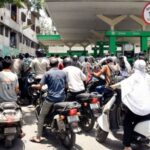
As a direct consequence of the impending US blockade of Iranian maritime traffic, oil prices have surged beyond $100 per barrel. The announcement has raised alarms about potential disruptions in the Strait of Hormuz, resulting in safety measures where tankers begin to avoid the area, thereby introducing volatility in energy markets.
Iran has issued warnings of retaliation in response to these actions, heightening fears of broader conflict. The blockade not only threatens to impact the flow of oil but also poses challenges for countries dependent on oil imports, likely leading to increased inflation rates and fuel costs globally.
Delhi Healthcare Initiative
In a significant move to enhance healthcare delivery in the capital, the Delhi government announced plans to establish a new medical institute which will integrate four key hospitals: Guru Tegh Bahadur Hospital, Rajiv Gandhi Super Speciality Hospital, Delhi State Cancer Institute, and the Institute of Human Behaviour and Allied Sciences, with GTB as the leading facility. This initiative is intended to improve care, support research, and expand medical education opportunities.
The newly proposed Delhi Institute of Medical Sciences, through resource pooling and reduction of service duplication, aims to address current disparities in patient care among these hospitals. With the initiative focusing on specialization and increasing the number of medical training seats, officials anticipate relief for healthcare facilities and an overall enhancement in care quality across the city.
Bihar Political Transition
A leadership transition is taking shape in Bihar as Nitish Kumar prepares to move to the Rajya Sabha. Samrat Choudhary has emerged as the front-runner for the Chief Minister position. His acceptance by both the Bharatiya Janata Party and NDA allies indicates a potential shift in power dynamics after years of Nitish’s leadership.
Choudhary’s rise is supported by considerations of caste and his background as an OBC leader, making him a favorable candidate. Other names in consideration include Vijay Kumar Sinha and Nityanand Rai, but Choudhary’s status as the leading candidate is seen as a reflection of the BJP’s increasing influence within the NDA coalition.
Supreme Court Considerations on Temple Control
The Supreme Court of India is currently deliberating on constitutional matters regarding the Sabarimala temple case, looking at the balance between individual religious freedoms and denominational rights. The hearing has brought to light differences between the central government and various Hindu organizations concerning the control and management of temples.
While Hindu groups call for greater independence from state intervention regarding temple governance, the central government has approached these discussions with caution, advocating for checks on autonomy to prevent potential exclusionary practices. This situation highlights ongoing tensions around religious autonomy and the push for social reform in India.