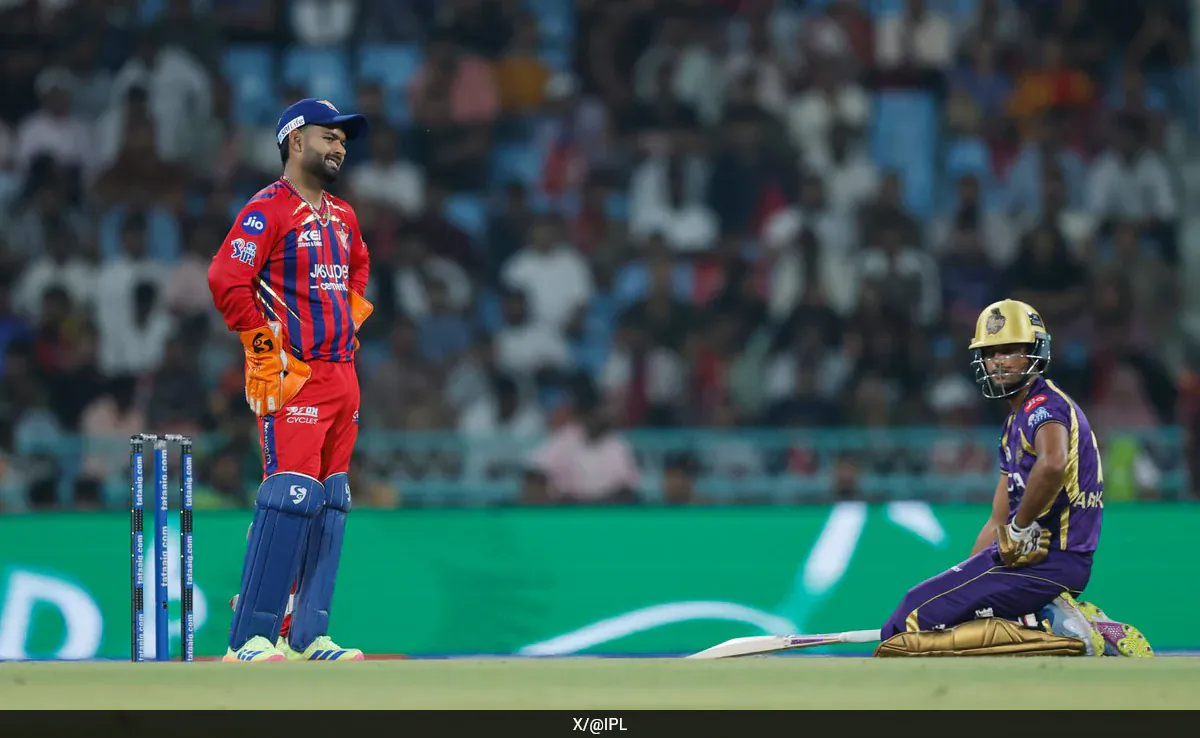
Debate Over Angkrish Raghuvanshi’s Dismissal Sparks Discussion on Obstructing the Field Rule
Kolkata Knight Riders’ Controversial Dismissal
The Indian Premier League (IPL) recently faced controversy following the dismissal of Angkrish Raghuvanshi, a batter for the Kolkata Knight Riders (KKR), during a match against the Lucknow Super Giants (LSG). This incident marked only the fourth occasion in the history of the T20 league where a player was ruled out for obstructing the field. The decision, made by third umpire Rohan Pandit, has divided opinions among cricket fans and experts alike.
Opinions among former players are split, with some, including former Indian cricketers Virender Sehwag and Rohan Gavaskar, expressing disagreement with the umpire’s ruling. Discussions around the decision have highlighted the criteria umpires consider when determining a dismissal for obstructing the field.
Understanding the Obstructing the Field Rule
The rules governing the “obstructing the field” dismissal are outlined clearly for match officials. They need to establish whether the batter significantly altered their running direction without valid reason. In the case of Raghuvanshi, umpires assessed that he met both criteria, leading to the controversial call.
During a discussion on Cricbuzz, Rohan Gavaskar provided insights, arguing that Raghuvanshi’s focus was not on the ball at the time of the incident. He stated, “I think it’s not out because of the way he turned, dived, and jumped. His eyes were not on the ball. He thought, ‘I have dived, turned now, I want to dive.’ It wasn’t his intention to stop the ball.” He emphasized that if Raghuvanshi had intended to obstruct the throw, he would have remained stationary. Instead, his actions demonstrated a lack of intent to interfere with play.
Sehwag echoed this sentiment, asserting that it is common for batters to glance at fielders while running. He explained, “Every batsman looks at the fielder when the ball goes to them. You take one run, you take two runs, and you see which end is safer.” He noted that diving to avoid the throw was a natural reaction and that Raghuvanshi’s actions did not suggest intentional obstruction.
Rule Specifications and Expert Opinions
The MCC rulebook, specifically Clause 37.1.4, sheds light on the regulations regarding obstructing the field. It states, “For the avoidance of doubt, if an umpire feels that a batter, in running between the wickets, has significantly changed his direction without probable cause and thereby obstructed a fielder’s attempt to effect a run out, the batter should, on appeal, be given out, obstructing the field.” Importantly, the clause stipulates that it is not relevant whether a run out would have occurred as a result of the obstruction.
Other former cricketers, such as Sanjay Bangar and Carlos Brathwaite, have joined the discussion, suggesting that it is unreasonable to expect a batter to execute a perfect 180-degree turn while running. They contend that there exists a natural radius for turning, which should be considered in such decisions.
Conclusion
The incident involving Angkrish Raghuvanshi has sparked significant conversation regarding the interpretation and enforcement of the obstructing the field rule in cricket. As debates continue within the cricketing community, clarity on the application of these rules may be necessary to foster a better understanding among players and fans alike.