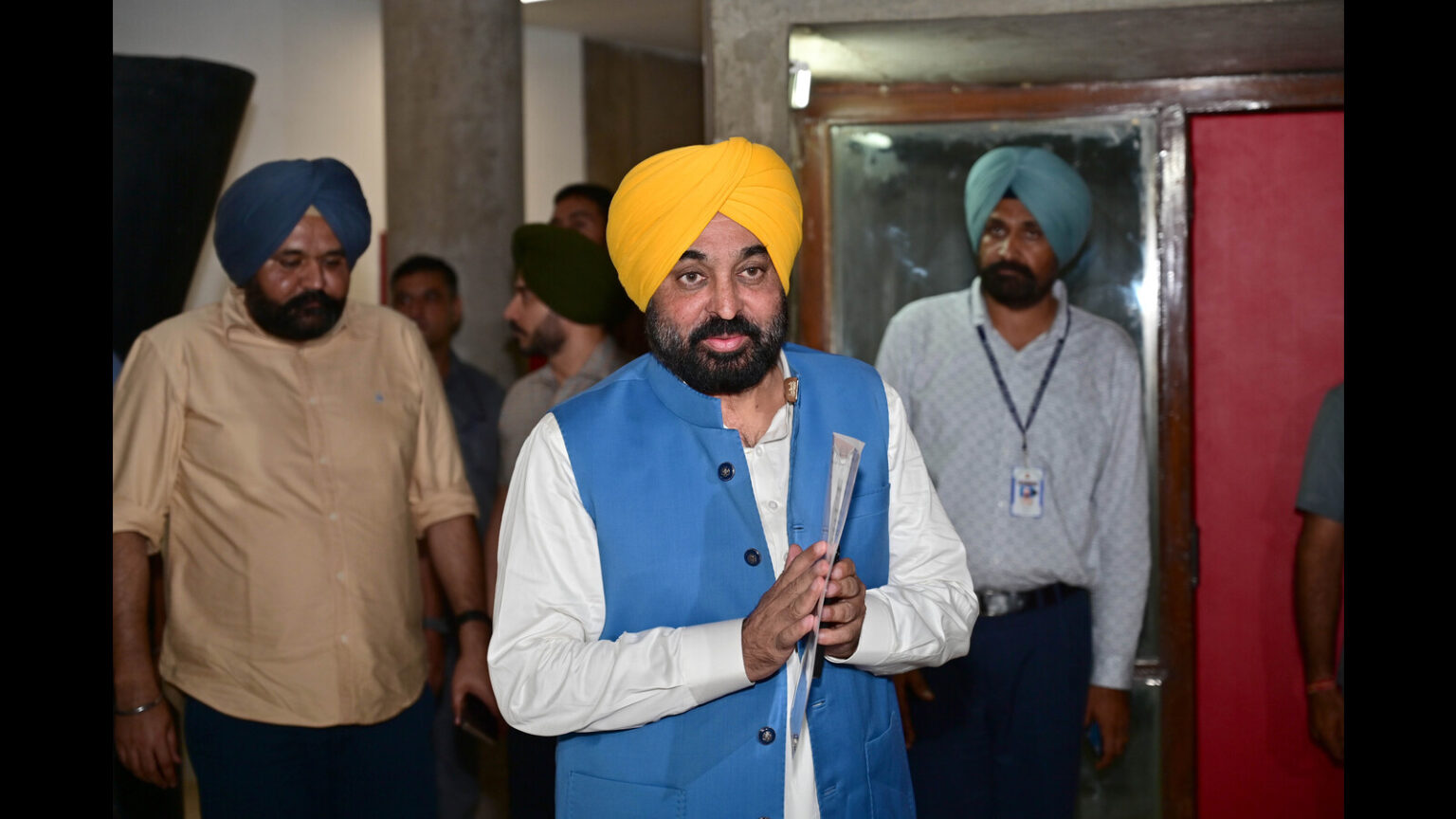
Chandigarh, India July 14:Chief Minister punjab Bhagwant Singh Mann during the 3rd day of punjab vidhan sabha special session at Chandigarh on Monday.Photo by Ravi Kumar/HT/Hindustan Times
SHARE
Punjab Assembly Introduces Controversial Sacrilege Bill
Details of the Bill
On April 14, 2026, the Punjab Assembly introduced the Jagat Jot Sri Guru Granth Sahib Satkar (Amendment) Bill, which has raised concerns regarding its implications for civil liberties. This legislation, which marks the third attempt to address issues of sacrilege, has been described as the most stringent iteration to date. The Bill proposes severe penalties, including life imprisonment or a minimum jail term of seven years, along with fines of up to Rs 25 lakh for anyone found guilty of desecrating the Guru Granth Sahib.
The current Bill broadens the definition of sacrilege significantly. It does not limit itself to acts of physical damage, such as burning or theft, but also includes spoken, written, symbolic, and electronic expressions that may be perceived as offensive to religious sentiments. This expansion is seen by critics as a potential means to suppress dissent and target individuals under the guise of protecting religious feelings.
Political Context
The introduction of the Bill comes ahead of upcoming assembly elections, prompting speculation about the motivations of the Aam Aadmi Party (AAP) government. Observers note that the government may be attempting to appeal to specific voter demographics while simultaneously exerting control over the Shiromani Gurdwara Parbandhak Committee, the traditional authority governing gurdwara matters. The Bill mandates increased oversight of the publication of the Sikh holy scripture, further centralizing power within the state’s administration.
Previous attempts to legislate similar measures saw mixed results. The first Bill was introduced in 2016 by the Akali-BJP coalition but was rejected by the Centre due to concerns that it discriminated against other religious groups. A second attempt was made in 2018 during the Congress administration, although it failed to receive the Governor’s approval. The release of the current Bill comes more than a decade after several incidents of sacrilege that sparked significant unrest in the state.
Historical Incidents of Sacrilege
One of the pivotal events that heightened tensions in Punjab occurred in June 2015, when the Guru Granth Sahib was stolen from a gurdwara in Burj Jawahar Singh Wala village in Faridkot. This incident was followed by public outcry when torn pages of the scripture were discovered in nearby Bargari village. Anonymous posters surfaced, claiming that the defacement was retaliation for perceived disrespect to the leader of the Sirsa-based Dera Sacha Sauda. The resulting protests had a lasting impact on the political landscape, contributing to the downfall of the Akali government at the time.
The ongoing legal proceedings related to these sacrilege cases continue to influence the political discourse in Punjab, making the introduction of the latest Bill particularly contentious. Many within the state express concern that the AAP government’s focus on this issue distracts from pressing challenges, such as rising gang violence, drug abuse, economic instability, and financial constraints facing the state.
Public Response
The Bill has generated considerable unease among residents of Punjab, which has long celebrated a secular identity amidst the complex interplay of religion and politics. The timing of the Bill’s introduction—on Baisakhi, a significant day representing the founding of the Khalsa by Guru Gobind Singh, who brought together individuals from various backgrounds—has been criticized as ironic. This moment in history symbolizes unity beyond religious and societal divisions, contrasting sharply with the divisive nature of the proposed legislation.