Congress Faces Dilemma on Women’s Reservation and Delimitation Ahead of CWC Meeting
Upcoming Meeting to Address Key Legislative Concerns
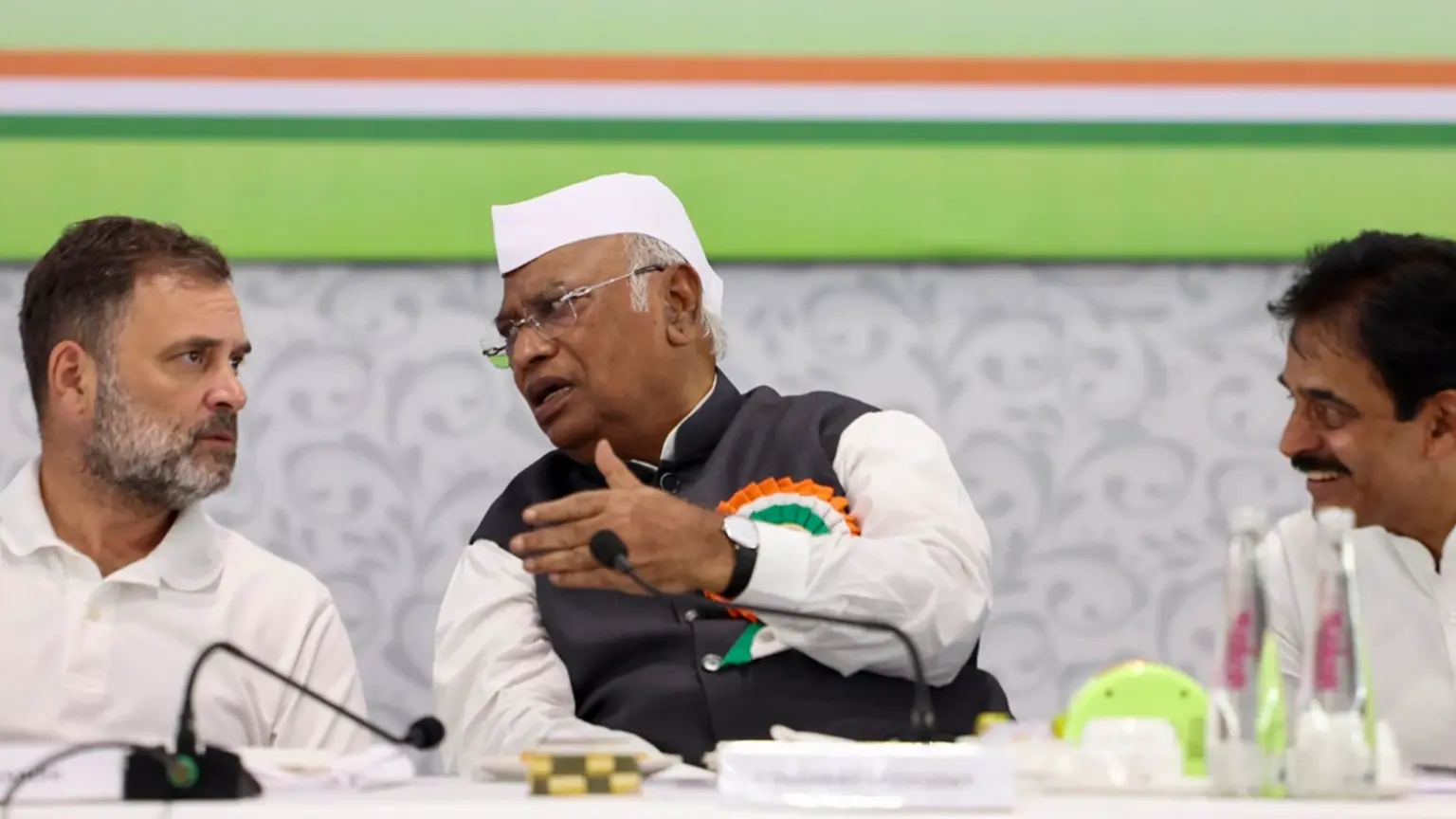
The Congress Working Committee (CWC) is scheduled to convene on Friday to discuss the party’s approach towards the proposed constitutional amendments linked to the Nari Shakti Vandan Adhiniyam, or Women’s Reservation Act, and the Delimitation Bill. This meeting comes as Parliament gears up for a special session set for April 16-18 to address these legislative measures. The CWC meeting is set to begin at 3 PM.
While Congress leaders have expressed support for women’s reservation, the party has articulated its opposition to the timing of these bills, particularly amidst ongoing state Assembly elections. There are concerns that the government has not engaged all opposition parties in this process, which has raised several alarms within the party’s leadership.
Concerns Over Delimitation Impact
Concerns have also surfaced regarding the potential impact of the delimitation exercise, especially in South Indian states. Congress leaders argue that their political representation in Parliament could be adversely affected if the total number of seats in both Houses is increased. Jairam Ramesh, Congress’s communications chief, has argued against Prime Minister Narendra Modi’s assurances that South Indian states would not be negatively impacted, labeling these claims as “deceiving.”
Ramesh elaborated on this matter in a statement released on April 5, highlighting the contradictions in the proposed increase of Lok Sabha seats. He explained that if the size of the Lok Sabha were to expand by 50%, the disparity between states such as Uttar Pradesh and Kerala would widen significantly, suggesting that larger and more populous states would benefit disproportionately from this exercise. He noted that the difference in Lok Sabha seats between these states would only increase if the proposed changes are implemented.
Challenges in Supporting Women’s Reservation
As the discussion unfolds, Congress faces the challenge of supporting women’s reservation while remaining critical of the government’s methods. A CWC member acknowledged the intricacies involved in this situation, emphasizing the need for the party to maintain a supportive stance on women’s reservation without appearing to oppose it. This balancing act is especially crucial given the growing influence of women as a voting demographic in various elections.
Another party leader indicated that the CWC would analyze strategies for including sub-categorization within the reservation framework for women. The party supports the notion of extending this reservation to women from Scheduled Castes (SC), Scheduled Tribes (ST), and Other Backward Classes (OBC), but emphasized that the specifics of this plan must be deliberated further during the CWC meeting.
Consultation with Allies
In the lead-up to the special parliamentary session, the Congress party and its INDIA bloc allies are anticipated to gather in Delhi to establish a united front. The Dravida Munnetra Kazhagam (DMK), one of Congress’s significant allies, has raised its own objections to the Modi-led government’s delimitation proposals. Tamil Nadu Chief Minister M K Stalin referred to the government’s plans as a “calculated political restructuring” aimed at skewing representation favorably towards northern states dominated by the Bharatiya Janata Party, thereby diminishing the voice of South Indian states.
Stalin pointed out that northern states could nearly double their representation, while states like Tamil Nadu, Karnataka, Kerala, and Telangana, which have been successful in controlling population growth, would see their representation stagnate at around 24%. He characterized the proposed changes as punitive towards these southern states.
Follow US
https://www.facebook.com/charchaexpress
https://www.youtube.com/@charcha-express
https://www.instagram.com/charcha.express/
Contents
Upcoming Meeting to Address Key Legislative ConcernsThe Congress Working Committee (CWC) is scheduled to convene on Friday to discuss the party’s approach towards the proposed constitutional amendments linked to the Nari Shakti Vandan Adhiniyam, or Women’s Reservation Act, and the Delimitation Bill. This meeting comes as Parliament gears up for a special session set for April 16-18 to address these legislative measures. The CWC meeting is set to begin at 3 PM.While Congress leaders have expressed support for women’s reservation, the party has articulated its opposition to the timing of these bills, particularly amidst ongoing state Assembly elections. There are concerns that the government has not engaged all opposition parties in this process, which has raised several alarms within the party’s leadership.Concerns Over Delimitation ImpactConcerns have also surfaced regarding the potential impact of the delimitation exercise, especially in South Indian states. Congress leaders argue that their political representation in Parliament could be adversely affected if the total number of seats in both Houses is increased. Jairam Ramesh, Congress’s communications chief, has argued against Prime Minister Narendra Modi’s assurances that South Indian states would not be negatively impacted, labeling these claims as “deceiving.”Ramesh elaborated on this matter in a statement released on April 5, highlighting the contradictions in the proposed increase of Lok Sabha seats. He explained that if the size of the Lok Sabha were to expand by 50%, the disparity between states such as Uttar Pradesh and Kerala would widen significantly, suggesting that larger and more populous states would benefit disproportionately from this exercise. He noted that the difference in Lok Sabha seats between these states would only increase if the proposed changes are implemented.Challenges in Supporting Women’s ReservationAs the discussion unfolds, Congress faces the challenge of supporting women’s reservation while remaining critical of the government’s methods. A CWC member acknowledged the intricacies involved in this situation, emphasizing the need for the party to maintain a supportive stance on women’s reservation without appearing to oppose it. This balancing act is especially crucial given the growing influence of women as a voting demographic in various elections.Another party leader indicated that the CWC would analyze strategies for including sub-categorization within the reservation framework for women. The party supports the notion of extending this reservation to women from Scheduled Castes (SC), Scheduled Tribes (ST), and Other Backward Classes (OBC), but emphasized that the specifics of this plan must be deliberated further during the CWC meeting.Consultation with AlliesIn the lead-up to the special parliamentary session, the Congress party and its INDIA bloc allies are anticipated to gather in Delhi to establish a united front. The Dravida Munnetra Kazhagam (DMK), one of Congress’s significant allies, has raised its own objections to the Modi-led government’s delimitation proposals. Tamil Nadu Chief Minister M K Stalin referred to the government’s plans as a “calculated political restructuring” aimed at skewing representation favorably towards northern states dominated by the Bharatiya Janata Party, thereby diminishing the voice of South Indian states.Stalin pointed out that northern states could nearly double their representation, while states like Tamil Nadu, Karnataka, Kerala, and Telangana, which have been successful in controlling population growth, would see their representation stagnate at around 24%. He characterized the proposed changes as punitive towards these southern states.