
Chennai Film Festival Celebrates P K Rosy, A Dalit Cinema Pioneer
Introduction of the Festival
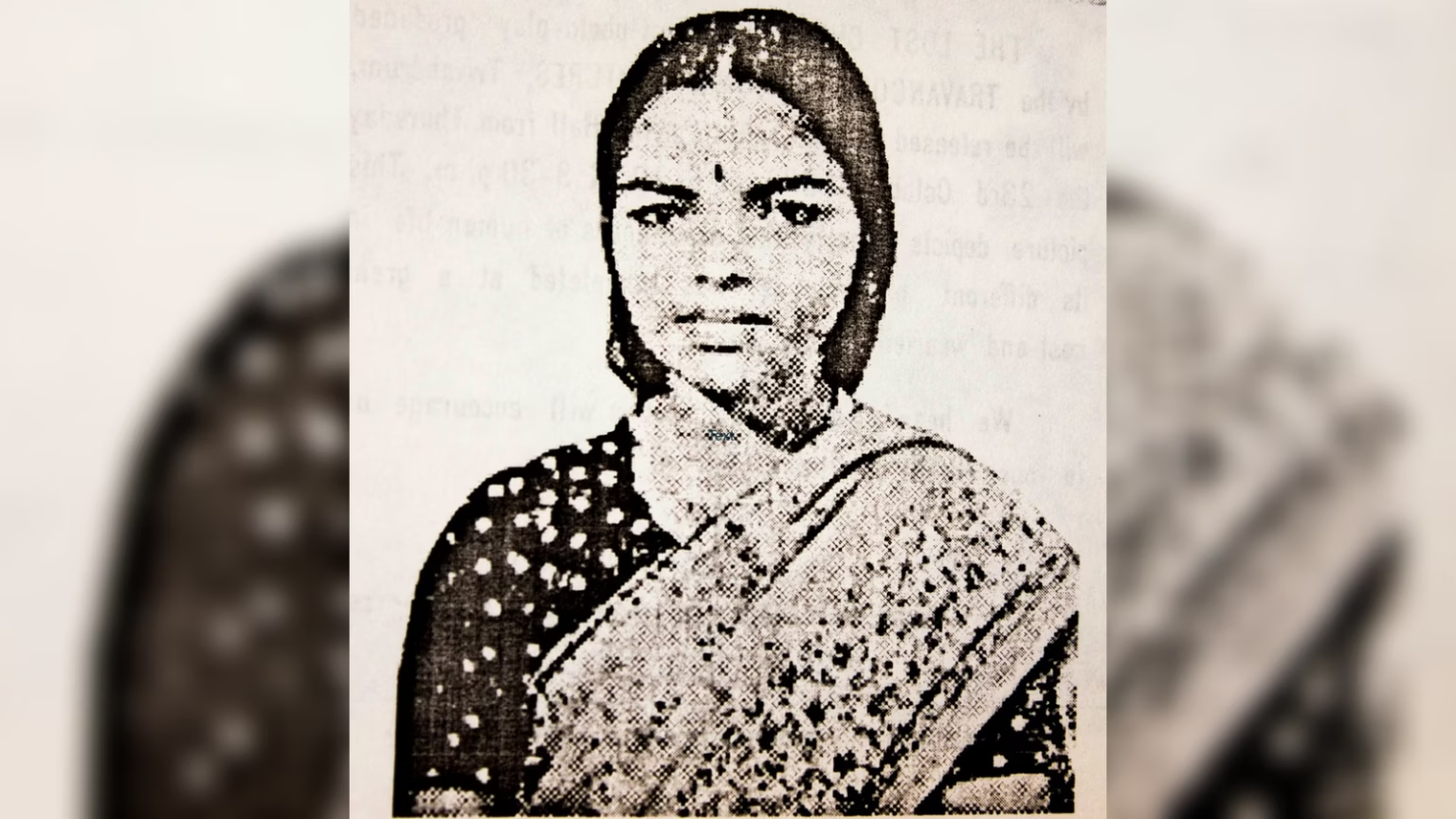
The P K Rosy Film Festival has been launched as part of the Vaanam Art Festival in Chennai, organized by filmmaker Pa Ranjith’s Neelam Culture Centre. This initiative is more than just a cultural gathering; it represents a significant statement regarding memory, caste, and representation in cinema. P K Rosy, a Dalit woman from Kerala, holds a unique position in the early history of Indian cinema as she starred in the first Malayalam feature film, Vigathakumaran, during the late 1920s. However, her involvement was met with backlash, highlighting the ongoing challenges related to caste in film.
Rosy’s pioneering role as an actress in a time when societal norms were rigid stands as a crucial moment in the evolution of Indian cinema. Unfortunately, this breakthrough was overshadowed by controversy, as Rosy’s portrayal of an upper-caste woman incited violent protests, leading to her disappearance from the public eye. This highlights a fundamental issue within Indian cinema; it has consistently revolved around who is represented and under what circumstances.
Significance of the Festival
The P K Rosy Film Festival aims to fill the void that persists in contemporary cinema regarding the representation of Dalit women. Even as Indian cinema has evolved over the decades, meaningful portrayals of Dalit women remain scarce. They are often depicted through the lens of others, rather than as independent storytellers of their experiences. The festival, therefore, seeks to disrupt this narrative by promoting films that address caste, labor, gender, and resistance, positioning Dalit narratives at the forefront of the discourse.
By naming the festival after P K Rosy, organizers aim to correct the historical oversight that marginalized her contributions. This initiative reflects a growing movement to create cultural spaces that do not rely on mainstream validation, thus allowing for a more authentic representation of marginalized voices. Mainstream cinema tends to absorb dissent selectively, creating a diluted version of reality; festivals like this provide an opportunity for unfiltered storytelling.
A Global Movement
In the broader context, there is an emerging global trend to amplify the voices of Dalit and other marginalized communities within the film industry. From cities such as New York to London, Dalit-Adivasi film festivals are establishing an international network that integrates caste issues into discussions on race and justice. These festivals serve as platforms for these communities not only to tell their stories but also to create films that explore their identities and lived experiences.
Simultaneously, this moment in cinema draws from a rich history of cultural affirmation. The Women in Cinema Collective in Kerala, for instance, created the P K Rosy Film Society in 2019 to emphasize feminist and marginalized narratives. Such initiatives underscore that mere representation is insufficient; sustainable spaces must be created to nurture and disseminate these voices effectively.
Importance of Timing and Recognition
The P K Rosy Film Festival is notably held every April, coinciding with Dalit History Month and the birth anniversaries of B R Ambedkar and Jyotirao Phule. This timing emphasizes the ongoing struggle for recognition and transformation in mainstream institutions, which continue to grapple with the legacy of figures like Rosy. The festival seeks to bridge the gap between acknowledgment and action, solidifying Rosy’s story as not just a chapter in the past but a foundation for the future of Indian cinema.
Through its thoughtful programming and focus on marginalized narratives, the festival raises critical questions about the future landscape of Indian cinema. It prompts reflections on the potential transformations that could arise if those historically excluded were allowed to take their rightful place in cinema. Over the few days of the festival, the answers begin to emerge, highlighting the importance of centering these often-overlooked narratives.
Follow US
https://www.facebook.com/charchaexpress
https://www.youtube.com/@charcha-express
https://www.instagram.com/charcha.express/
Contents
Introduction of the FestivalThe P K Rosy Film Festival has been launched as part of the Vaanam Art Festival in Chennai, organized by filmmaker Pa Ranjith’s Neelam Culture Centre. This initiative is more than just a cultural gathering; it represents a significant statement regarding memory, caste, and representation in cinema. P K Rosy, a Dalit woman from Kerala, holds a unique position in the early history of Indian cinema as she starred in the first Malayalam feature film, Vigathakumaran, during the late 1920s. However, her involvement was met with backlash, highlighting the ongoing challenges related to caste in film.Rosy’s pioneering role as an actress in a time when societal norms were rigid stands as a crucial moment in the evolution of Indian cinema. Unfortunately, this breakthrough was overshadowed by controversy, as Rosy’s portrayal of an upper-caste woman incited violent protests, leading to her disappearance from the public eye. This highlights a fundamental issue within Indian cinema; it has consistently revolved around who is represented and under what circumstances.Significance of the FestivalThe P K Rosy Film Festival aims to fill the void that persists in contemporary cinema regarding the representation of Dalit women. Even as Indian cinema has evolved over the decades, meaningful portrayals of Dalit women remain scarce. They are often depicted through the lens of others, rather than as independent storytellers of their experiences. The festival, therefore, seeks to disrupt this narrative by promoting films that address caste, labor, gender, and resistance, positioning Dalit narratives at the forefront of the discourse.By naming the festival after P K Rosy, organizers aim to correct the historical oversight that marginalized her contributions. This initiative reflects a growing movement to create cultural spaces that do not rely on mainstream validation, thus allowing for a more authentic representation of marginalized voices. Mainstream cinema tends to absorb dissent selectively, creating a diluted version of reality; festivals like this provide an opportunity for unfiltered storytelling.A Global MovementIn the broader context, there is an emerging global trend to amplify the voices of Dalit and other marginalized communities within the film industry. From cities such as New York to London, Dalit-Adivasi film festivals are establishing an international network that integrates caste issues into discussions on race and justice. These festivals serve as platforms for these communities not only to tell their stories but also to create films that explore their identities and lived experiences.Simultaneously, this moment in cinema draws from a rich history of cultural affirmation. The Women in Cinema Collective in Kerala, for instance, created the P K Rosy Film Society in 2019 to emphasize feminist and marginalized narratives. Such initiatives underscore that mere representation is insufficient; sustainable spaces must be created to nurture and disseminate these voices effectively.Importance of Timing and RecognitionThe P K Rosy Film Festival is notably held every April, coinciding with Dalit History Month and the birth anniversaries of B R Ambedkar and Jyotirao Phule. This timing emphasizes the ongoing struggle for recognition and transformation in mainstream institutions, which continue to grapple with the legacy of figures like Rosy. The festival seeks to bridge the gap between acknowledgment and action, solidifying Rosy’s story as not just a chapter in the past but a foundation for the future of Indian cinema.Through its thoughtful programming and focus on marginalized narratives, the festival raises critical questions about the future landscape of Indian cinema. It prompts reflections on the potential transformations that could arise if those historically excluded were allowed to take their rightful place in cinema. Over the few days of the festival, the answers begin to emerge, highlighting the importance of centering these often-overlooked narratives.