
Assam Elections 2026: Key Factors Influencing the Outcome
Introduction to the Political Landscape
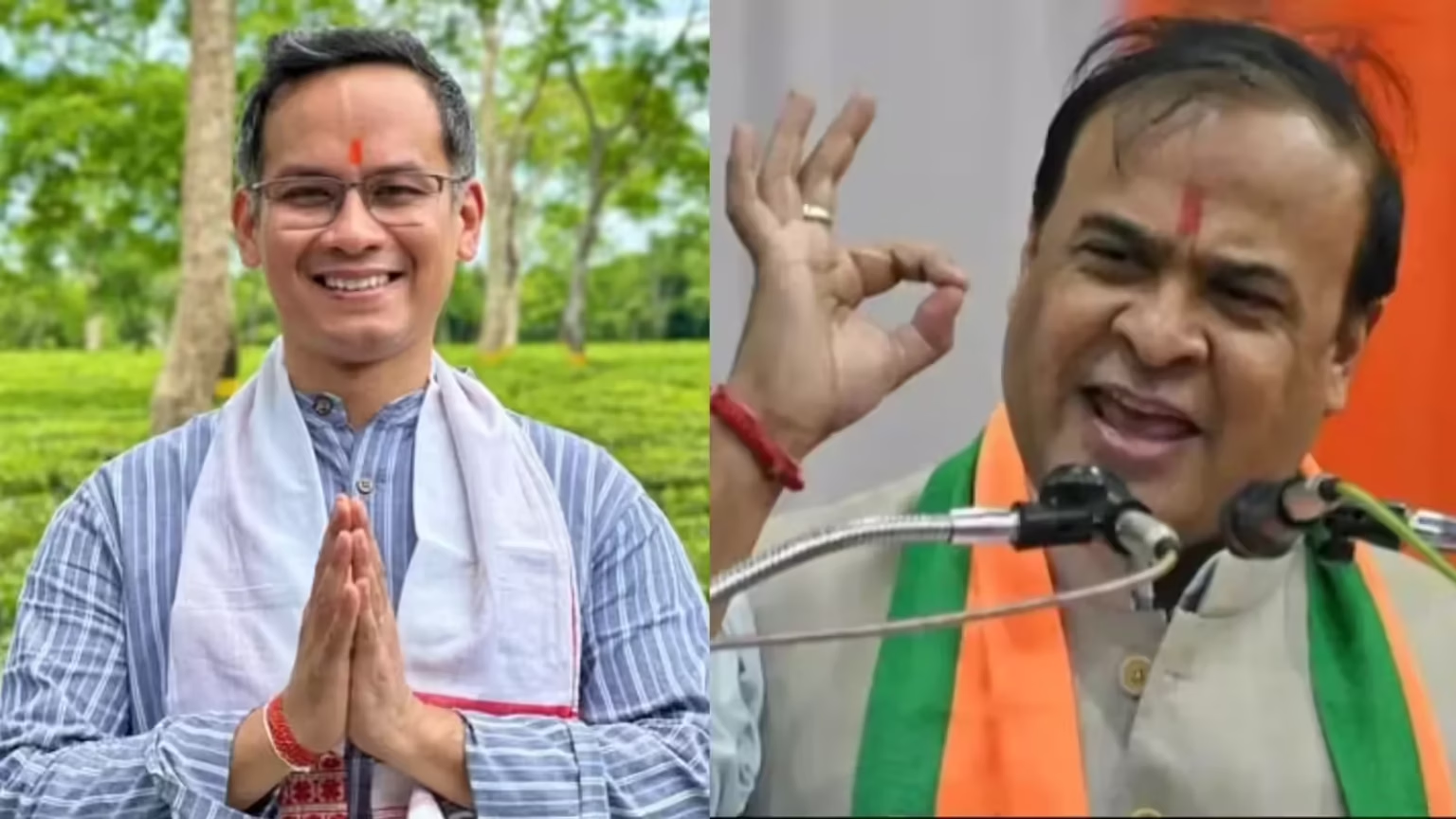
On April 9, voters in Assam will cast their ballots for the 126 assembly seats in the state. The elections represent a significant contest primarily between incumbent Chief Minister Himanta Biswa Sarma of the BJP and Gaurav Gogoi, the leader of the Congress party. Sarma aims to achieve a rare third consecutive term for the BJP-led alliance, while Gogoi seeks to leverage public discontent towards the current administration to secure electoral success.
In this assembly, a majority is defined by 64 seats, and the outcome is expected to hinge on multiple local and regional issues rather than a singular political wave. Several determining factors are anticipated to shape the verdict on May 4, 2026.
Factor 1: Delimitation Changes
This election will be the first since the 2023 delimitation, which redrew constituency boundaries based on the 2001 Census. The modified map has resulted in a decrease of minority-dominated seats from approximately 35 to 23, enhancing the influence of indigenous and tribal groups. This shift appears to favor the BJP, which has strategically employed identity politics alongside welfare initiatives to garner support. Additionally, in regions like the Barak Valley, the restructuring of constituencies may disrupt traditional voting patterns that have historically benefited the Congress and the All India United Democratic Front, changing the electoral dynamics.
Factor 2: The Infiltration Narrative
Assam continues to grapple with identity issues, particularly regarding the Citizenship Amendment Act (CAA) and the National Register of Citizens (NRC). While these matters no longer provoke widespread protests, they have shifted into the political discourse between rival parties. The BJP positions itself as the defender of indigenous identity and land rights, which is visible through controversial eviction drives in areas like Darrang and Nagaon. Conversely, opposition parties accuse the government of exploiting these issues for political gain and societal polarization.
Factor 3: Economic Strategies
The BJP’s governance strategy, branded as ‘double engine’ governance, heavily relies on Direct Benefit Transfers (DBT). In light of burgeoning anti-incumbency sentiment, Sarma is emphasizing the welfare delivery of schemes such as the flagship Orunodoi initiative. With over 2.6 million women beneficiaries receiving monthly financial aid, the scheme has created a strong voter base termed ‘labharthi’ voters. Initiatives like Atmanirbhar Asom further bolster this outreach. In contrast, the Congress party and Raijor Dal criticize the economic implications of such schemes, citing rising state debt and recruitment scandals as evidence of an unsustainable economic model that fails to yield long-term job creation.
Factor 4: Tribal and Tea Garden Voters
Certain regions in Assam, notably the tea tribes, which encompass around 35 to 40 constituencies, are critical in determining electoral outcomes. Both major parties have made significant efforts to engage with these communities, though achieving uniform support from these voters remains uncertain. Meanwhile, the Bodoland Territorial Region has gained prominence following the increase of assembly seats from 11 to 15 due to delimitation. The BJP’s alliance with the United People’s Party Liberal (UPPL) and peace accords with Bodo groups are being promoted as indicators of governance stability, although shifts in voter allegiance in these areas could decisively affect numerous seats.
Factor 5: Fragmentation of the Opposition
Finally, the composition of the anti-BJP electorate is a crucial determinant in the election. Currently, the opposition vote is split among multiple parties including the Congress, AIUDF, Raijor Dal, and Assam Jatiya Parishad. This fragmentation has previously benefited the BJP, as showcased in the 2021 elections when the ruling coalition secured 75 seats amidst divided opposition. For Gaurav Gogoi, presenting unified leadership is essential, especially following the departure of several leaders to the BJP. Meanwhile, Sarma’s strategy includes maintaining this division among opposition parties while consolidating advantages in several regions.
As the election date approaches, the outcome will offer insights into whether the BJP’s strategy of identity politics, welfare programs, and strong leadership continues to dominate Assam’s political scene, or if there is potential for opposition parties to reclaim influence. The verdict will be revealed on May 4.
Follow US
https://www.facebook.com/charchaexpress
https://www.youtube.com/@charcha-express
https://www.instagram.com/charcha.express/
Contents
Introduction to the Political LandscapeOn April 9, voters in Assam will cast their ballots for the 126 assembly seats in the state. The elections represent a significant contest primarily between incumbent Chief Minister Himanta Biswa Sarma of the BJP and Gaurav Gogoi, the leader of the Congress party. Sarma aims to achieve a rare third consecutive term for the BJP-led alliance, while Gogoi seeks to leverage public discontent towards the current administration to secure electoral success.In this assembly, a majority is defined by 64 seats, and the outcome is expected to hinge on multiple local and regional issues rather than a singular political wave. Several determining factors are anticipated to shape the verdict on May 4, 2026.Factor 1: Delimitation ChangesThis election will be the first since the 2023 delimitation, which redrew constituency boundaries based on the 2001 Census. The modified map has resulted in a decrease of minority-dominated seats from approximately 35 to 23, enhancing the influence of indigenous and tribal groups. This shift appears to favor the BJP, which has strategically employed identity politics alongside welfare initiatives to garner support. Additionally, in regions like the Barak Valley, the restructuring of constituencies may disrupt traditional voting patterns that have historically benefited the Congress and the All India United Democratic Front, changing the electoral dynamics.Factor 2: The Infiltration NarrativeAssam continues to grapple with identity issues, particularly regarding the Citizenship Amendment Act (CAA) and the National Register of Citizens (NRC). While these matters no longer provoke widespread protests, they have shifted into the political discourse between rival parties. The BJP positions itself as the defender of indigenous identity and land rights, which is visible through controversial eviction drives in areas like Darrang and Nagaon. Conversely, opposition parties accuse the government of exploiting these issues for political gain and societal polarization.Factor 3: Economic StrategiesThe BJP’s governance strategy, branded as ‘double engine’ governance, heavily relies on Direct Benefit Transfers (DBT). In light of burgeoning anti-incumbency sentiment, Sarma is emphasizing the welfare delivery of schemes such as the flagship Orunodoi initiative. With over 2.6 million women beneficiaries receiving monthly financial aid, the scheme has created a strong voter base termed ‘labharthi’ voters. Initiatives like Atmanirbhar Asom further bolster this outreach. In contrast, the Congress party and Raijor Dal criticize the economic implications of such schemes, citing rising state debt and recruitment scandals as evidence of an unsustainable economic model that fails to yield long-term job creation.Factor 4: Tribal and Tea Garden VotersCertain regions in Assam, notably the tea tribes, which encompass around 35 to 40 constituencies, are critical in determining electoral outcomes. Both major parties have made significant efforts to engage with these communities, though achieving uniform support from these voters remains uncertain. Meanwhile, the Bodoland Territorial Region has gained prominence following the increase of assembly seats from 11 to 15 due to delimitation. The BJP’s alliance with the United People’s Party Liberal (UPPL) and peace accords with Bodo groups are being promoted as indicators of governance stability, although shifts in voter allegiance in these areas could decisively affect numerous seats.Factor 5: Fragmentation of the OppositionFinally, the composition of the anti-BJP electorate is a crucial determinant in the election. Currently, the opposition vote is split among multiple parties including the Congress, AIUDF, Raijor Dal, and Assam Jatiya Parishad. This fragmentation has previously benefited the BJP, as showcased in the 2021 elections when the ruling coalition secured 75 seats amidst divided opposition. For Gaurav Gogoi, presenting unified leadership is essential, especially following the departure of several leaders to the BJP. Meanwhile, Sarma’s strategy includes maintaining this division among opposition parties while consolidating advantages in several regions.As the election date approaches, the outcome will offer insights into whether the BJP’s strategy of identity politics, welfare programs, and strong leadership continues to dominate Assam’s political scene, or if there is potential for opposition parties to reclaim influence. The verdict will be revealed on May 4.