Astronomers Discover Trans-Neptunian Object With Atmosphere in Outer Solar System
Discovery of a Unique Celestial Body
Astronomers have identified a small celestial object, measuring 310 miles (500 kilometers) in diameter, located beyond the orbit of Neptune. This body is classified as a trans-Neptunian object (TNO) and is designated (612533) 2002 XV93. TNOs are considered remnants from the solar system’s formation, which occurred approximately 4.5 billion years ago.
This discovery notably includes the presence of an atmosphere surrounding the object, a finding that adds to the complexity of our understanding of these distant bodies.
Stellar Occultation Reveals Atmospheric Evidence
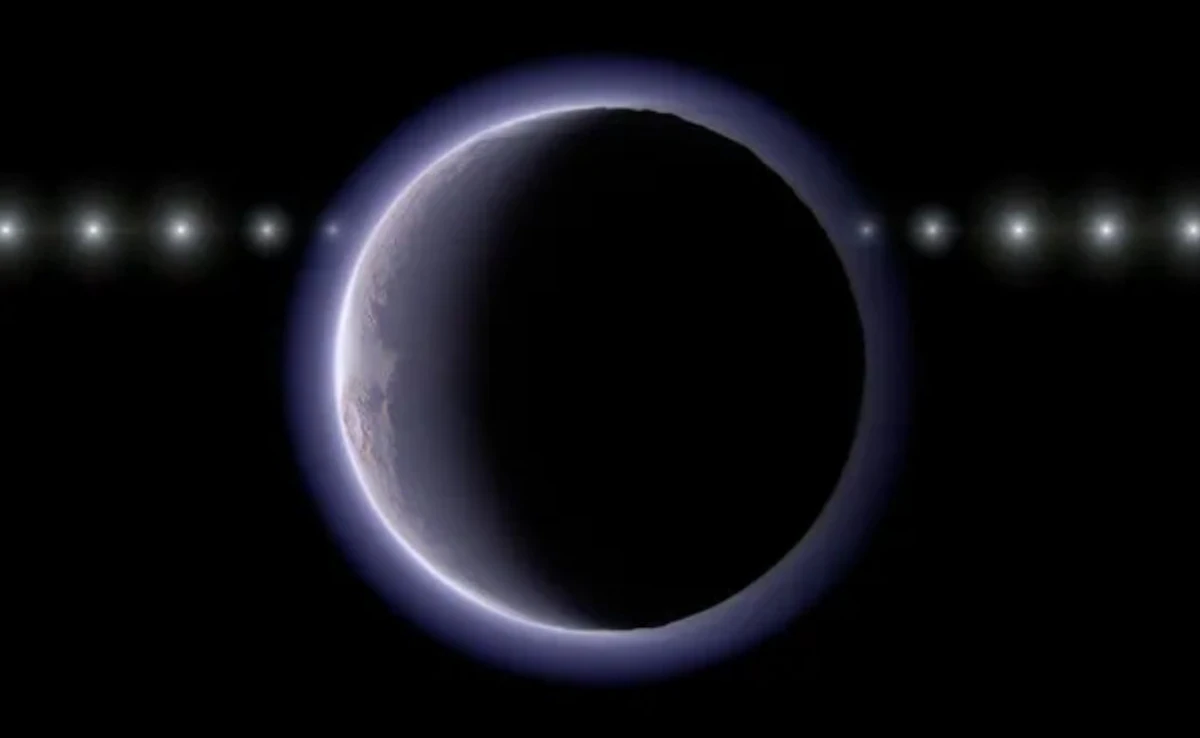
The atmosphere was identified during a rare stellar occultation event that took place on January 10, 2024. During this event, the trans-Neptunian object passed in front of a star, as observed from Japan. The study was led by Dr. Ko Arimatsu from the National Astronomical Observatory of Japan (NAOJ). The research team, composed of both professional and amateur astronomers, noted that the light from the star gradually dimmed rather than disappearing suddenly. This gradual dimming is indicative of an atmosphere surrounding the object.
The atmospheric pressure detected on the surface of this object is extremely low, falling between 100 and 200 nanobars. To put this in perspective, this is approximately 5 to 10 million times less than the atmospheric pressure experienced on Earth.
Understanding the Formation of the Atmosphere
The existence of an atmosphere on such a small and distant body raises questions about how it formed. The extremely low temperatures and the weak gravitational forces exerted by TNOs typically hinder the ability of such objects to retain an atmosphere. Researchers speculate two possible explanations: One theory suggests that a recent collision with a comet may have released captured gases, while another possibility is the formation of an ice volcano on the surface, which could contribute to the presence of the atmosphere.
Astronomer Scott Sheppard, known for his extensive studies of TNOs, emphasized that this discovery challenges the notion of the Kuiper Belt as a barren and frozen wasteland. Instead, he suggests it might be a region abundant with essential ingredients for life, potentially revealing a more dynamic environment than previously thought.
Conclusion and Implications
The discovery of (612533) 2002 XV93 and its atmosphere marks a significant advancement in our understanding of trans-Neptunian objects and the conditions in the outer solar system. As astronomers continue to investigate these celestial bodies, they may unveil further insights into the formation of our solar system and the potential for astrobiological presence beyond Earth.