Centre Defends Great Nicobar Infrastructure Project Amid Criticism
Government Responses to Criticism
Two days after Rahul Gandhi, the Leader of the Opposition in the Lok Sabha, labeled the Rs 81,000-crore Great Nicobar mega infrastructure project as “one of the biggest scams” and a “gravest crime” against India’s natural and tribal heritage, the Union Government released a comprehensive factsheet. This document addressed the environmental impact assessment, tribal welfare concerns, and outlined the project’s strategic maritime and defense objectives.
The government asserts that there will be no displacement of the Nicobarese and Shompen communities, emphasizing that there are “no relocation” plans for these groups. While the factsheet did not directly counter Gandhi’s accusations, it highlighted that the project received prior environmental clearance following an exhaustive process, complete with 42 specific clauses for environmental protection.
Project Details and Environmental Concerns
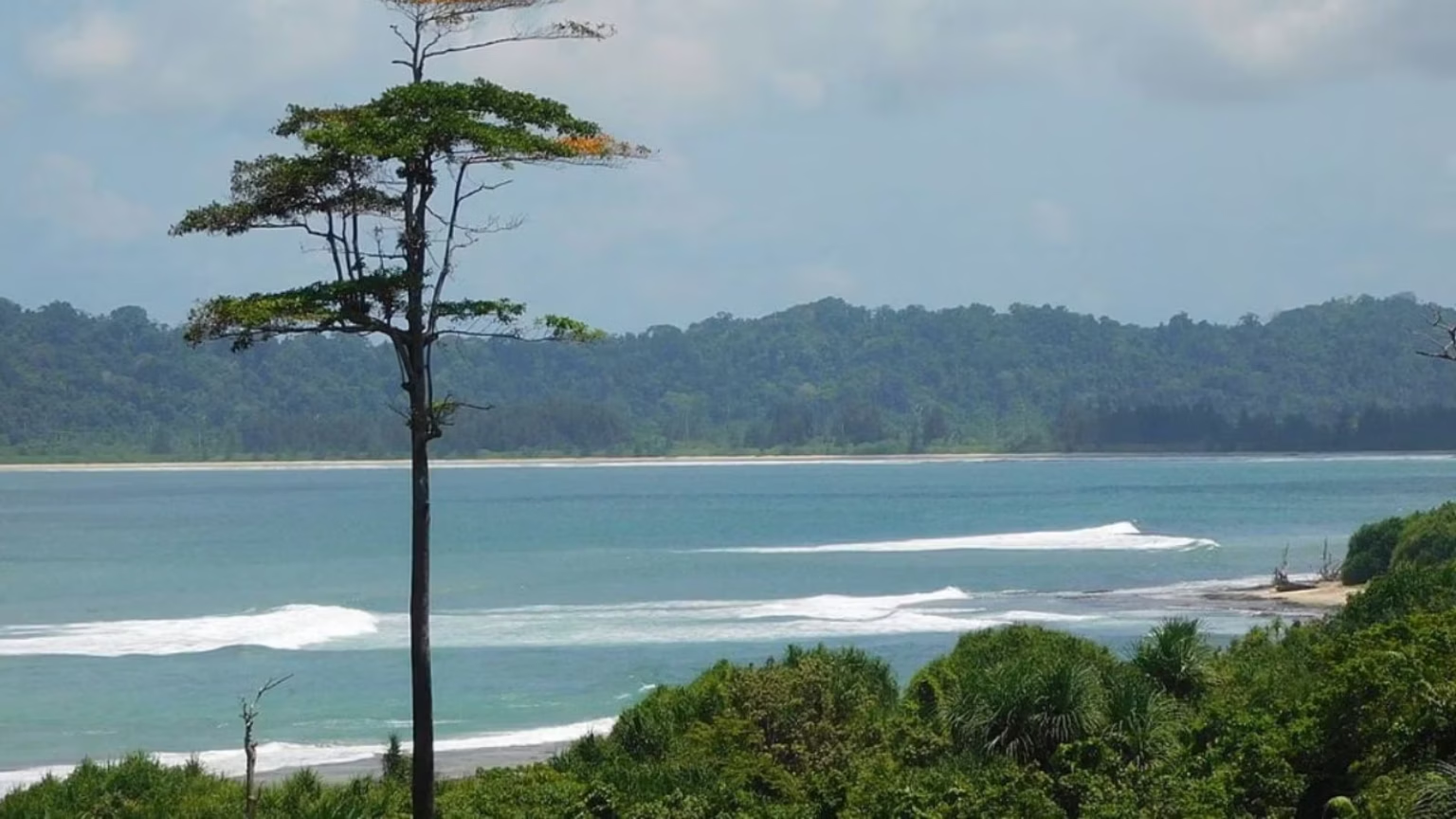
The Great Nicobar initiative will involve constructing several facilities, including a transshipment port, an integrated township, a civil and military use airport, as well as a solar and gas-powered plant with a capacity of 450 MVA. The project will span an area of 166.10 square kilometers, comprising 35.35 square kilometers of revenue land and 130.75 square kilometers of forest land, necessitating the removal of a million trees from tropical evergreen and semi-evergreen forests.
According to the government’s release, the estimated total number of trees in the project area is approximately 1.865 million, with the highest anticipated number of trees to be cut down reaching 711,000 across 49.86 square kilometers of forest. This tree removal process will be implemented in phases corresponding with the project’s sequential development phases. The government also indicated that 65.99 square kilometers will be designated as green zones, where no tree felling will occur, in a bid to maintain ecological balance.
Rahul Gandhi’s Critique
During a three-day visit to the Andaman and Nicobar Islands, Gandhi toured the Great Nicobar Island on April 28, engaging with members of the indigenous Nicobarese community and other local settlers, including ex-servicemen. Following his exploration of the island’s forests, he expressed his concerns on social media, stating, “Millions of trees are marked for the axe,” and condemned the project as a facade for environmental destruction, labelling it a “scam” against the country’s natural heritage.
Gandhi’s statements emphasized the urgency of addressing the situation and called for national awareness regarding the implications of the project. He remarked, “What is being done in Great Nicobar is one of the biggest scams and gravest crimes against this country’s natural and tribal heritage in our lifetime. It must be stopped.”
Tribal Welfare and Land Use
The government claims that the development plan has been “carefully designed” to ensure that the Nicobarese and Shompen tribes will not face displacement. Out of the proposed 166.10 square kilometers for development, 84.10 square kilometers overlap with the Tribal Reserve. However, 11.032 square kilometers of this area has been settled and utilized as revenue land since 1972. As a result, a net addition of 3.912 square kilometers to the tribal reserve has been proposed.
Despite the assurances from the government, the Nicobarese community has expressed grievances, having written to the Centre and the National Commission of Scheduled Tribes multiple times regarding their revoked no-objection certificate for the denotification of their tribal reserve. The community has faced hardships since the 2004 tsunami and has frequently demanded relocation to ancestral lands. Furthermore, allegations have emerged that local officials coerced community members to sign “surrender” certificates relinquishing claims to their ancestral lands.