RBI Governor Highlights Concerns Over West Asia Conflict’s Economic Impact
RBI’s Current Stance
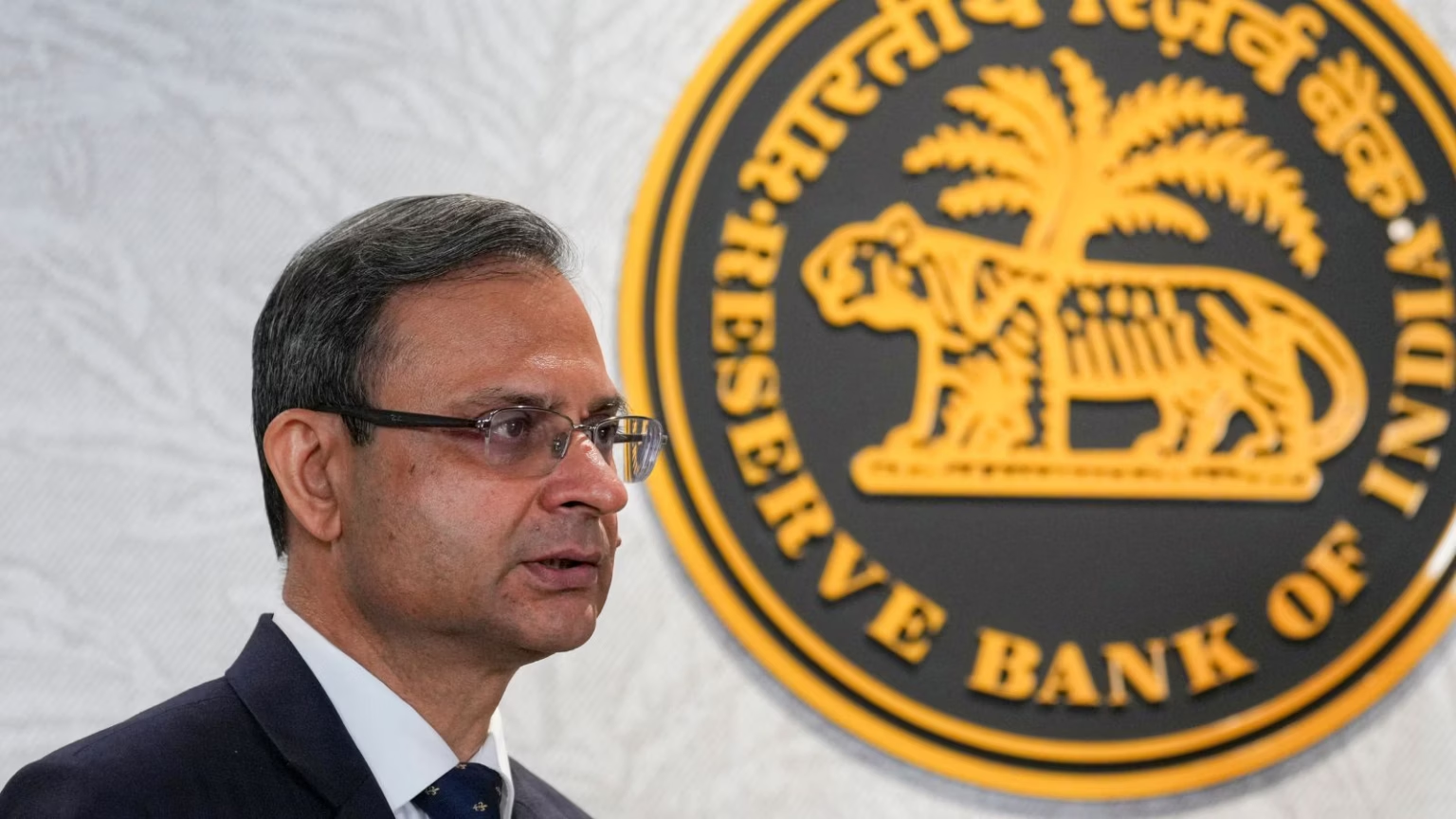
The Reserve Bank of India (RBI) is adopting a “wait and watch mode” in response to the uncertainty stemming from the ongoing conflict in West Asia, according to Governor Sanjay Malhotra. He emphasized the importance of being agile and nimble in light of the severe supply shocks caused by the war.
Malhotra cautioned against making “firm commitments” regarding future policy directions during such volatile times. He stated, “Second-round effects are the real concern,” indicating that if supply chain disruptions persist, initial supply shocks could have a prolonged effect on the overall price levels in the economy.
Potential Impact on Inflation
In his remarks made during a speech at Princeton University, which were publicly released by the RBI on Monday, Malhotra pointed out that preventing the entrenchment of inflation expectations is a crucial role of monetary policy. He noted this responsibility is more effective when focusing on influencing inflation expectations rather than simply compressing demand.
Earlier in April, the RBI’s Monetary Policy Committee decided to keep the repo rate unchanged at 5.25%. Projections indicate that retail inflation is expected to rise significantly, potentially hitting 4.6% in the financial year 2026-27.
Impact on the Indian Rupee
The conflict in West Asia has put considerable pressure on the Indian rupee, which saw a rapid decline past various thresholds of 92, 93, 94, and 95 per dollar in March. This drop was exacerbated by foreign investors withdrawing from Indian assets due to soaring crude oil prices and a strong US dollar.
Although the rupee has regained some strength, closing at 93.12 per dollar on Monday, foreign portfolio investors (FPIs) have continued to sell off Indian equities and debt. After a significant sell-off worth $13.6 billion in March, FPIs have net sold $6.3 billion in April thus far.
Trade and Remittances Concerns
Malhotra highlighted the specific impact of the West Asia crisis on India, noting that the region accounts for about one-sixth of India’s exports and one-fifth of its imports. Furthermore, it supplies half of India’s crude oil imports, two-fifths of its fertilizer imports, and nearly two-fifths of its inward remittances.
Despite only a marginal increase in headline retail inflation, which rose to 3.4% in March, wholesale inflation surged to a 38-month high of 3.88%. This spike is attributed to rising petroleum product prices. While the government has shielded consumers from the brunt of these increases by maintaining petrol and diesel prices, producers are beginning to face higher costs that they may eventually pass on to consumers.
Resilience of the Indian Economy
Governor Malhotra, who holds a Master’s degree in Public Policy from Princeton University, asserted that the resilience of the Indian economy is not merely coincidental but rather the result of robust policy frameworks. He commented on the current health of the financial system, stating that it is very healthy and resilient, thereby supporting ongoing economic development.