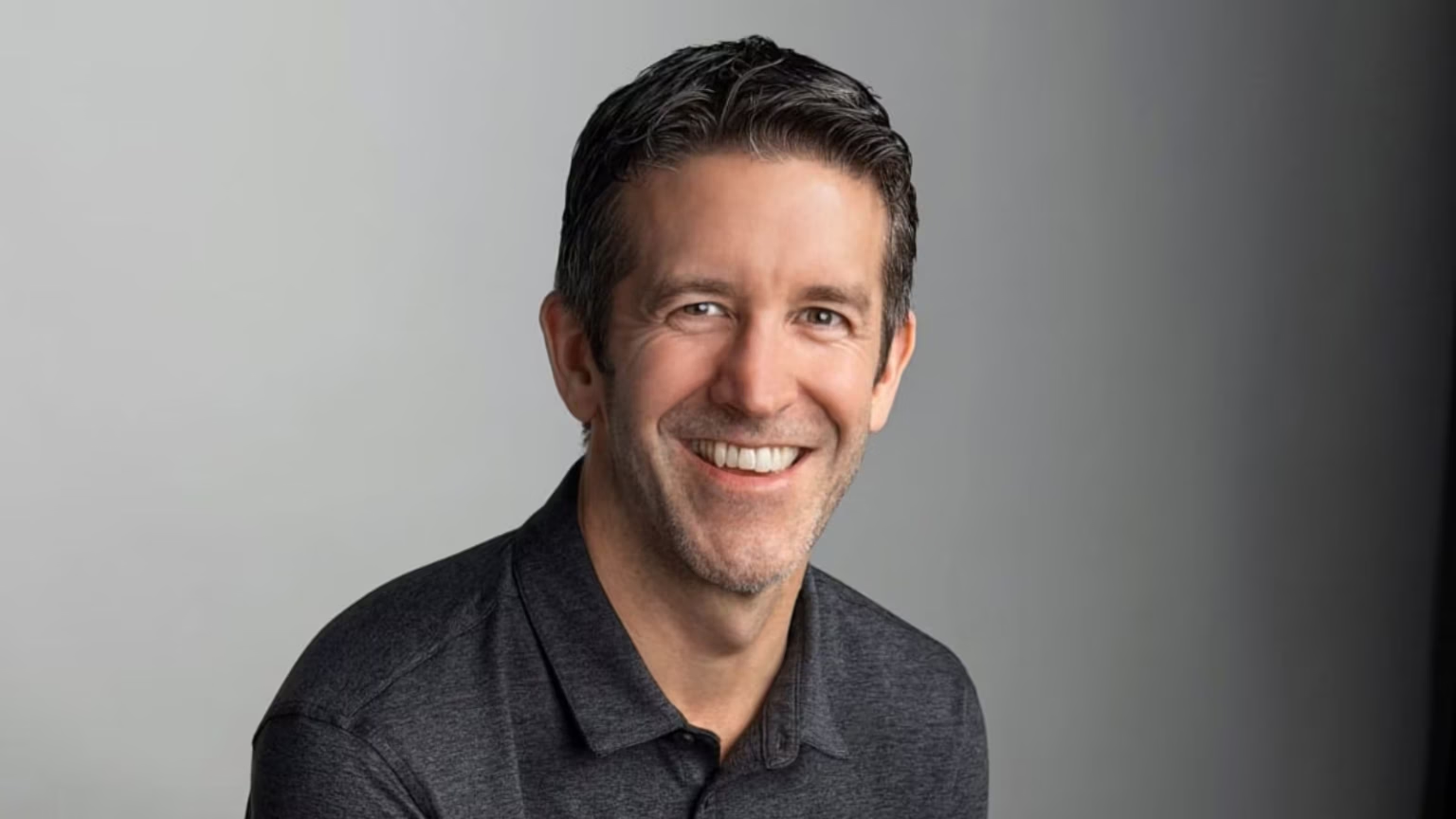
John Ternus Appointed as New CEO of Apple, Succeeding Tim Cook
Leadership Transition at Apple
Tim Cook’s tenure as CEO of Apple has concluded, with John Ternus, the senior vice-president of hardware engineering, stepping into the role effective September 1. The announcement was made via a press release around 3 am on Tuesday, as many were asleep in India. Cook has served as CEO since 2011, following the death of Steve Jobs, leading one of the world’s most valuable technology firms for 15 years.
The transition of leadership within Apple has been speculated for years. Ternus has now taken the reins of a company valued at approximately $4 trillion, known for producing significant technological innovations. Although Cook had previously claimed he would continue as CEO for five more years, the recent executive changes signal a strategic pivot for the company.
John Ternus: A Proven Innovator
John Ternus, 51, symbolizes Apple’s preference for promoting leadership from within and is recognized for his contributions as a product innovator. Joining the company’s product design team in 2001, Ternus has been part of Apple’s evolution from a burgeoning tech company into a dominant force in the industry. His early work included external Mac monitors, and he played a vital role in the development of iconic products like AirPods, Mac, and iPad.
By 2020, Ternus had assumed responsibility for iPhone hardware engineering and was promoted to senior vice president of hardware engineering in January 2021. His ascent to Apple’s executive team has been marked by his deep understanding of Apple’s product strategy and technological needs.
The Significance of the Transition
Replacing a CEO in a company with a storied history like Apple is a multifaceted process that often spans several years. Both the CEO and the board work collaboratively to identify a suitable successor, ensuring a strategic alignment for the organization’s future. Ternus’ technical expertise is particularly critical at a moment when Apple seeks a leader who can adapt to evolving market conditions.
Cook’s leadership has significantly shaped Apple’s trajectory, expanding into markets such as China and India and diversifying its product offerings. During his tenure, Cook emphasized enhancing existing products and integrating services like Apple Pay and Apple Music into Apple’s ecosystem, thus maintaining the brand’s position as a market leader.
Challenges Ahead for Ternus
While Apple’s financial performance under Cook has been strong, there are challenges that Ternus will need to navigate. The reliance on the iPhone and the lack of new innovative products has been points of concern. Key areas needing attention include advancements in artificial intelligence, such as enhancing Siri, and the management of supply chain issues stemming from global geopolitical tensions.
Transitioning from hardware engineering to the CEO role means Ternus will take on broader responsibilities, including product features and strategic decision-making. He graduated with a Bachelor of Science in Engineering from the University of Pennsylvania in 1997, equipping him with valuable technical insight that aligns with Apple’s current needs.
Looking Forward
The impact of Ternus’s leadership may not be immediately evident as Apple operates on a three-year product development cycle. His influence will become clearer in future product launches, particularly since he has already played a significant role in unveiling products like Apple Silicon and the iPhone Air.
As Apple looks to refine its product portfolio, questions arise regarding the strategic vision that will drive future innovations. Ternus, in his new position, will need to balance maintaining Apple’s reputation for quality hardware with addressing software reliability and user experience, particularly as the tech landscape rapidly evolves.