Unique Parental Care Observed in Toxeus magnus Spider Species
Introduction to Toxeus magnus
Most people associate milk with mammals rather than arachnids, but a distinct phenomenon has been observed in the Toxeus magnus, a species of jumping spider. Traditionally, spiders are known for abandoning their offspring shortly after laying eggs; however, Toxeus magnus exhibits a notably different behavior.
Nurturing Behavior of the Mother Spider
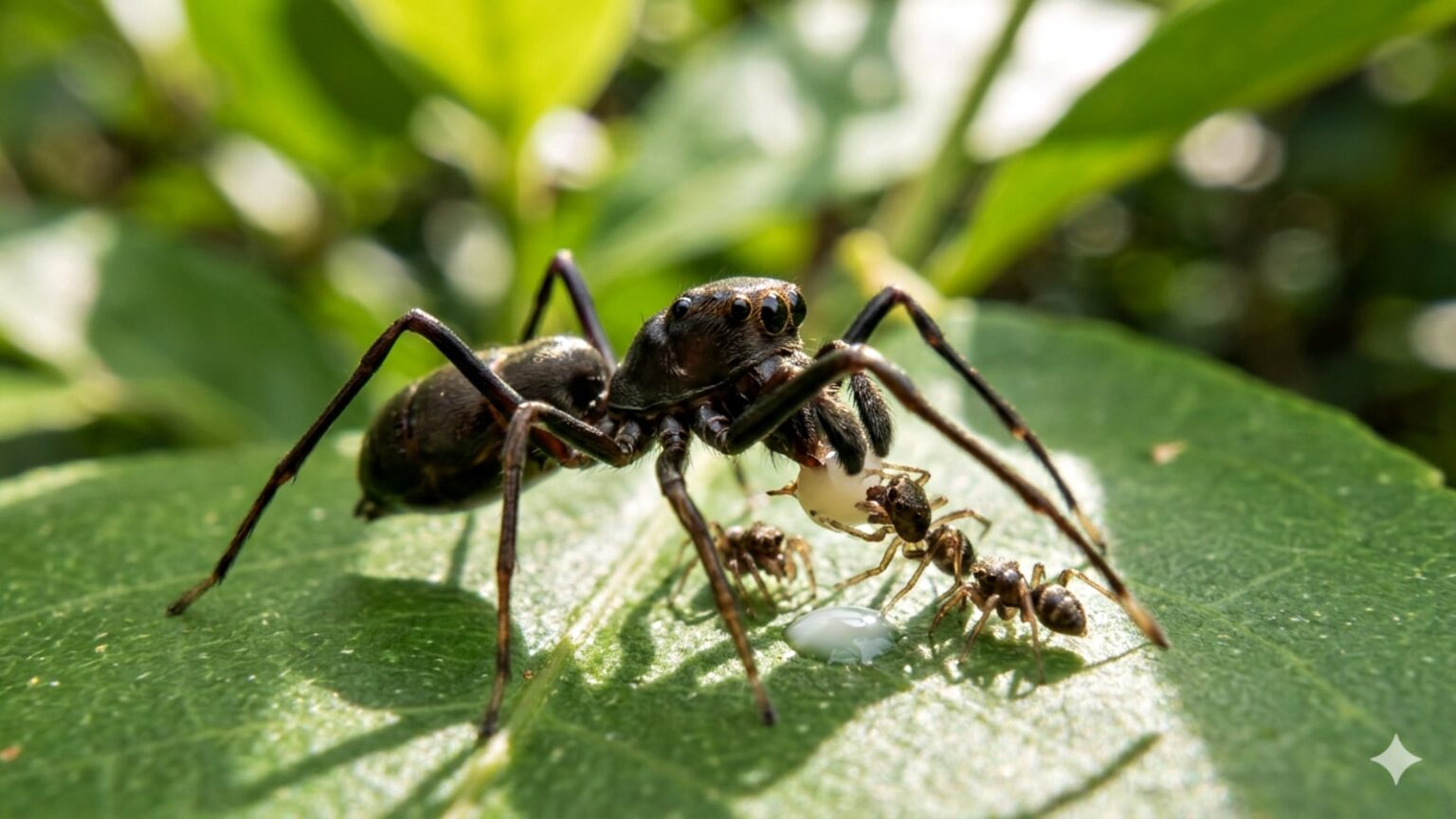
After the eggs of Toxeus magnus hatch, the mother remains with her spiderlings, providing them with a nutrient-rich, milk-like fluid. This substance serves as the primary source of nutrition for the young spiders during their initial days after hatching. Through a unique process involving her reproductive system, the mother spider produces this specialized fluid.
Researchers have studied the composition of this spider milk and found it to contain proteins, fats, and sugars, resembling the nutritional profile of mammalian milk. The young spiderlings actively consume this fluid while remaining close to their mother, highlighting a significant departure from typical spider behavior.
Duration of Parental Care
In an unusual twist for arachnids, the maternal care exhibited by Toxeus magnus extends beyond the initial feeding phase. The spiderlings continue to stay near their mother for at least 38 to 40 days, relying on her for nourishment and protection as they grow. Notably, female offspring may even return to the mother for lactation until they reach sexual maturity, further emphasizing the rarity of such extended parental involvement among spider species.
Survival Strategy
This nurturing approach appears to be a strategic adaptation for survival in unpredictable environments. By dedicating more energy and resources to a smaller number of offspring, the mother increases the chance of survival for her young. This method stands in contrast to many other spider species that rely on sheer numbers to enhance the odds of offspring survival.
Broader Implications for Understanding Animal Care
The discovery of this spider’s unique caregiving behavior has implications for how scientists understand “milk” and parental care across the animal kingdom. While the fluid produced by Toxeus magnus is not identical to mammalian milk, it still fulfills a similar role by providing essential nourishment during early development. Moreover, the spider milk has a notably higher protein concentration, reported to be four times that of cow’s milk, alongside essential fats and sugars.
Conclusion
The remarkable maternal behavior of the Toxeus magnus serves as a reminder that even within the arachnid world, nurturing and care for offspring can manifest in surprising and complex ways. Rather than simply being feared, these jumping spiders may also be recognized for their affectionate parenting.