Introduction of Delimitation Bill 2026 in Parliament
Parliamentary Session Highlights
On April 16, 2026, during a special session of Parliament, the introduction of the Constitution (131st Amendment) Bill was successfully passed in the Lok Sabha. The bill passed after a division vote, with 251 MPs in favor and 185 against. A total of 409 members participated in the vote, with none abstaining.
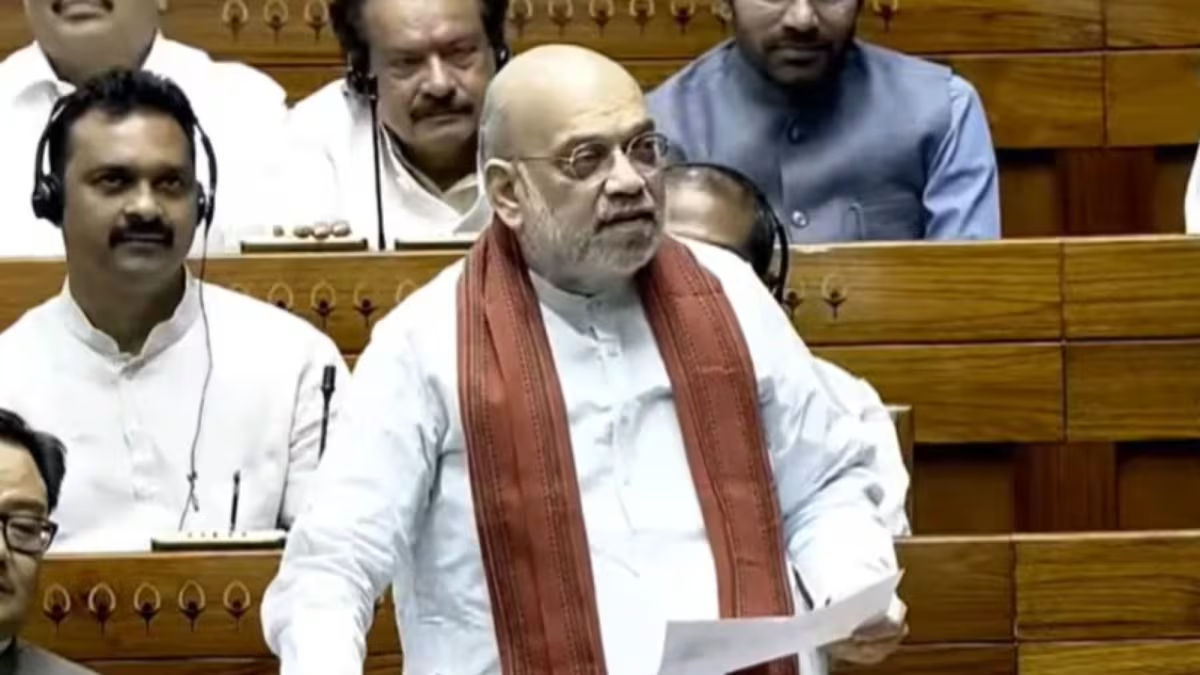
Union Home Minister Amit Shah addressed the Lok Sabha, highlighting the Centre’s pivotal role in introducing key legislation, including the Nari Shakti Vandan Adhiniyam, also known as the Women’s Reservation Bill, which was passed in 2023. The introduction of the Constitution (131st Amendment) Bill is fundamental to this legislative exercise.
Details of the Constitutional Amendment
The Constitution (131st Amendment) Bill, 2026, proposes to increase the strength of the Lok Sabha from the current 550 members to a maximum of 850 members. This would consist of 815 representatives from States and 35 from Union Territories. Out of these 850 seats, 273 will be reserved for women, representing approximately 33 percent.
Overview of the Delimitation Bill
The Delimitation Bill, 2026 was introduced by Law Minister Meghwal in the Lok Sabha and aims to readjust the allocation of seats in the Lok Sabha, as well as in state and Union Territory legislative assemblies. Each state and Union Territory will be divided into territorial constituencies based on the 2011 Census. The opposition has expressed concerns, advocating for the deferral of this delimitation exercise until the 2021 Census data is available.
Discussion on Bang on Women’s Reservation
Union Home Minister Amit Shah addressed concerns surrounding the delimitation exercise, dismissing claims that it would reduce representation for southern states, specifically citing Karnataka. Currently, Karnataka holds 28 of the 543 Lok Sabha seats, accounting for 5.15% of the total strength. Under the proposed changes, its representation would increase to 42 seats, maintaining a similar percentage share.
Shah assured that the proportional representation of southern states will be preserved, emphasizing that no state will experience a real loss in representation due to these reformative measures. The Union Territories Laws (Amendment) Bill, 2026 was also presented to align electoral and administrative provisions in Union Territories with these legislative changes.
Political Reactions Unfold in Lok Sabha
Varied responses emerged from different opposition leaders regarding the Delimitation Bill and Women’s Reservation Bill. Priyanka Gandhi criticized the government, claiming it is undermining the rights of backward classes by not conducting a caste census. She expressed that passing the Bill without addressing these concerns could jeopardize the democratic framework.
Notably, PM Modi remarked on the heightened role of women in political life and expressed determination that those opposing these reforms will face consequences. He encouraged unity in support of the bills, suggesting that the collective effort would be noted in history.
In contrast, leaders like Akhilesh Yadav questioned the urgency of passing the Women’s Reservation Bill and pointed to the government’s unwillingness to conduct a caste census as a central issue. Other opposition voices, including Manish Sisodia, raised concerns about the potential manipulation of electoral boundaries through the proposed delimitation process, deeming it inappropriate.
Deliberations continue as the Lok Sabha Speaker announced that discussions on the bills will be followed by voting tomorrow, emphasizing the importance of the legislative decisions being made at this time.