Supreme Court Affirms Voting Rights for Native Indians
Judicial Perspectives on Electoral Rights
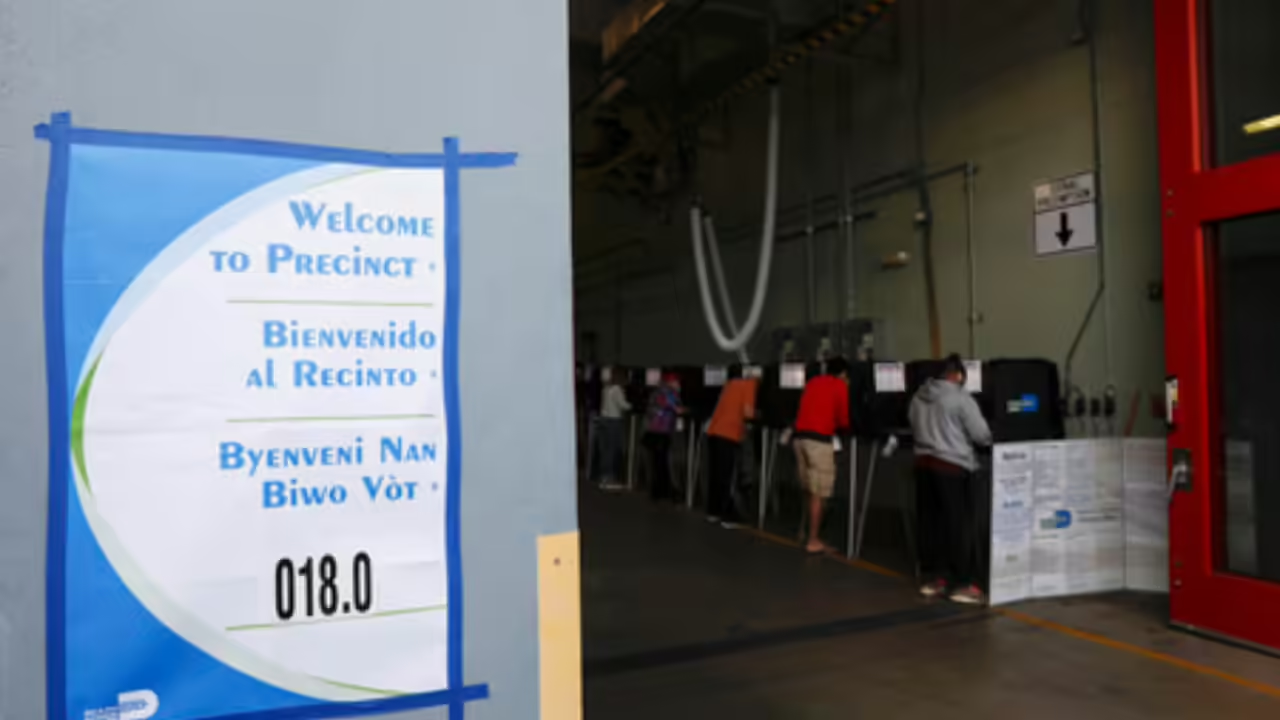
In a significant ruling, the Supreme Court of India stated on Monday that individuals born in India possess the constitutional right to remain on the electoral roll and to vote. The remarks were made by a bench led by Chief Justice Surya Kant, along with Justice Joymalya Bagchi. Justice Bagchi emphasized the importance of this right, noting, “Somewhere we are getting blinded by the dust and fury of an impending election. Right to remain on the roll and the right to vote in the country where you are born is something which is not only constitutional but also sentimental.” He described participation in democratic elections as a profound expression of nationality and patriotism.
The court also addressed concerns regarding a special interim relief (SIR) in West Bengal, highlighting that the original framework did not account for the review of those listed on the electoral roll as of 2002. Justice Bagchi added that a different approach would be taken if discrepancies arose in tightly contested elections, indicating the necessity to evaluate cases where the victory margin is narrow compared to the deletion rate of voters from the rolls.
Debate on Voting Eligibility
The Supreme Court declined a request to allow votes from individuals deemed eligible by appellate tribunals during a period when the electoral roll is frozen. Senior advocate DS Naidu, representing the Election Commission, stated that the voter deletion rate in West Bengal aligns with patterns found in other Indian states. The discussion was ignited by advocate Rauf Rahim, who argued for the right of those eligible through appellate rulings to participate in elections despite the ongoing scrutiny.
Justice Bagchi clarified that the court was not focused on whether West Bengal was exceptional in its electoral procedures but was concerned with ensuring fairness in the scrutiny process. He noted that the original standards set by the Election Commission (EC) did not anticipate adjustments to the voter list from 2002 but had necessitated scrutiny based on issues with identity verification. He highlighted the complexity of examining claims and objections, attributing the challenges to the significant workload due to upcoming elections.
Procedural Delays and Responsibilities
Discussion also ensued regarding the implications of voter deletions on electoral outcomes. Justice Bagchi pointed out, “If in a constituency, there is deletion of 10% of voters, but the victory margin is 15% or so, then the election result would appear to be in order. However, if in a constituency, the victory margin is 2% and the deletion is 10%, then we will consider such cases.” He reiterated the need for a thorough and careful examination of appeals, emphasizing that the court should avoid hastiness in these matters.
Responding to concerns about delays caused by inadequate staffing of high-ranked officials by the state, Justice Bagchi remarked that this situation should not devolve into a conflict between the state and the EC. He emphasized that the core issue relates to the rights of voters caught between constitutional entities. He commended the EC’s efforts while recognizing the cautious approach of the state in this matter.
Next Steps in the Adjudication Process
Ending the discourse, Chief Justice Surya Kant remarked that there was no requirement for further academic scrutiny at the current stage. The bench’s order specified that no requests for inclusion in the electoral roll would be entertained before adjudication of ongoing appeals. It encouraged petitioners to engage with the relevant tribunals and seek expedited hearings. The 19 appellate tribunals commenced full operations on Monday.
Furthermore, the Supreme Court ordered the Election Commission and state authorities to ensure the continued security of judicial officers involved in the SIR process. The court mandated that this security arrangement would not be withdrawn without prior court approval, noting that it may be enhanced following a review of any security threats faced by the officers.