Parliament Set to Debate Women’s Reservation Bills, Says PM Modi
PM Modi Confident of Support
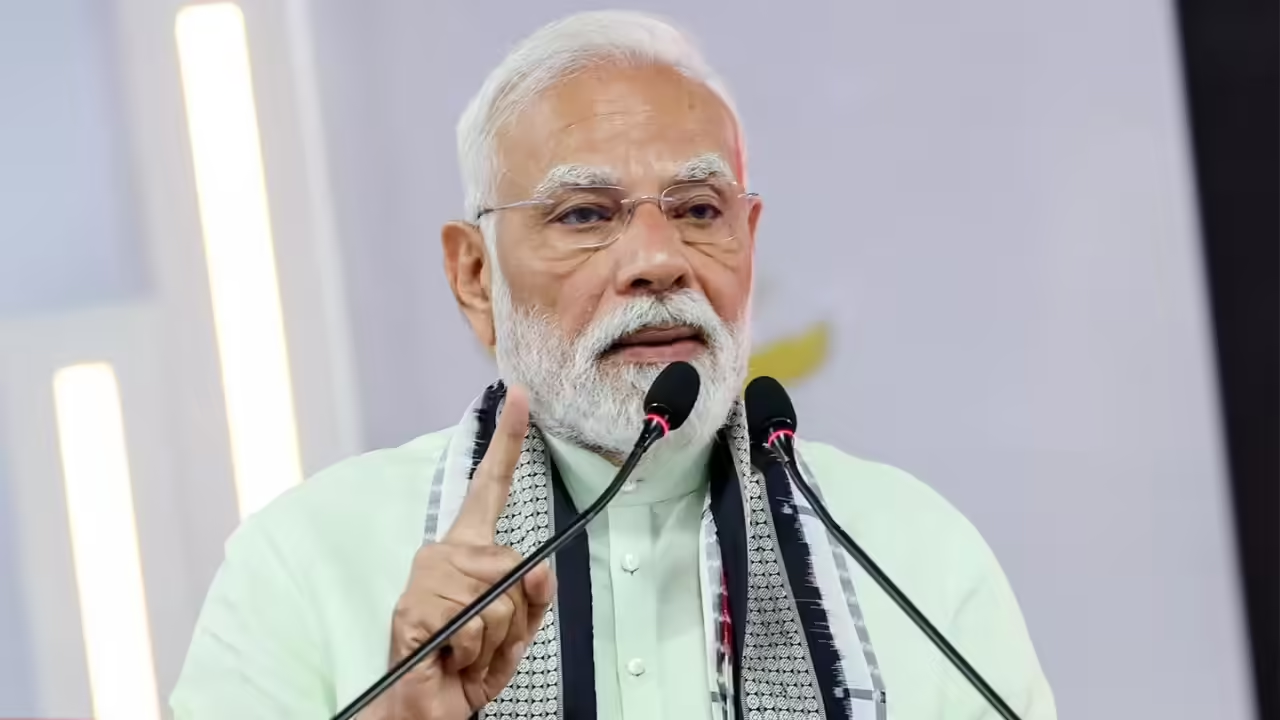
Prime Minister Narendra Modi asserted on Monday that Parliament is on the verge of making a significant historical decision as it prepares to discuss bills aimed at implementing women’s reservation in legislative bodies starting in 2029. Modi expressed optimism about securing support from the opposition, despite some dissenting voices from Congress and allied parties.
Several opposition parties have criticized the government for hastily advancing these bills during the ongoing state elections, raising concerns about the delimitation proposal as well. However, at a recent event, Modi refrained from engaging in this debate and instead highlighted the longstanding cross-party support for the women’s reservation proposal.
Recognition of Political Collaboration
During his address at the Nari Shakti Vandan programme, attended by women achievers and former Lok Sabha Speaker Meira Kumar from Congress, Modi emphasized that the credit for passing the women’s quota bill would belong to all political parties. He noted that the bill’s implementation would mark an end to the decades-long demand for reserving one-third of seats for women in both the Lok Sabha and state assemblies.
Modi characterized the potential decision as one of the most significant milestones of the 21st century, stating that the Parliament’s three-day session beginning April 16 will be decisive. He reflected on his commitment to women’s empowerment, which he claims has been evident since his tenure as Chief Minister of Gujarat, where he initiated various schemes aimed at supporting women’s welfare.
Emphasis on Women’s Empowerment
In his address, Modi also shared his achievements in empowering women by ensuring that government-assisted housing projects are registered in women’s names, thereby enhancing their authority in familial decision-making. His remarks were met with applause and smiles from the audience.
Modi observed that when the original law was passed in 2023, there was a unanimous call for its rapid implementation, particularly among opposition MPs advocating for enforcement from 2029. He acknowledged the importance of the opposition’s perspectives, asserting that the government takes their views seriously.
Legislative Process and Challenges
The government requires support from a portion of opposition parties for the constitutional amendment bill to pass, as it necessitates a two-thirds majority. However, key rivals of the BJP, including Congress, Trinamool Congress (TMC), Dravida Munnetra Kazhagam (DMK), and Samajwadi Party (SP), which collectively hold enough seats to obstruct the bill’s progress in the Lok Sabha, have not yet confirmed their support for the proposed legislation.